W O L F C L U B - City of Once
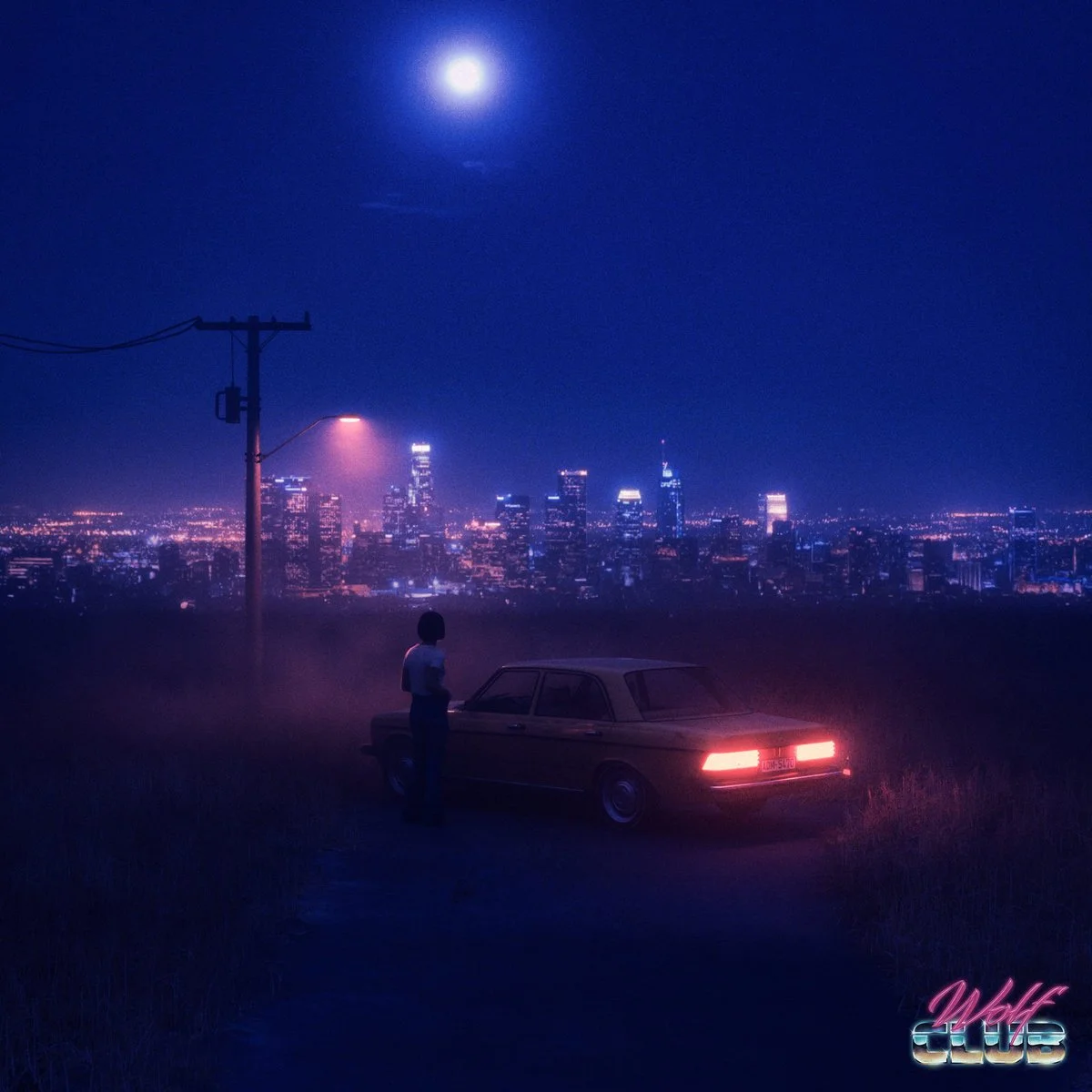
Review by Karl Magi
Overall Album Impressions
Wolfclub’s “City Of Once” voyages through all of the challenging, contradictory and deeply human feelings with which we each must contend. The way in which the album brings together acoustic sounds with synthesized layers forms an engaging and emotionally powerful background to support a variety of very talented guests, each of whom adds more strength and weight to the music. As a result, the album delves deeply into all of those things that make us feel and fills our lives with complexity.
As an approach, the balance of synthesized elements with acoustic and more organic sounds “City Of Once” is something I find enjoyable. Steven Wilcoxson has a sense of balance in his choices of instruments and the production qualities of his music. The musicians playing their instruments and the synthesized tones and textures come together in a way that paints cinematic imagery, adding more expression to the vocal elements.
Without the guest artists, “City Of Once” would still be well done, but the guests elevate the music to another level. Each has a voice which is distinctive and full of true feeling, adding layers of vulnerability and passion to their expression. The individual character of the performers comes through while still allowing Steven Wilcoxson to showcase his vision and lyric writing. I enjoy the fact that there's both cohesion and a unique quality to the songs performed by the guests.
Lyrically speaking, Steven Wilcoxson evokes feelings that roil and intertwine within each of us. He's unafraid of digging into the more emotionally difficult corners and expressing them with honesty and beauty. The way in which he brings together combinations of love and pain or loss and hope contributes to the impression that one is being shown a true version of how he might feel or the experiences he's had that led to this music.
My Favourite Tracks Analyzed
“City of Once” begins with a languid melodic pattern that glimmers like skyscrapers on the horizon and a synth creates muffled delicacy before the exhaling vocals caress like soft hands on warm skin. The lead singer finds the essence of the lyrics, in touch with their affection and emptiness, bringing together brokenness and desire.
In the distance, a drift of notes floats before massive percussion presses on. Sunburnt passion fills the vocals as they reach me with their earnest yearning. Phil Smith’s guitar has a slightly gruff tone and carries melodic entanglements that tremble with ferocious feeling.
The lead singer’s voice has a vulnerable quality that permeates the music with tragic love above a heavy reverberation. The chorus climbs with a nostalgic haze that extends above the foundational pulse before the song comes to a close on Phil Smith’s guitar as it reflects bereft passion in its interwoven sound.
As she drowns herself in the song's subject's past, our storyteller is "trapped in a figure of eight" as she trips over the words she wants to say "forever, that there's no escape." She feels clumsy with the other person and her soul as she fails to “call myself brave." Ink from the photograph’s frame covers her hands and "the monochrome spills from the page."
Feeling "grazed by the summer," the narrator doesn't think she can recover and she's being kicked out anyways. She says there's "no time to remember, just time to surrender." She'll "meet you in the city of once," and embrace the song's subject there for eternity but that won't be enough. she adds "I'll starve or suffocate in your love” if that's what she’s feeling.
"Stand by the glass just to watch you sway, I'm vacant in all the right ways "as our storyteller tears at her heart so that the song's subject could stay, "an ultrasound mapping your veins."
Rough-edged electric guitar strums in a static-filled line that shifts uncomfortably as “Stop” captures fiercely moving emotion and Angie Robba broadcasts all of the burning feelings that rise within her before the percussion shudders with guiding energy.
The intensity and aching feeling within Angie Robba's unique and earnest voice transfers to me through the pained, needy melody. The chorus bursts with all of the drama of a growing sunrise before the heavy underlayer is joined by Phil Smith’s guitar that calls out, encapsulating all of the mixed passion and vulnerability within the lyrics and the vocals.
All of the fierce love and loss that pours from Angie Robba drives home the song's message. As the rhythm slowly slides away, tangling notes growl from the guitar with conviction and strong emotion before the chorus spills once more and the song ends.
With the outline of the city in the background, a shadow stands with our narrator and she says she'll "see it in a matter of time and I'll hold it tight but know that the shapes will blur in contact," because it's her imprisoned in a moment of her own. While she watches the past take shape slowly, she says, "My eyes don't even know me, reckless and so carelessly numb."
The song's subject's form reveals itself softly, "transparent and so ghostly," which she can remove as though brushing it away with her thumb.
"I'm falling for you, I'm falling apart," as she announces that she'll fall for the other person one more time and then stop. She'll keep the song's subject in her pocket like a "gold chain and silver locket." Like a photo stolen from a frame, she cuts the other person's shape out to fit them in. She says that it was "chopped up from the beginning to hold the paper, you and the weight."
Like the dawn breaking, umber tones spread outward along with gentle vocal harmonies hovering in the background as “Lost” comes into focus before the lead singer’s vocals sail in with honeyed tenderness. As breathy notes spread into a flowing pattern, the vocals are permeated with a powerful yearning for completion and the background notes exude orange luminosity.
As Phil Smith’s guitar solo captures mournful passion, it touches me and wraps around me, blanketing me with warm sensations. The lead singer has a voice like silk and uses it to deliver a melody combining love and questioning as the guitar cascades, shivering with emotion and the rhythm guides before the song closes on sobbing guitar.
Talking about "the emptiness of what was won," our storyteller says that the song's subject "left the fields when there's no distance left to run." The other person always thought they'd be important but they simply "held the silence when all that’s said was said and done."
As the "stands fall in the lighting, carved up grass and brothers fighting," the scoreboard's light is dazzling and "the grip of youth so tense and frightening." The summer pretends that "the battle can't stop the sun from setting" and both the narrator and the song's subject’s past is "out there reflecting" along with their never-ending love.
Closing out the song, our storyteller asks: “How do we lose ourselves to get lost? How do we find ourselves when we've lost?"
“Almost Nothing” comes together in a web of glowing guitar and continually tumbling bass that creates pressure to propel the music as the lead singer’s ethereal vocals haunt with challenged emotion, strings adding an energetic leap as they create warmth beneath the emotionally gliding vocals above the exploding beats.
The lead singer catches hopeful emotion mixed with emptiness and struggle while the drum beat speeds along beneath. As Phil Smith’s guitar meshes with the percussion, it creates growth and energy to contrast with the more complicated emotion in the lyrics. The lead singer's full range of expression captures my heart before the chorus blazes with concentrated radiance, carrying the song's dreaming feelings on to a conclusion.
Referring to the darker part of herself, our narrator says that "there's so many words that I want to leave, tenderly or bittersweet." She can imagine a plethora of futures but there's a "a missing piece, carelessly" and they're tossing their hearts away recklessly to "settling or rushing in, retracing our steps to begin again."
The storyteller is a "runaway crying out in the dark" and running straight for the other person's heart. "Blackheart me, meandering through the open sores of a rootless tree" and recalling that "senselessly, we carved our names just to make it bleed."
A guitar melody drifts with wistful contemplation and a sensation of interwoven light as “There Goes the Dream” flows to transmit a pensive feeling before Indigo's voice hovers with lacy elegance above the repeating guitar pattern as it illustrates the song’s emotional weight. A prismatic synth gleams as Indigo drives the lyrics home with an earnestness and ferocity of feeling that belies her performance’s breathy grace.
Rhythmic beats shatter and the strength within the music radiates outward, grasping me with its conviction. A full-sounding synth moves with Phil Smith’s guitar as it cries, lifting in a burst of distant love and hope that perhaps things can be good again. Firefly brightness spills from the vocals and the synth, combining in one sonic sunrise before the foundation adds guidance.
Seeing a "sunset in your eye," the narrator wonders if she was the other person’s or if they were only hers. Facing a "distance I can't climb," she realizes that, "the time was gone but all's not lost and I wanted you to lie." She’s sick and tired as the days and weeks don't do anything but, "rush to pass us by like thieves caught in the night. "
Smoke rises to "choke the buildings of the sky" and our storyteller wanted to save the other person and have them stay as she took away their pain. “The breeze will make things right, to wash away the dust that's percolating in our minds” as a "beam of vapour fights and dulls to shade the mist of us that's catching in the light.”
“Chasing Ruins” strums to life with Phil Smith’s guitar creating a folksy feeling and thoughtful quiet balanced with gentleness before the thundering rhythm joins Cadenti's voice which rises in a luscious line, full of emotional engagement. Strings wash as the synth glitters like stars rising and Cadenti imbues the lyrics with life and earnest feeling while the beats break into a heavy pulse.
Iridescence reflects from the music while the soaring vocals reach out to enmesh my heart. Strumming floats with strings that create moments of sunny luminosity while the mournful expression in the vocals drifts with unconcealed affection and need.
The bed of strings has a muted tenderness that mixes the lyrics while the guitar growls with a gruffer feeling, Cadenti pours everything into his performance, adding to the brilliant brightness that spills fully and the song ends in a richly entangled soundscape.
Wondering if "it will ever be right to say you're on my mind" or if it'll ever be "fine to go with you sometime” the narrator says perhaps they aren't the same but "I can't seem to let it slide, so I'm waiting tonight."
"I'll wait for you in the middle of the night, I'll wait for you and won't turn out the light" because our storyteller knows that he belongs to the song's subject but "you are not mine." Now he is chasing after everything they left behind and he's "chasing love, chasing tears, chasing all your fears, chasing ruins, chasing you."
As the acoustic guitar introduction creates contemplation as “Desolate” breathes into being with a breeze slipping through leaves as the singer's fragility makes an imprint, capturing all of the potential hurt and loss reflected in the words. Breezy sound sails out while the guitar floats along with hissing static, adding an element of uncertainty before
The singer exhales in a breath of remembrance and the chorus calls out with pain that leaves me vulnerable. Static hisses as the sonic elements come together in a misty wash and the broken beat creates powerful propulsion. The vocalist reaches for the listener with her heart on her sleeve, her voice revealing the emotional depths within the words before the song closes out.
"I don't understand the lightning in my head, the scars upon my hands" so the storyteller stands. She speaks of a hope that came to be and a love that wasn't theirs "like melted photographs." Finally she has the strength to ask as her mask slips but "time won't bring you back like trash flowing through our house." She wants to fix it but he can't because her fingertips are in ash and she’s desolate.
"I'm running odds and ends" the narrator says as she lays in the ruins of the song's subject.she adds "it's better to pretend” and says the other person has "a will that will not bend, a bone that cannot mend, your heart is so desolate. "
“Avalanche” has a fuzzed out guitar halo that gives rough edges to the music, joined by Cadenti’s vocals that float with his distinctive, magisterial tones and carry emotion with unadulterated heart and soul. The track arcs with elegiac feeling and a sinewy rhythm adds another layer of support as the vocals rise with cloudy grace.
Cadenti’s combination of great power and deep feeling keeps me held in thrall. Colossal percussion rebounds and the sung melody climbs with nobility and undeniable strength, piercing the listener with the wonderfully heartfelt vocals. As the music ends, astral sheen reflects from each sonic surface.
Describing the song’s subject as "an avalanche, a soaring star, a satellite," our narrator adds that he doesn't know where they are. Comparing the other person to "the rain at sundown, a slow burn sky, a heartache rundown" he says that they still don't know how to fly.
"An avalanche fell and we got it so wrong," but the storyteller doesn't want to decide if he wants to be strong, he'd rather "learn to be somebody else." He doesn't want to lie but, "the storm won't stop and we’re covered with rain." To conclude, he says " I don't want to deny, I want to do it again. "
Guitar with a slight twang produces a home spun feeling before Cadenti’s vocals spread out like honey and remembrance to bring “You Sleep, I'll Drive” into being with oneiric contemplation while strings intermingle with haunting words. Fully engaging the listeners in his performance, Cadenti cries out with the ache of unfulfillable love.
As Phil Smith’s guitar weaves the story of a long night, I am charmed by Cadenti’s distinctive and honest performance. A slow heartbeat of drums anchors the wistfully compelling vocals. A static pulse, like a radio caught between stations, moves as the vocals soar into the air with inescapably touching sensations before the song stops.
Our narrator says, "you sleep, I'll drive through the mountains, through the forests, through your eyes." They'll walk together through the darkness and he’ll hold the song's subject "to a love song in the sky.”
Wishing that the other person could still hear him and was a part of his life, he says "now I've only got memories to keep you alive." He wants to be able to hold the other person once more and tell them that it's all right. He concludes , "I know that it's hard but please stay one more day. "
Conclusion
“City Of Once” is for listening to late at night with all the world asleep, wrapped in thought. It examines life with honest and vulnerable feelings as it evolves, keeping my ears engaged.