
CAT TEMPER - Kitty Hate Machine

Review by KIZUNAUT
Mike Langlie aka CAT TEMPER is a Boston-based musician, graphic designer, illustrator and the most puntastic feline in the synth-scene. Cat Temper has become known for his unique style of music that eludes precise definition but which draws influence from 80s industrial acts, synthpunk and electronic oddities like DEVO, Sigue Sigue Sputnik and Alien Sex Fiend. While mostly far removed from the typical fare of the genre, the synthwave community has eagerly adopted his unique music that might have been led astray in other times.
Starting from 2019, the extremely prolific musician has released eight albums, including an alternate soundtrack to the film Eraserhead. While the previous album More Than a Feline was an interesting but ultimately somewhat uneven experiment in blending Cat Temper's instrumentals with guest vocalists, the new album Kitty Hate Machine is a return to Cat Temper’s established form of instrumental music while offering an evolution of his sound.
As is fit for a tribute to Nine Inch Nails, Kitty Hate Machine sees Cat Temper at his most industrial. There are squirming basslines that recall 80s electronic body music, the occasional splashes of heavy, crunchy guitars and bursts of harsh FM synths. The style of composition and production is however unmistakably of Cat Temper's own, and the album is in my opinion better for it. It is truly a tribute and not a derivative.

Amongst the gnarlier industrial elements there are plenty of lighter moments to be found on the album. Cat Temper has a talent for conjuring up unusual melodies and strange synth tones that have prowled unknown sonic territories between quirky, mysterious, geeky and witchy. Sandwiched between growling EBM-sections you can find plenty of his off-kilter synthpoppy, videogamey stylings. This gives the tracks at times an almost dialogue-like feeling. The overall vibe is hard to describe, sounding like some kind of a videogame rave in a cartoon bat cave with moments of pure 80s leather jackets and sunglasses cool thrown in. Coming from a background of enjoying both 80s industrial and videogame music greatly, I enjoy the vibe. There's something quite visual to the music and I'd imagine some kind of animated, narrative music videos could elevate the music to a wholly new level.
On the production side of things the album has a definitively retro sound mixed with very pristine production. For the most part the synths and drums sound like things that could have well existed in 1989 when Pretty Hate Machine came out. There's plenty of klangtastic FM-synths, heavy detuned square basslines, leads and arps with relatively simple tones and synthlines with a decidedly 80s feel. But there's also some more modern sounds to be found in the mix, too. Cat Temper apparently uses the Casio synths and primitive drum machines he started with along with more modern equipment. You can really hear it here. The mixing and production of the album is clean, discerning and airy, with the oldschool FM synths giving it a certain archaic digital rawness and fuzziness. It's a unique take. You can really hear every detail, every purr and hiss of every synth in it. My only complaint when it comes to the production side of things is that I found bass drums occasionally getting lost in the mix. It's a very synth-forward album.

Cat Temper has always had a very striking, unique visual aesthetic featuring plenty of bright colors and cats. Kitty Hate Machine is no different. Featuring a very colorful illustration of a goth/punk woman with a leather vest that has a Cat Temper logo on it, the artwork conjures the inspiration and aesthetic of the album wonderfully. There’s playfulness in it, the hot salmon pink background, the rad leopard sleeves, but also a bit of a threat as she is brandishing a heavy chain. While Cat Temper is also a visual artist, the album artwork was done by the Brazilian artist Foreigner, and the gritty death metal inspired logo was done by the Russian designer Misha Mono.
The album opens with The Meoward Spiral. It gets straight into the business with a mix of super gritty guitars that almost recall black metal that eventually give way to a more electronic section with deep kick drums and a constant bassline. Synth leads join in, casting a mysterious, waiting mood. The track switches into a part where bursts of heavy riffs alternate with quirky high pitched synths, followed by an interlude of ascending guitar riffs. Fast electronic beat joins in the track picks up energy, finishing off with a mix of guitar riffs and high-pitched synths that cast a kind of darkly playful vibe.
The Paw That Feeds kicks off with a super gnarly line of FM synths playing a repeating riff that recalls oldschool EBM. After a brief guitar-driven interlude this gives way to a section driven that opens with strange throaty synths and a synthetic breakbeat. Layers of synths are built upon this formula, eventually building to a dramatic sounding climax. Grinding detuned synths and beats follow, and they are soon joined by a curious sounding bright arpeggio. The gnarly EBM section repeats before the track moves to it's extended outro section, featuring a metallic bass synth arp and a buzzy synth lead that are eventually joined by another brighter lead and guitars.
Shed Like A Hole opens with a detuned bass arpeggio and distorted wormy synths, strongly recalling 80s synth punk and industrial. Sharp, rolling synthetic drums come in, as does a wet, resonant secondary synth arp. The track bursts into life with a bright synth melody that feels like a call to an adventure. The track alternates between this melody and more gnarly sections until the end where the melody repeats and is joined by a whistling synth that gives the track a very spacey vibe.

Metallic FM bassline that is pure classic EBM opens Pet You Like An Animal. Dramatic, metallic synth hits join the bassline and the beat. The synth hits drop, but the bassline is now doubled with a super gritty FM faux-electric guitar, which is joined by synths which cast a strange, witchy mood. The section with dramatic synth hits repeats. This section is followed by an interlude of a resonant, pulsing synth bass and heavily detuned quirky arps, giving a faster variant of the verse, one last repeat of the chorus and a quick outro featuring the quirky arps from the interlude. One of the more structurally conventional pieces on the album and a personal favorite for it's oldschool industrial sound.
She's Gone Astray opens with buzzy, shrill, rapidly panning synths before exploding into a gritty, driving section dominated by a heavy bassline. An aery section dominated by hollow square synths that cast a mood that wanders between melancholy and mystery comes next.This is followed by an interlude that is lighter in mood that I can't help but to describe as ”cartoon chase sequence” music. The section with hollow square synths repeats, this time with additional high-pitched pizzicato synths pinging around. After a quick interlude the heavy driving bassline from the start comes back, this time mixed in with atmospheric swooshes and gnarly noisy synths, before ending with shrill, menacing synths that play a dramatic melody.

A quick drum roll kicks off Starfluffers Inc, soon followed by a steady beat and a menacing metallic FM synthline. Dramatic, squirming distorted synths come in, followed by large, somewhat choir-like synths coming in, forming a chorus for the track. The verse comes in again, this time with some extra elements thrown in. The chorus repeats with a spidery arpeggio joining in. A more stripped down version of the verse follows, which is then followed by one last extended repeat of the chorus. Another favorite of mine for it's hyper-dramatic dark synthpop mood; sounds like being hunted by a Terminator in an abandoned church in Los Angeles.
Purest Feline begins with a mysterious, dramatic sound effect that is followed by a rather videogamey sounding mix of arpeggiated basses and an evolving mass of sharp synths that sounds like halfway between an arp and a pad, having a kind of a Commodore 64 vibe to it. Energetic section of more videogamey elements alternating with rocking guitars follows next, and after that comes a section that is pure synthpop with it's detuned retro saw synth melody and extra slap bass hits. A brief interlude leads into a section where mysterious, dramatic synth hits loom over the bassline, soon joined by an equally dramatic and mysterious saw lead, culminating in a section with a rather funky extra slap bass line dropping in. The track strips itself down, leaving an alternative version of the earlier synthpoppy section that eventually builds up and leads to a repeat of the part with rocking guitars before ending with one note repeating over and over, the track getting sucked into outer space in a swoosh of synth effects. Yet another highlight of the album in my opinion for it's cool mysterious mood and varied synthwork.

Hissitation Marks is the album's closing track, and it kicks off with menacing pitch, bending synths which are then joined by a resonant arp that casts a sinister mood. A slow, heavy synth bassline follows, joined by crunchy, distorted guitars. Rolling percussions and a pattern of detuned saw synths joins in, casting a sinister mood. An interlude with guitar leads and sharp synths that play a minor key melody follows. This is followed by a section dominated by a synthetic blastbeat and equally fast and harsh guitar work before the track somewhat abruptly ends with a quick repeat of the pitch-bending synths that it opened with.
Overall, the album is yet another very solid offering from Cat Temper and a gradual evolution of his unique sound. It quickly established itself as my favorite from his catalogue as I found the overall style very appealing. Those who like the quirkier side of retro synth music will enjoy the album, especially if they like bit of a bite. Fans of oldschool industrial will also likely find the music here quite a catch.
Cat Temper seems to have established a solid following and is well on the way to become a future cult classic. And for those who have been hesitant to explore his music because they've found all the cat puns too much of a hairball to swallow, this is the perfect opportunity to dip their paws into Cat Temper's ever-expanding discography. After all, there is serious talent behind all the humor.
For more Cat Temper, visit cattemper.com
TIMECOP1983
/// Synth Maestro Jordy Leenearts Opens Up

Foreword and Album Overview by Vero Kitsuné
Time and time again, we see “Synthwave is Dead” being proclaimed by certain journalists and publications - most recently by Metal Hammer Magazine.
But is it really, though?
In the last couple of years, fans of synthwave saw the genre evolve and grow beyond its traditional neon-lit, palm-tree lined, gently arpeggiated soundscapes and gated snare. Some artists have started to deviate and introduce various elements: From harsh, robotic saw-edged industrial cyberpunk; heavy-hitting nu metal grit; dark and brooding darkwave and post-punk; to high-gloss EDM and saccharine mainstream pop sounds. Some even have moved on to early ‘90s treatments, declaring the era as the new trend in nostalgia.
However, some of synthwave’s leading artists retain a strong anchor in maintaining the longevity of the genre by staying true to the foundations of its culture. All make a compelling case that the genre is indeed not a fad with an expiration date, but rather a timeless concept of art that yet still has to reach its peak - or arguably, still on a steady climb in its current trajectory. One of these proud bastions is the illustrious Jordy Leenearts, more popularly known as TIMECOP1983. Over the course of the last decade, Timecop1983 has steadily grown the solid foundation of his career as a top synthwave artist and producer - a name that is globally recognized in all synthwave essential lists. With a multitude of collaborations with fellow esteemed artists under his belt, 8 studio albums, and a brand new record Faded Touch, Timecop1983 has not shown signs of slowing down - nor his touch fading at all.

Faded Touch carries the refined fingerprint that is signature to Timecop1983’s sonic aesthetic. Since his debut full-length record, Journeys (2014), his approach to synths has always been elegant and painterly - almost reminiscent of the late painter Bob Ross’ gentle-mannered and sensitive nuances. His form of arrangements is pared-down and more low-key than some of his contemporaries, yet his art comes alive through his sentimental gradation - often invoking pillowy, tender memories of childhood pasts and time long gone. Inherently, his work directly alludes to the success of the genre itself- its power to transport listeners to bygone eras filled with themes of romance, longing, and hope. However, Jordy humbly muses that his music is not a reflection of his persona at all - “(I’m) not as romantic or as artistic” - and refers to himself as a much simpler, down-to-earth guy whose only agenda is to create and express music as he hears it without any superfluous projections often associated with being an artist.
But Jordy’s work tells a more poignant story in Faded Touch, his latest 11-track offering created in the midst of the COVID-19 pandemic. Darker, atmospheric and more progressive than his previous works, Faded Touch starts off with a somber yet hopeful intro with Holding On To Memories. Fellow synthwave great, Josh Dally, lends his vocals to half of the record and first joins in the tales of heartbreak in Falling. The shimmering, arpeggiated track, Emotions, cascades and sets up the bridge to a powerful anthem of forlorn and regret in Feel The Same, also featuring vocals and guitars by Dally. Moments In Time starts off arresting time and holding it in suspense right before a full-bodied heavy snare drops and punches all the right places; brassy synths hover in tasteful, undulating maneuvers. The record accelerates and finally gets its first peek of bright neon lights in One Night, before shifting gears into the moody yet serene New Beginnings, and the very hopeful, sun-kissed dawn in Forever. Dynamics take a leap along with Dally’s heartfelt vocal performance in the up-beat romance in Chemical. The record neatly finishes off with yet another brooding yet hopeful track in Alone, followed by a heartbreak-themed finale in Did You Move On which features some unexpectedly fresh, otherworldly top lines.
Beautifully emotive and thoughtful with impeccable execution, Faded Touch secures its place as another solid synthwave hallmark that ushers the genre into a new classic space, poised to transcend time here on out. With his latest highest-grossing offering, Timecop1983 lights a beacon that synthwave is indeed alive and well, and is in fact here to stay for a very long time.

Photo Courtesy of Timecop1983
____________________________________________
ABSYNTH EXCLUSIVE ///
In an exclusive interview, Jordy Leenearts opens up to Absynth editors about his thoughts on his work, the synthwave genre and his collaborations.
Jordy, for those who are new to Synthwave, please tell us where you are from and how did you initially get into music? When did the Timecop1983 project first start?
So, my name is Jordy and I was born in 1983 (hence the name). I live near Eindhoven in The Netherlands, where I have lived almost my entire life. I live together with my girlfriend and our cat.
I have been making music since I was 12 when a friend of mine gave me a floppy disk with a tracker for MS-DOS. But I didn’t have any musical background and didn’t know how to write or read notes, but I loved the idea of making my own music so much that I just kept playing with the tracker. And after a while I started creating my own ideas, but because I didn’t have a musical background and I didn’t know enough about music I never finished anything.
But after some time of playing around (like 15 years on and off) I heard the soundtrack of ‘Drive’ and I decided I wanted to make this kind of music too.
Back then I didn’t know Synthwave was a thing and to get inspiration I started looking into the genre and I fell in love. So after some experimenting I created my first song and Timecop1983 was born.
How long have you been writing and producing, and what had brought you to the nostalgia genre?
It wasn’t until 2013 when I discovered Synthwave through ‘Drive’ that I got into making music more seriously. When I saw ‘Drive,’ two years after its release, the music and the cinematography just came together for me. It just clicked. The music fitted so perfect in all scenes and it felt new, yet nostalgic. That’s when I decided to make this kind of music myself. I didn’t have any expectations of it, but I was listening to a lot of Synthwave on Soundcloud and thought to myself that I had to release something on there as well. And it was received surprisingly well, so I knew I found my genre I wanted to focus on.
Speaking of nostalgia were there any favorite childhood memories you’ve had back in the ‘80s that inspired a lot of the emotional spirit you put into your sound?
Yes! I can very clearly remember a cassette tape my mom and dad used to play in the car. It had 80’s music on it and I loved that tape sooo much. I can clearly remember Ghostbusters (my favorite of the tape) and Abracadabra from that tape and I think those two songs alone were the spark to ignite my love for the 80’s.
When I create my music I try to create a feeling of nostalgia that reminds me of that time. The feeling of being free, without any worries.
A lot of your full-length records, especially the 2014 debut “Journeys” and 2016’s “Reflections” provide listeners with emotional mirages, invoking tender memories, reflections of the past as true to nostalgia as it could be. A lot of them are delicate and poignant in nature. How would you say have you grown creatively, emotionally and artistically between each major offerings up to the most recent release, “Faded Touch”? Do you think it’s important for artists to have their own life journey and philosophies reflect back into their art? How much would you say the nature of the Timecop1983 discography is as a true mirror of the artist behind it all?
For me, making music isn’t really reflecting my own emotions. I just write whatever comes up and make that into songs. It might not sound as romantic or as artistic, but I just create whatever I like to make. It does not mirror me as a person at all actually! From my music you’d think I’m this very romantic guy, but i’m not!
I don’t think music or any art should reflect an artist’s journey of life philosophies. Sometimes art is just art. Artists often feel like their art should “represent” something, but personally I don’t think that’s necessary. There’s nothing wrong with artists having a belief or a life goal they are working from, but I think I’m too much of a down-to-earth kinda guy for that. Of course I want everybody on earth to love each other, but I’m not pretending that I can change the world with my music. I just create music that I like, there’s nothing more to it.
However I do try to create a story with my albums. Not from a certain philosophy, but I try to select songs on an album that fit together. I think it’s better described as themes. For ‘Night Drive’ the theme was more of a dark feeling of driving alone on the road at night and with Faded Touch Josh Dally and I tried to tell the story of a relationship.
You have collaborated with majority of what would be considered the synthwave pantheon, your fellow top-level contemporaries like Ollie Wride, Dana Jean Phoenix, Jessie Frye, The Midnight, Lebrock, The Bad Dreamers, and Josh Dally. How do you normally approach collaborations and choose which artists you collaborate with? Are collaborations a way for you to encourage camaraderie and keep the spirit of synthwave alive?
Yeah, I have been very lucky to have collaborated with a lot of bigger names in the scene. I’m 1000% sure that without these collaborations I wouldn’t have grown to where I am now, so I’m eternally grateful to each and every one of the artists I worked with. Also, collaborations spark my creativity.
The collaborations start in different ways. Sometimes people ask me if I want to work with them and sometimes I ask them. I don’t have a set way of approaching collaborations, but most of them have started with me making the music and then they write and record the vocals. I never started a song from pre-recorded vocals alone.
Collaborations most certainly keep the spirit of Synthwave alive! It’s just great to work with other people and to expand your horizon. I hear my instrumentals all the time and don’t think it’s special anymore after hearing the same song 2500 times when finishing it. So a collaboration adds new spirit to my music, and I absolutely love that.

TIMECOP1983 with FM-84, Photo by Andrew B. White
Speaking of collaborations, over a year ago one of your collaborations “My Delorean” had come under fire when your project collaborator, then-emerging pop artist Laura Lee Bishop, also known as Primo, broke out with her story on The Beyond Synth podcast (and later on her own journal) about receiving the lesser “feature” credit despite of her writing and production work on the track. Many are familiar with the publicized details of her side of the story and the resolution. However, many are also still waiting to hear from Timecop1983 for a response or a comment. Do you care to share your own perspective on this matter?
I do not want to go in too much detail about this, because I want to forget the whole issue, but her statements in the Beyond Synth podcast and on her own blog were only partly true and I feel like she’s been trying to put me in a dark light on the matter.
Primo blamed me for taking credit on the track. Yes, I did not add much to the track. But we agreed on this and I was very open with her on this from the very beginning. I told her multiple times the song was almost perfect how she wrote it. She was totally fine with me just mixing and mastering the song and then releasing it as a collaboration. She said it would help her a lot as an upcoming artist. Although in the end, I did add some elements to the song and I made some changes to the arrangement.
Secondly, she said I didn’t want to re-upload the song. This is true, because my aggregrator said we might lose playcounts and monetization (we agreed on a 50/50 split) and I didn’t want that to happen. The song was doing great and I didn’t want to risk having it removed from playlists when we uploaded the new version.***
She also blamed me for not taking action on changing the release quick enough. Yes, I should’ve pushed my aggregrator some more to help us out after they sent me their standard response that changes to releases weren’t possible. But she did not give me enough time to figure that out. She made it public pretty quick after she asked me to change it and went around my back to contact my aggregrator directly to ask to make changes.
And finally, she blamed me for making her just a featured artist on the song. But that is just wrong in my opinion. She made the artwork where she added the text with herself stated as the featured artist. I also sent her various “final” versions of the song where the file was clearly named “Timecop1983 – My Delorean (Feat. Primo)” and she didn’t say a word about it, so I thought she was ok with this.
In the end I had to read in her blog post that she wasn’t feeling well during the time we worked on the song. She never said anything about how she was feeling. She just agreed with everything. So I could not have known she wasn’t happy with the terms.
I didn’t have a clue how she was truly feeling until after the release. If I had only the slightest clue she wasn’t happy before the release I would have surely talked to her about it and we would have fixed these things straight away. No questions asked.
I’m glad we fixed everything in the end, but it’s too bad she wasn’t open with me on her feelings and she had to make it public after the song was released.
What do you think is the future of synthwave and where it is going?
I keep reading stories that “Synthwave is Dead” or that the hype is over, but I disagree with that. I haven’t had as many listeners on the streaming platforms as I have now. I’m amazed every day by how many people listen to my music.
On one hand I hope Synthwave will grow even bigger, but on the other I don’t want it to become a hype like Dubstep, where everybody listens to it for a few months or years and then it dies out.
I do think it’s becoming harder and harder to get into the scene if you are new. There’s so many people that make Synthwave these days, so it’s hard to stand out if you are new to the scene. Even if you are really good. And unfortunately I don’t see that changing soon.
What would you say is the most important thing about being a musician today and what continues to inspire you and drive you?
I think marketing is a very, very important thing about being a musician these days if you want to grow bigger and make a living out of making music. Just as important, or maybe even slightly more important than making good music. I mean, you can make the greatest song of all times, but if nobody hears it is it still the best song ever made?
For me I get my drive from seeing all the responses to my music. Of course I create the music I love and like to make, but seeing that other people like this music too drives me to make more music!
Do you have new releases planned for the near future?
I just released my album ‘Faded Touch’ with Josh Dally in April and don’t have a specific release planned anytime soon. I do plan to create a EP which will be more like ‘Night Drive,’ but don’t have a ETA on that.
I am working on some other cool projects as well. I’m getting into my longtime dream of making soundtracks. Can’t talk about specifics yet, but I’m currently working on a soundtrack for a short film and start working on a soundtrack for a podcast soon. I hope to keep doing this in the future.

TIMECOP1983, FM-84, Josh Dally. Brooklyn, NY. Photo by Andrew B. White
In 2018, we saw an epic massive performance with you, FM-84, Ollie Wride and Josh Dally altogether on stage in Brooklyn. Will we have another one of those in the near future? Any tour plans slated?
Oh, that was a magical night! During that same weekend we all even joined the stage with The Midnight as well, since they were playing in Brooklyn too. Good memories!
All my shows came to a grinding halt because of the pandemic. My last show was in September 2018, which seems like ages ago… I do plan to go on tours as soon as things are back to “normal”. Actually I’m working on a better live show with Josh Dally, so you can expect something new on stage as soon as we can. However, I do need a vaccination first and I’d like to play for a full room. I don’t feel that comfortable on stage and especially not when there’s only like 50 people allowed. In some strange way I feel less bad playing for hundreds of people instead of a few…
Anything else you would like to share? Last words to your fans?
I want to thank everyone who listens to my music and I hope to meet them at my shows again soon.
Also, I’ve teamed up with Timeslave Recordings to create a merch shop on my website (www.timecop1983.com) soon!

TIMECOP1983, FM-84. Brooklyn, NY. Photo by Andrew B. White
____________________________________________
***An ISRC (International Sound Recording Code) is an industry-standard code that is used to identify individual sound recordings in audio and video. An ISRC is unique to the audio associated with it so that each individual recording can be identified. According to the International ISRC Registration Authority Guidelines, any new version of an existing sound recording with changes to the mix, mastering and metadata requires a new ISRC to be issued. Adding a new ISRC number to a previously released track will not automatically add new play counts and retain playlist placements that were accumulated by the original – it is effectively seen as a ‘new version’ and starting from scratch. In addition to this, re-using an existing ISRC on a new recording or variant is prohibited. In this case, the parties’ resolution implies a new version of the track (with changes to the mix, mastering and metadata details) was re-uploaded and re-distributed with the ISRC code from the original version, deviating from the standard ISRC guidelines.
PERTURBATOR - Lustful Sacraments
Review by KIZUNAUT

James Kent aka Perturbator is an artist that has been both genre-defining and genre-defying. From 2012 onwards he helped to establish and popularize the darksynth sound, developing his own highly recognizable style within the genre. Offering a mix of driving rhythms, gnarly synth basses, dark futuristic ambience and flourishes of synth melodies wrapped in song structures that expertly work with tension and release, Perturbator has been perhaps the most musically accomplished of the darksynth artists. It's no wonder he is among the rare few synthwave-associated artists known to a larger audience.
Perturbator's early style peaked with 2016's The Uncanny Valley, a cyberpunk-tinted dark electronic masterpiece offering the perfect mix of energy, atmosphere, passion and songwriting sensibilities. A diverse yet coherent album rooted in an expert sense of aesthetics. A true hallmark record and the perfect crystallization of the themes explored by the darksynth genre.
Having reached the highest possible peak of the synthwave genre there was only one direction to go to: elsewhere. 2017's New Model took the retro out of the retrowave and offered a decidedly futuristic take on Perturbator's style, a hyper-synthetic ultra-dark slice of futurewave with crafty synthwork and occasional bursts of synthetic blastbeats recalling extreme metal more than anything else. The result was the musical equivalent of an AI-piloted stealth bomber.
Lustful Sacraments offers another evolution of Perturbator's sound. Influenced by post-punk and the gothic music of the 80s and 90s, Lustful Sacraments is decidedly more human and retro than New Model in it's sound. While Perturbator isn't the first artist to explore mixing synthwave influences with post-punk, he has managed to blend the chimy chorus-drenched guitars and deep vocals seamlessly into his style of production and composition seamlessly. The results are tremendous, sounding instantly recognizable as Perturbator yet breaking new ground for the artist. The album also contains the most sung parts of any Perturbator album, some of them delivered by guest artists, some of them by Perturbator himself for the first time.
Pertubator has for a long time had a talent for crafting a kind of a background world for his albums. According to an interview with Metal Hammer, Lustful Sacraments is set in a fictional city called Xanadu where everything is free and nothing is forbidden. While there might be a fantastical backdrop to the album, it sounds and feels far more grounded in real life, real human concerns, in a style and culture that has actually existed. Indeed, in an another interview with the Daily Express Perturbator stated that the album is about ”...self-destruction, how humans tend to destroy themselves through addictions, through discontent...It's not like a message, there is no lesson...it's more of a look at myself and other people, maybe, to relate”. This gives the album a rare air of truthfulness and introspection in a genre preoccupied with fantasies. While not as explosive or straightforward in it's delivery, the album's theme of self-destruction through hedonism has shades of Nine Inch Nails' The Downward Spiral in it.

The post-punk and darkwave influences can also be heard in the production style of the album. There are sections of it which sound like they could have been made in 1989. While there are plenty of modern influences, sounds and production techniques to be found, it's in some ways the polar opposite of the inhuman ultra synthetic audio wizardry of New Model. The tracks have a more rounded, airier quality to them, a darkness that's more sensual, softer and gothic than that found in his previous works. The drums recall classic 80s sample-based drum machines, the synths mostly sound like things that could have existed 30-40 years ago, and when the classic post-punk guitars come in other elements make way for them. The album hits a wonderful sweet spot between sounding modern and retro. The beats are punchy, the basses move air with real force and the production is discerning and clear while retaining a certain twilight ambience. Perturbator has done a great job fusing musical influences with production choices.
On the visual side of things, Perturbator already took a clean break from the usual synthwave tropes with New Model's ultra stark black on white aesthetics. Lustful Sacraments is more colourful, featuring an illustration of people dancing in a ring inside a structure that recalls perhaps some kind of a futuristic cathedral. The impossibly thin supports, intricate details, unusual angle and long, spindly shadows make it extremely striking and uncanny. The deep amber orange background brings life and warmth. I am biased as orange on black is one of my favorite color combinations, but I find the cover to be one of the best album covers ever made, wonderfully reflecting the style and themes contained within the album while also standing out from usual gothic tropes. The long sold out colored vinyls are especially wonderful looking artefacts.
The album begins with Reaching Xanadu, a somber instrumental that opens with deep, resonant synth hits. Soon rolling, crips synthetic beats that recall the beats from New Model join in. Swirling synths loom in the background. The track soon builds towards a crescendo, with a soaring, weepy synth string topping off the track, eventually descending in a glissando towards unknown depths. The brief intro ends with sounds of glass shattering. Perhaps the way to Xanadu goes through a bottle or a pipe.
The intro is followed by the title track Lustful Sacraments. It opens with a reverb-drenched, melancholic guitar line looming over mid-tempo driving beats and a low, constant synth bass pad. Brief vocal passage comes in, and the very post-punk influenced soundscape gives way to a more synthetic section with throaty synth hits dominating the soundscape. Soon enough the song returns to as it began, only to quickly move into a very mechanical-sounding synth passage. Synth strings sweep in before the track starts to wind down, only to build itself back up into a mesmerising swirl of guitars and synth pads. The track has a deep air of melancholy, perhaps even regret to it all. The aversion to typical verse-chorus-verse structures and the blending of various different parts carries over to the rest of the album.
Excess offers a mix of straightforward, catchy post-punk parts spliced with more synthetic sections featuring Perturbator's hallmark guttural bass synth strings mixed with airier pads. The track kicks off with a squirming bassline and metallic synth hits that recall oldschool EBM. Somber, low-key vocals about taking too much today as was taken yesterday come in before the track bursts into a jangly, catchy, instrumental post-punk section. The guitars give way to a sparse passage with shouts of ”Excess!” floating over rapid bass arps, surrounded by gliding, voice-like synthlines. A burst of guttural bass pads leads into another post-punk section, only for the rhythm to be stripped away. Shouts of ”Excess!” ringing over deep bass pads that jawn like some kind of subterranean abyss. The track evolves into a dreamy, even narcotic, hazy guitar solo, followed by a brief buildup and one last burst of energetic, driving post-punk. The track ends with an extended synth outro featuring fluttering synth arps, noisy swooshes and hollow synth sequences.There is a wonderful mix of melancholy and dark passion to be found in this very varied track, and it is my personal favorite from the album.
Secret Devotion opens with clicky, zippy synthetic beats and raw saw synths that somewhat recall Nitzer Ebb. It soon evolves into a more post-punk influenced fare. Dissonant bell synths clang over a pulsing beat, and deep vocals paint an atmosphere of gothic passion. The track builds up into an brighter-sounding passage that leads into a section that sounds almost Depeche Mode influenced. A change in rhythm leads to a somewhat sparser section with spoken vocals, synth pads and atmospheric guitars looming in the background. Another synthpop-influenced section comes in, this time featuring twinkly square wave synths and the clangy bells from earlier of the track. The track oozes with dark romance. Building into a crescendo with airy synth pads, the track starts stripping itself down only to quickly shift into end with a sinister, energetic section that recalls Perturbator's classic darksynth sound more than anything else in the album so far.
Low, bending synth pads bridge Secret Devotion straight to Death of the Soul. A squirming, sinister bass arp comes in, recalling oldschool EBM somewhat. Pained, ghostly synthlines float over the track. The beat kicks in, the bassline builds in intensity and vague vocals in russian loom in the background. The bassline mutates and ominous synth strings make a brief passage. Another vocal section comes in, followed by a very percussive part that leads into a section dominated by a swirling mass of synth pads in Perturbator's instantly recognizable style. The squirming bass returns, as do the sporadic vocals, this time with more synths added to the mix. A more percussive section once again builds to the track into it's climax, a repeat of the swirly synths strings, this time featuring brief passages of melancholic guitars before ending with a brief synth outro that descends into nothingness. The track has a very energetic, sinister atmosphere and its structure is deceptively simple compared to some of the other pieces on the album. It's easy to see why it was chosen as the lead single.
The Other Place kicks off with clacky percussions and extremely modulated synths that somewhat recall certain moments of The Downward Spiral. Soon enough they are replaced by a bit slower section that offers a mix of airy synth strings, melancholic post-punk guitars and resonant synth melodies. The track picks up energy and moves into a wonderful passage with reverb-drenched guitars casting a mysterious atmosphere. A more sinister-sounding synth passage gives way into another more post-punk flavored section with a different guitar melody that eventually leads into a repeat of the earlier section with resonant synths. The drums drop out and the heavily modulated synths make another appearance, joined in by various synth pads and a low-key, deep bassline, slowly dying down. The track explodes into life once again, and the mysterious-sounding guitar line makes a reappearance. Another personal favorite from the album.
A brief vocal sample bridges The Other Place into Dethroned Under a Funeral Haze. Opening with a mix of slow beats, melancholic guitars and high-pitched squarewave synths casting an uncanny atmosphere, vocals eventually come in, speaking of death and decay. There is a brief rhythmic and tonal shift that soon leads to a repeat of the beginning, this time with low-ley synth pads fluttering in the background instead of the square synths. An interlude follows that dances between sounding melancholic and ominous, eventually leading into an extended outro ultra-deep bass pads and clangy, noisy, rhythmic synths that give way to sad synth strings. A mournful atmosphere permeates the whole track. Eventually, the whole track fades into almost imperceptible noise.
Messalina, Messalina begins with a rapid beat that is soon joined with dramatic synth strings and low-key vocals that talk of ends justifying means. The vocals drift away and a different type of string melody comes in, only to make way for reverbing guitars that cast a very sinister atmosphere. A shout is followed by rapid-fire bass drums and dissonant ambient noises, leading into a repeat of the beginning section with dramatic strings and vocals. The variation of the string melody is this time joined by guitars, and eventually the strings drop, leading to the return of the sinister guitar line from earlier. The almost verse-chorus-verse structure gives way to an extended interlude featuring sparse, almost dissonant synth strings, airy guitars, deep synth hits and slow rhythms that dies down into nothingness, only for the track to explode into an extended outro with dark, gnarly bass pads and rapid beats that recalls a more gothic version of certain tracks from New Model. The sinister guitar line comes in one last time as an outro. The almost metal-like rhythms and majestic synth strings give the track a curious mix of dark passion and regality.
God Says ends the album and it begins with an extended intro section featuring metallic, distorted atmospheric synths. A bright synth arpeggio and remote bass hits eventually join in, followed by dark bass pads and synth strings. After a brief pause cymbals come in, followed by melancholic guitars and soft vocals. The track is sparse and somber. The cymbal builds up a pace a bit, joined in by bending, swirling synth leads. The vocals make a return, as do the metallic atmospheric synths, and soon only the synths remain. The cymbals return and the track bursts into life, turning into an almost doom metal-like dirge, with constant buzzing bass synths serving as the backbone. Melancholic guitars glisten over the darkness, and vocals come back again, this time more passionate in their delivery, telling us that ”God says he's away”. There is almost a post-rock vibe to it all. Heavily reverbed snares roll in and the track abruptly ends, ending the album with it.
Lustful Sacraments is Perturbator at perhaps his most progressive, offering complex song structures that frequently feature sudden turns, changes and building up and stripping down of elements. There are dynamics and subtlety to be found within the music. The album is far less in your face and aggressive than his previous works while retaining a healthy degree of energy and drive. The listener's enjoyment will heavily depend on their taste for the decidedly more human, more post-punk approach presented within. Those who were looking for hard cyberpunk dancefloor bangers are probably gonna walk away disappointed.
My initial impression was that while I enjoyed the album tremendously, I found the songwriting not to quite reach the highest peaks of Uncanny Valley. But upon repeated listening and revisiting Uncanny Valley I wasn't sure anymore. The songwriting isn't perhaps as instantly memorable as it was on Uncanny Valley or New Model, but the album rewards analytical listening more than anything Perturbator has put out before. It's a wonderfully unique prog-synth-goth experience that's executed masterfully. There really is nothing like it out there, and even if it were to spawn a wave of imitators I doubt few will ever approach Perturbator's craftsmanship.
My only real complaint is that I would have prefered the vocals to be a bit more intelligible. The style itself is fine and I'm not sure if it's a mixing issue or English being my second language, but I often had a hard time hearing what was being sung. Perhaps the choice of having the vocals be more of background tapestry or instrument amongst others was a deliberate artistic one, but I found it diminishing my enjoyment ever so slightly.
Overall, Lustful Sacraments is a wonderful triumph of artistry, craftsmanship and good taste. It is also likely a polarizing album. Not only is it a major stylistic shift, the album was preceded by a scene uproar over the Metal Hammer interview which had ”SYNTHWAVE IS DEAD” as the header. While Perturbator never said so, he stated that after Uncanny Valley he felt that the scene was reaching a saturation point and that he doesn't consider himself involved in it anymore. In some ways I find it understandable and it reminds me of Trent Reznor drifting away from industrial rock, a genre he helped to popularize to seek new inspirations. True artists are able to transcend boundaries and grow, and perhaps this is simply the direction that James Kent has chosen to grow to.
At the same time I am saddened, as I believe and hope that the scene could and should incorporate a diversity of sounds and styles. In a scene filled with ”fan” groups chock full of inane and tedious ”debates” over whether synthwave can have vocals or guitars or piano or sax in it and ”curators” procuring playlists full of samewave bass arps hammering away as background noise for gaming sessions, Lustful Sacraments should serve as an inspiration to aim higher, a lighthouse burning with dark light, a promise that limits can be transcended and true artistry can be reached.
For more Perturbator, visit: perturbator.bandcamp.com
NINA: A Synthwave Icon

By Vero Kitsuné
German artist, singer-songwriter and producer Nina Boldt, or simply known as NINA, has been captivating audiences with her effervescent and pastel-tinted romantic tracks that celebrate the sun-kissed, delicate side of the neon-soaked spectrum of the synthwave genre. Taking inspiration from the ‘80s era, NINA’s approach to her craft carries a distinctive motif that is tastefully nostalgic sans the campiness often associated with nostalgia music. Her approach is painterly in nature with refined brushstrokes, combined with impeccably emotive vocal delivery, thoughtful lyricism, and just the right amount of fine glitter. Her marquee track “Beyond Memory” is considered a synthwave essential and has helped seal her seat as synthwave’s true Golden Girl and fixed icon, being one of the first female artist-producers leading in the genre.
In September 2019, I had the honor of personally getting to know NINA when she and fellow synth pop artist Parallels flew to New York to kick off their North America tour starting at the Knitting Factory in Brooklyn. Italo-disco and synthwave dynamic duo - and my perpetual stage comrades - Bunny X and I (as CZARINA) served as hosts and opening acts during that memorable evening, when the synthwave community coming from different parts of the country all pooled into the halls of the Knitting Factory to experience a rare, historic all-female lineup headlined by the synth queens. During that period, I discovered what is truly striking about NINA is how she is true to form to her music and her image. Despite of her success and achievements, NINA is remarkably gentle-natured, low-key and unassuming, which is often a rarity in this day and age. Yet behind the doe-eyed, delicate golden frame is a seasoned superstar that easily commands the stage, the spotlight and the hearts of her adoring fans and peers - her “Synthians.”
In anticipation of her upcoming trilogy of new releases this summer, I recently caught up with NINA to discuss all the basics behind her story, the array of changes and growth since her last tour and the release of her sophomore record, Synthians.
So Nina, for those who are new here, please tell us where you are from and how did you initially get into music? When did the NINA project first start?
I was born and raised in Berlin, Germany. I started singing at a very young age and at 15 I started taking classical vocal lessons. By the time I was 18 I was a backing singer touring and performing at various TV Shows including “Top Of The Pops”. This is when I developed a taste for performing and truly got hooked, or as we say in Germany “I licked blood”. Ha.
At age 20, I decided to widen my horizon and move to the UK where a lot of my musical idols come from, like Depeche Mode, David Bowie and Queen.
Living in London really inspired me, because it’s filled with pop culture and I met so many interesting musicians who helped me along the way and taught me a lot about writing and production. “We Are The Wild Ones” was my first official Single, released in 2013.
How long have you been writing and producing?
I started writing lyrics and poetry when I was about 12 and began my career as a performing artist in my 20’s. I eventually got into the production side of things in my 30’s and now have my own studio in Berlin.
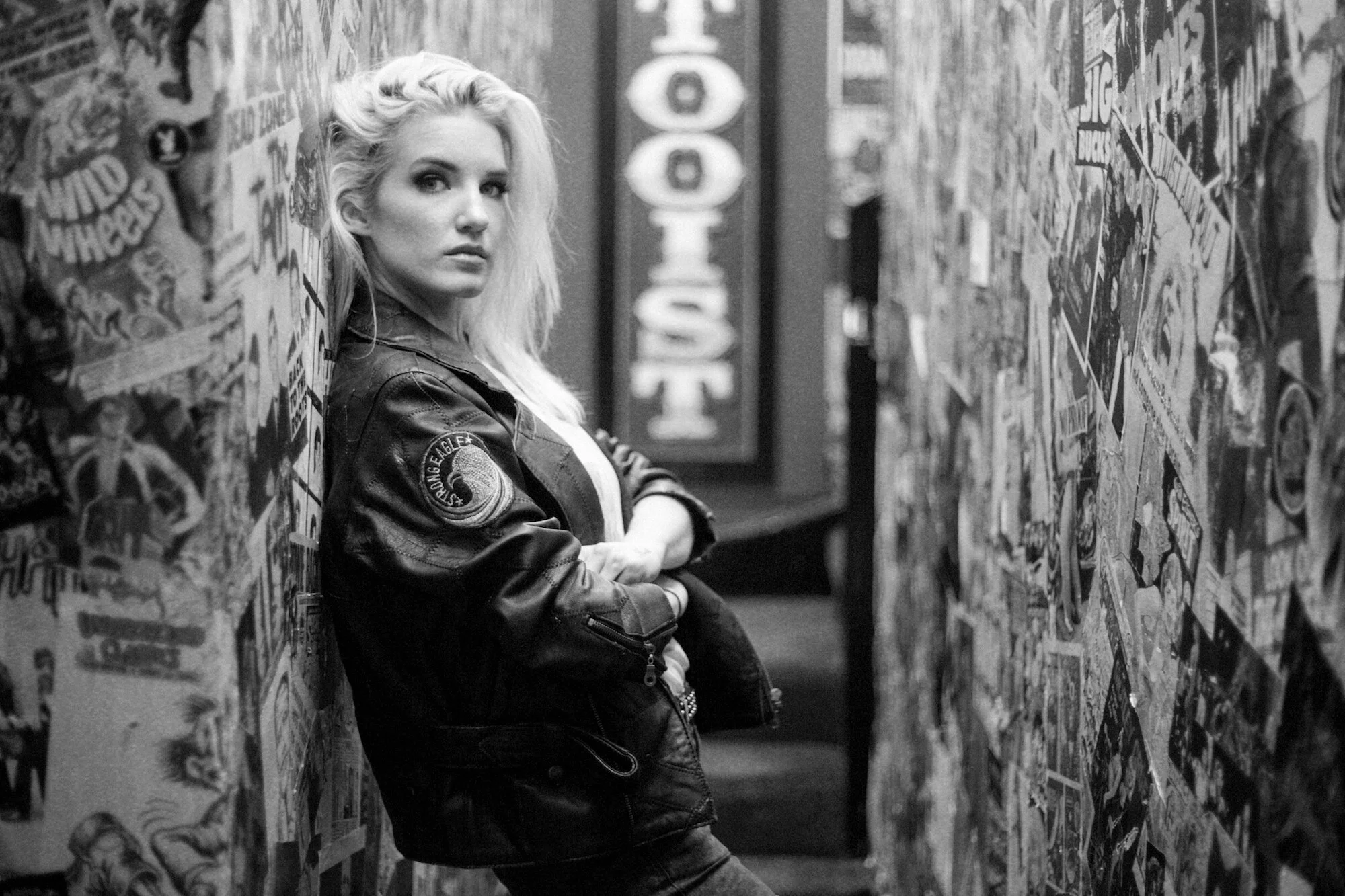
You are known as one of the first female pioneers and a fixed icon in the synthwave scene. “Beyond Memory” continues to be a strong staple in every synthwave playlist among “Automatic Call” and many others. Tell us what brought you to the ever-growing popular nostalgia genre?
I’m an 80’s baby, so I naturally love Pop Culture from that decade. I always liked the idea of reliving feelings from my childhood, while creating something new with my own music. When I lived in London, I noticed a retro-modern flare in the indie music scene that was very 80’s. This was somewhere between 2010 - 2015. It suited me, so I went with it and by the time “Beyond Memory” came out, this wonderful new genre called “Synthwave'' grew and the people of the scene embraced me. I have felt at home “ever synth” ;)
Who are your musical influences and heroes. Is there anything in particular (whether it’s a film, event, occasion, era) that has shaped your creative perspective and stylistic direction?
Freddie Mercury (Queen), because he’s larger than life. Jim Morrison (The Doors) for his lyrical oeuvre. John Carpenter for his iconic horror movie scores and Nena for her vocal talent and raw power. I love horror movies and I’m really into ghosts and the supernatural. I write a lot about longing for another reality whether it be past, present or future. All of this combined has helped shape my music.
Please share with us what your first full-length record, Sleepwalking, and your second full-length record, Synthian, are about. How have you grown creatively, emotionally and artistically between the two major offerings.
“Sleepwalking” explores love, betrayal, memories, breaking free, loyalty and the realm between reality and dreams. With the success of this record, I connected with so many amazing fans and I met so many great artists during my tours. This experience ultimately inspired my next record “Synthian”.
“Synthian” is a more immediate record. So, rather than writing a song about what has happened to me, I was writing about what was happening to me at the moment. For example I wrote “The Distance” as I was falling in love and “The Wire” is about the urgency of time and the importance of maintaining a meaningful connection. And of course the title track “Synthian” is a love note to my devoted fans.
Through all this experience, I’ve learned so much about music production and I’ve become a much better songwriter. I used to be a very shy artist but now I feel liberated and bold in my creative process. My new upcoming songs are more raw, hands-on and emotionally charged.
You recently turned a major chapter, struck out on your own and are now working independently. What direction do you see your music going into and what does the future hold for NINA?
Without getting too specific prematurely, I definitely think I’m going to take more creative risks and will experiment with new ideas. I’d like to challenge my own voice and sing in new ways. I’m working on a special collaboration project with Radio Wolf. It’s very cool. We’re messing around with all kinds of sounds. It’s electronic, it’s rock’n roll, it’s experimental. It’s fun to combine our mad brains. I’m also working on my third album aimed for a 2022 release.
What do you think is the future of synthwave and where it is going?
I honestly don't know. Everything is so unpredictable. But my hope is that it’ll have a long lifespan and grow, not just in reach but also in creative ideas. And as much as I love the 80’s, there are great musical ideas of every decade to explore.

What would you say is the most important thing about being a musician today and what continues to inspire you and drive you?
Keep creating! Make music because you love it, be true to yourself and hang in there.
I’m inspired by my collaborators. It’s special when creative worlds collide and marry into one. Stay connected; I look to my fans during tough times. They give me hope when I need it the most.
Do you have new releases coming soon? Please tell us about it.
I’m releasing a trilogy of new Singles this summer; produced by electro-rock auteur Radio Wolf and songwriting legend Ricky Wilde. For all the latest news, subscribe to my mailing list: www.iloveninamusic.com.
In 2019, we had the honor to experience the Automatic Gold tour with you and Parallels. And we know you still have the show scheduled with Ollie Wride coming up. Any tour plans slated for the future once it’s safer to travel again?
Yes, Ollie’s show is on December 5th and then I have a show in Berlin with Adam Is A Girl on Dec 18th. Then Hotline Bristol on June 4th 2022. There is another big Festival planned for late 2022, which I can’t announce just yet but it’ll be big. In the meantime, I’m gonna be spending a lot of time in the studio creating and when the time comes, I will launch a new and updated live experience.

Anything else you would like to share? Last words to your fans?
Keep burning bright, Synthians.
For more NINA and to keep updated with her new works, visit iloveninamusic.com
- December 2025
- November 2025
- October 2025
- September 2025
- August 2025
- July 2025
- June 2025
- May 2025
- April 2025
- March 2025
- February 2025
- January 2025
- December 2024
- November 2024
- October 2024
- September 2024
- August 2024
- July 2024
- June 2024
- May 2024
- April 2024
- March 2024
- February 2024
- January 2024
- December 2023
- November 2023
- October 2023
- September 2023
- August 2023
- July 2023
- June 2023
- May 2023
- April 2023
- March 2023
- February 2023
- January 2023
- December 2022
- November 2022
- October 2022
- September 2022
- August 2022
- July 2022
- June 2022
- May 2022
- April 2022
- March 2022
- December 2021
- November 2021
- October 2021
- September 2021
- August 2021
- July 2021
- June 2021
- May 2021
- April 2021
- March 2021
- February 2021
- January 2021
- December 2020
- November 2020
- October 2020
- September 2020
- August 2020
- July 2020
- June 2020