
ALPHA CHROME YAYO - Dead Air
Review by KIZUNAUT
Alpha Chrome Yayo is North Ireland’s brightest synth star who has been winning the hearts and minds of listeners far and near since 2018. His style is difficult to pin down, offering an absolutely unique mix of retrowave, jazz fusion, video game music, ambient and new age influences with a decent sprinkle of humor. More than a singular sound or style, his prolific output has been defined by his love of conceptual releases. He has made EPs and albums dedicated to lighter themes such as cooking and golf, but also themes such as ghosts and an (allegedly) true local legend of a “suburban sorceress”.
Dead Air continues his tradition of thematic releases, this time with a darker theme that is a perfect fit for the spooky season. Described as “brain-boiling radio waves, cathode ray nightmares and low poly panic“ on Bandcamp, Dead Air seems to draw equal amounts of influence from ghoulish media of the past and the newer art of analog horror, a faux-documentary style of horror storytelling building myths of lost broadcasts and unearthed tapes telling of terrible things.
Alpha Chrome Yayo has been historically talented at conjuring up very particular vibes for his releases, and Dead Air is not different. The occasionally cartoony, occasionally somber, sometimes hair raising, sometimes surreal vibe of the album is extremely unique. It feels at times like the UK concept of “video nasty” given life, a digitized homunculus of a cultural concept, retromancy of the best sort, music that looks into the past with a vision to articulate. Beyond finding fun, horror and strangeness in past media, there is perhaps also a bit of a subtheme of media addiction to it all. This sort of conceptual work in music is reminiscent of the vaporwave scene's best offerings.
The style of production is about as diverse as the music found on the album, offering a mix of digital neo-retro tunes, a few more atmospheric numbers and some murkier and stranger sound explorations. A halloween snack buffet of digi-synths populate the album, from the potent FM basslines and shrill beeps and clicks to video game sounds, hypnagogic synth pads, washes of digi-noise and bright keys. It’s all a fair bit more energetic, even danceable than some of his earlier, more ambient offerings.
Nevertheless, the production has a bit of a carefree, atmosphere-oriented vibe to it even at its hardest, though it’s not as lush or ambient as some of his earlier work. This isn’t for people looking for earth-shattering optimized kicks or eardrum bursting snares, but there is a kind of early 90s clarity to it all. The instruments feel very well placed in the sonic range most of the time and there is purity and precision to even the gnarliest of tones. Taken at its context, the production choices work well, but perhaps a production style that really embraced the analog horror aspect with a few sprinkles of tape hiss, VHS distortion and grave dust could have elevated the work even more.
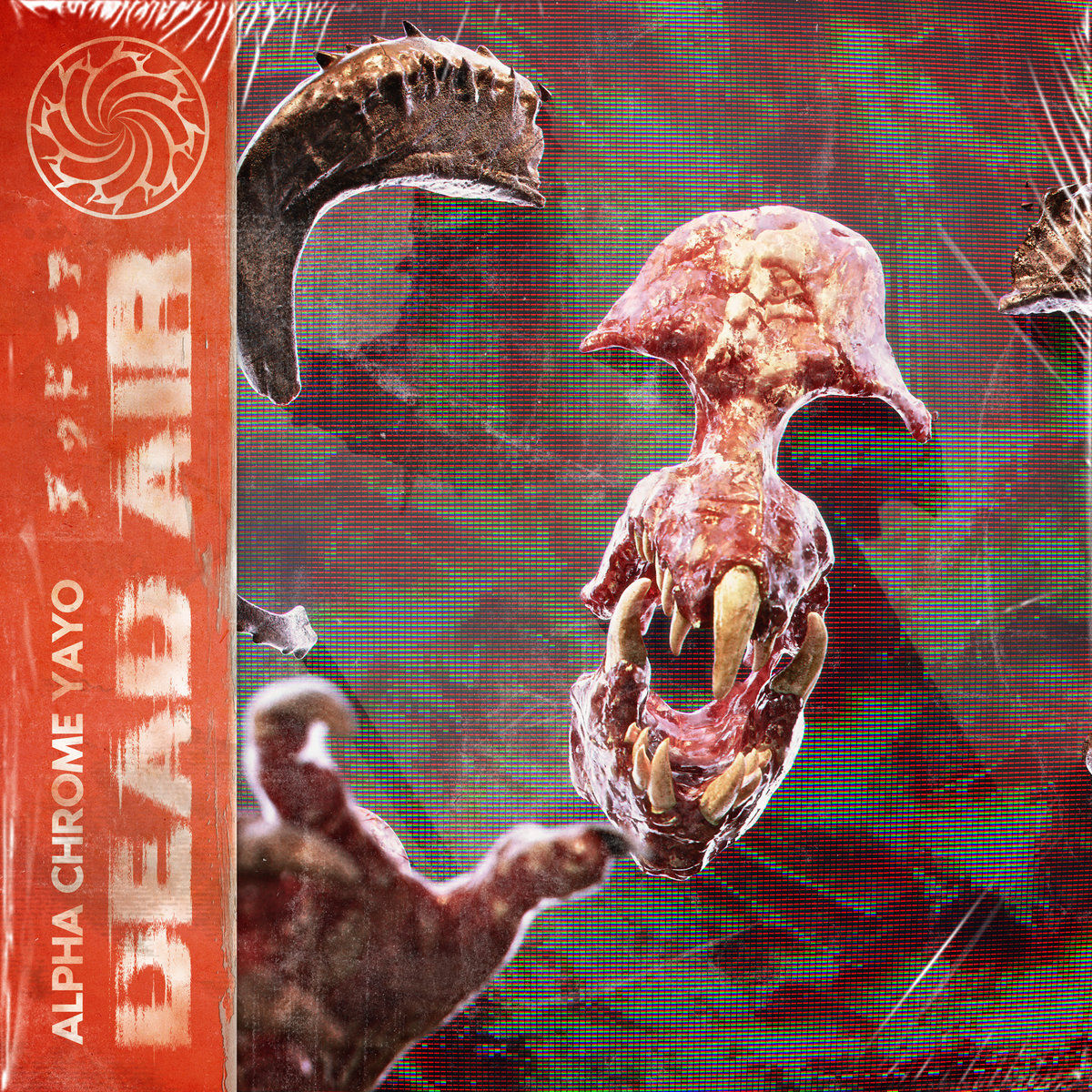
Alpha Chrome Yayo has had a knack for finding vibrant, unusual visuals for his music. The artwork for Dead Air isn’t as colorful as some of his other albums, featuring a demonic entity emerging from TV static, presented as a physical album cover wrapped in plastic. While there is nothing wrong with the artwork per sé, I feel like it doesn’t quite encapsulate the deliriously colorful range of music in the album, feeling a bit more like something fit for more traditional darksynth.
When it comes to the actual music on offer, the album has 18 tracks of ghosty and gobliny synth toe-tappers, creepy twisted city pop-infused weird-out pieces and unusual graverobbed adaptations of pre-existing songs with a couple of pieces sitting outside of these categories.
The album opens with Intro//The Sigil, a quick atmospheric burst of terror, before moving into the title track Dead Air. The title track offers a very satisfying mix of sinister churning basslines, a strange but addictive beepy synthline and a variety of creepy atmospheric synth lines, topped off with distorted voice samples talking about strange broadcasts.
Drowned in 120ft of Suffocating Static offers a strangely chill take on the digi-morbid subject matter, offering shimmering synth pads, swirly atmospherics and breathy vocoder lines over deep basslines and driving beats.
The next track Cathode Ray Chewed sounds almost like a piece of music from some kind of horror-themed Sega action game with it’s bouncy FM basslines and rad but ghoulish leads. Alpha Chrome Yayo also demonstrates his lead guitar chops on this track. A big favorite from the album and I wish it was longer!
Dissolver is a curious piece of hypnagogic horror pop, offering morbid vocoder lyrics over a rather relaxing instrumental of bright yet chill synths, passes of electric piano and a laid-back digital beat, an ode to rotting away in front of your TV.
The next song is first of the covers on offer, a reverb-drenched piano rendition of Franz Liszt's Liebesträume No. 3, here subtitled the Gut Machine, perhaps a nod to analog horror’s tendency of using twisted versions of past music as an element.
The next track, Bloodthirsty Little Imp picks up the pace and offers a mix of deep, groovy basslines, deranged arps, distorted spoken lyrics and straight up screaming over a nice house-influenced beat. One of my favorites from the album for it’s off kilter vibe and powerful energy.
Black Noise offers a mix of deep basslines, sad bells, a slow beat and a shrill lead, painting a mournful, serious atmosphere. Radio Smack lightens up the mood a bit with it’s fun mix of pulsing basslines, chiptune leads, groovy beats and Alpha Chrome Yayo rapping(!) about the titular radio smack. Both of these rank among my favorites from the album, for polar opposite reasons.
Tectonic March is a synth rendition of Pyotr Ilyich Tchaikovsky's Slavonic March, Op. 31, played on a variety of digital synths that make it sound straight out of the soundtrack of some archaic horror game.
Next comes Funeral In My Brain which is a performance of I Felt A Funeral in my Brain by Emily Dickinson, offering a very ambient piece dominated by hypnotic, swirly pads and vocoded lyrics that allude to an almost comic kind of horror.
P0rtcullis is almost more of a sound effect than a song, offering a rapid-fire chiptune transition into the next track. Coffin Full of Cables offers a fun, very videogame-esque mix of rapid arps, organs and melodies mournful and curious alike. It would not sound out of place in some kind of a halloween themed platformer. Another favorite from the album.
Shards offers a mix of bright, percussive keyboards and strange digital noises that sit somewhere between liquid and crystal, the whole painting a curious yet somber mood. Rhapsody in Black is is a reimagining of George Gershwin's Rhapsody in Blue, offering a mix of tectonic piano lines, creepy whistling sounds and chiming keyboards that paint the soundtrack of a black and white horror movie.
Bunker 47 is pure analog horror in it’s mix of sinister ambient sounds and computer generated dialogue between two characters, talking about power failures and the need to complete a ritual. The next track Last Transmission offers an uncanny juxtaposition of a kind of relaxed, jazzy instrumental with organs that occasionally slip into dissonance and a computerized voice spilling out gruesome lyrics. Notable for its inclusion of acoustic drums.
The Last Transmission is however not the last track of the album, as that honor belongs to The Black Broadcast. It offers a mix of driving rhythms, creepy arps, swirly pads, sharp keyboards and a thumping beat that goes into double-time during the latter half of the song. Breathy vocoded lyrics talk about flowing with electricity and seeing the future and the past. Sonically and thematically it feels like the album summed up, and it is a very fine way to end the album.
Dead Air offers a fun and varied mix of music for the Halloween season that however also has substance beyond the first bite. Some may find the very eclectic nature of the album off-putting, but for me, it created an atmosphere quite like nothing else. Alpha Chrome Yayo has shown himself to be once again an artist capable of conjuring up interesting, fresh concepts. For those not familiar with his work and who have an appetite for lost horror game soundtracks, errant broadcasts and exhumed video tapes, the album is well worth checking out.

MACHINA X - The Art Of Letting Go

Review by Jake Griffiths of Electrodrome FM
Denial. Anger. Bargaining. Depression. Acceptance. How we process our grief might be understood but it remains one of the most powerful and destructive emotional forces that human-beings encounter. MACHINA X’s EP release The Art of Letting Go goes deep into the feelings that drive us when we give up something we love.
In musical release terms at least, the Anglo-Burmese duo have had a comparatively quiet 2021, interrupted by events in Myanmar while they worked on an ‘all or nothing’ 2021 release. The Art of Letting Go is a 6-track EP, charting the emotional journey of loss.
The first thing you notice about this record is how far the Machina X sound has come since previous releases. Never ones to shy away from trying new things, the duo have always been genre-neutral, having expressed their music in forms from drum and bass to electro and even folk. Gone are the samples, multi-tempo experiments and different drum sounds. Here the sound may mutate across the tracks in speed and sometimes style, but it is fully consistent and has a real identity. The Machina X of late 2021 is a strong mix of crisp percussion, driving basslines and Annie’s beautiful, wrought vocals.
Intro track Prelude sets the tone perfectly before second track Fragile immediately lets you know what this record is intended to sound like - rolling, driving basslines that explode into a widescreen chorus with strings and sweeps that move all across the mix. It’s a gorgeous track and echoes the feel of Silent Now which comes later in the record.
Machina X released the track Belong To The Night as a single before the EP release. Sitting right in the middle of the record, it’s a heart-wrenching ballad with a dreamy, emotional vocal reminiscent of Kate Bush. It’s rightly been featured multiple times by the BBC Introducing team and is a pivotal moment in the EP, capturing so many of the main themes in one place.
This release brings Machina X a full step forward from being musical experimenters into having a sound of their own - pulling in elements of songwriting, electro and synthpop into something that emotionally resonates. The duo say it was a hard, draining record to make, both in terms of what was happening around them but also the subject matter. It was worth it.

For more Machina X, visit machina-x.bandcamp.com
THE LESS DEAD - It’s Alright

Review by Mike Templar
Gareth Perkins aka THE LESS DEAD was born in Northampton, England, but has spent most of his life in Japan. He has played bass and guitar since childhood and originally wrote a lot of folk. In the mid 00s he became interested in synthwave after hearing the great album Heritage by Collages. He started writing and recording music as a form of self-help: he found that he could process a lot of things that he couldn't say out loud through music (Editor’s note: I think this sounds familiar to many). That continues to be a strong motivator for him, but also knowing that it resonates with his listeners and they empathise has meaning for him. Gareth adds that this fosters a deep sense of connection, and that is something he always wants to be a part of.
I've been following his work for a while now and The Less Dead always surprises me with music that goes deep; big emotions and dreamy compositions as well as great vocals and lyrics.
His latest album It's Alright starts with a fresh breeze, like a new summer morning and dew is on the grasses, then everything becomes clearer - I imagine I'm on a morning walk on a hill and the sun is rising over an old town. This is how The Less Dead begins his musical journey with the track Just So You Now. He plays with subtle arps that start muted and then get brighter. The song is accompanied by a dreamy, distant guitar. Towards the end, a beautiful bell and string synths kick in before the song slowly fades out.
Just when I thought, oh wow, how can you top such an uplifting melody, the next song and title track It's Alright gave me the answer. It's the strong rays of the sun shining on you now, filling you with pure energy and light. When I first heard this song I got goosebumps, and I'm not exaggerating at all. Not only that, but I thought how the hell did Gareth managed to get Chris Martin from Coldplay to sing on his album :) Honestly, in my opinion this song has Coldplay quality, and I mean that in the best possible way. Of course it's not a copy, and The Less Dead has its own style, no question. The song plays with different pitched vocals that fit perfectly with the high energy of the song, while it is also accompanied by a nice percussion pattern, using wooden percussion instruments that work constantly and nicely in wide stereo. Without analyzing the whole song lyrics, I think that with the words "It's alright" he wants to motivate us not to take everything in life too seriously and to see things too doggedly, because we are only here for a short time anyway and all we can really do is understand each other and take care of each other.
The Ant Song plays a beautiful, distant piano melody while you can possibly hear trains and people running in the background. I imagine myself standing at the station waiting for the train, while I realize that I have noisy people around me who have forgotten that they are sentient beings. Modern slaves, so to speak.
Rumination continues with a single piano and a lot of white noise that makes the melodies very warm and cosy. The piano plays a nice melody and is accompanied by a soft synth pad. I can hear the piano keys being pressed, I assume this is a recording of a real piano. And if it's not, it's very well done and sounds very analogue. Later, the piano is replaced by a bell synthesizer before the beautiful melody fades out.
Translations is one of my favourite tracks, along with It's Alright. It plays with a dialogue between a woman and a man and then starts with a soft arp and a great synth melody before adding another dialogue. It's a dreamy and relaxing tune that I really enjoy listening to. Later the man asks "Where are you going?" and a new dialogue begins; I feel like the lines are from a film I can't identify, maybe you can.
The song All You starts with the lyrics "You Shine a light in my eyes", which brings me back to the impression and feeling I had from the beginning: the album is about the power of „light“. The song has a strong, almost medieval-like beat and plays with different high and distorted vocals that sound like a high and distorted guitar, but after each such part you can hear a breath. I think this song with all its elements is a very brilliant song that tells about insecurities or even a love story that ends with tears and unspoken truths.
No More Romance is the name of the next song and feels like a continuation of All You, conveying new hopes. It is an upbeat tune with comforting qualities.
Johnny Five is the penultimate song with a jangly guitar layered on top of a warm synth, complemented by beautiful synths and a pulsating bass. It is another dreamy track that I would love to listen to in the car while driving towards the sunset. At the end of the song, the analogue-sounding piano comes into play again, but this time it sounds almost like a honky-tonky piano and the song ends with a bit more white noise. I wondered about the song name, maybe Gareth is referring here to the film "Short Circuit" (1986), in which number five is later called "Johnny 5".
The album ends with the beautiful song The Forrest Of Time. This song again combines a piano with synthesizers and with a subtle choir in the background while a story is told. It's a beautiful story, but you should listen to it for yourself now. The Less Dead's new album is a dreamy album that tells beautiful and heartbreaking stories. If I were to guess, the overall story of this album is a new exciting romance that unfortunately fails because of illusions and unspoken truths about two people's past. But then when I look at the cover, it's not clear to me whether these are adult or children's stories, but where exactly is the difference anyway? Gareth uses clever instrumentation in all his songs and his compositions are all rock solid - he is certainly one of the best songwriters on the scene and continues to attract attention with great work.
For more The Less Dead, visit lessdead3.bandcamp.com
LET’S EAT GRANDMA - Hall Of Mirrors

Review by Jake Griffiths of Electrodrome FM
The name is the first thing that hits you. ‘Let’s Eat Grandma’ is a sentence used in grammar classes that highlights the importance of a well-placed comma, or a sentence which doesn’t include one at all. I’ll let you experiment, but it’s safe to say in Grandma’s case good grammar can save lives.
But there are some other things that really strike you about Rosa Walton and Jenny Hollingworth, the two members of Let’s Eat Grandma. At the age of just 19 they were releasing their second album, 2018’s critically acclaimed, summery synth driven ‘I’m All Ears’. Lead single Hot Pink was co-produced by SOPHIE with Faris Badwan of The Horrors, sending them flying high into synth artpop territory. It went on to win Album Of The Year at the Q Awards. Despite its airy, pop-driven feeling I’m All Ears is surprisingly complex, bringing in unusual song structures, meaningful lyrics and darker subject matter. Another single - Ava - is a heart-wrenching Lily Allen-esque piano ballad, and I’m All Ears finishes on a 11 minute banger called Donnie Darko which has also become a live favourite - what’s not to love about that.
Let’s Eat Grandma are at their best when their uplifting, fluent melodies meet introspective lyrics. New release Hall Of Mirrors is a prime example and an impressive return. Confident enough to mark their entry into 2021’s attention-low music releases with a track that is 5 minutes 11 seconds long, Hall of Mirrors has the same fluent feel to some of the band’s biggest tracks. The vocal is perfectly pitched, taking on big themes of global disorientation and detachment from your own sense of self alongside personal feelings of missing someone you love. And the instrumentation is all pulsing arpeggiators, floating background vocals that you can never quite catch up to and instinctive-feeling piano breaks. It’s beautifully written.
Pop music is forever fetishing youth, extracting its looks, energy and innocence for its own ends. Although Let’s Eat Grandma are definitely pop stars at the formative stage of their careers, they met at the age of four and have been described as inseparable teenagers. What you’re getting in their sound feels like two fresh pairs of eyes but two wise heads that have become fully accustomed to sharing deep themes and writing complex music together. Part of their uniqueness is the beautiful combination of intense honesty in their words and themes that feels like it could only be expressed between two genuine friends.
- December 2025
- November 2025
- October 2025
- September 2025
- August 2025
- July 2025
- June 2025
- May 2025
- April 2025
- March 2025
- February 2025
- January 2025
- December 2024
- November 2024
- October 2024
- September 2024
- August 2024
- July 2024
- June 2024
- May 2024
- April 2024
- March 2024
- February 2024
- January 2024
- December 2023
- November 2023
- October 2023
- September 2023
- August 2023
- July 2023
- June 2023
- May 2023
- April 2023
- March 2023
- February 2023
- January 2023
- December 2022
- November 2022
- October 2022
- September 2022
- August 2022
- July 2022
- June 2022
- May 2022
- April 2022
- March 2022
- December 2021
- November 2021
- October 2021
- September 2021
- August 2021
- July 2021
- June 2021
- May 2021
- April 2021
- March 2021
- February 2021
- January 2021
- December 2020
- November 2020
- October 2020
- September 2020
- August 2020
- July 2020
- June 2020