
NINA - I’ll Wait
Written by CZARINA
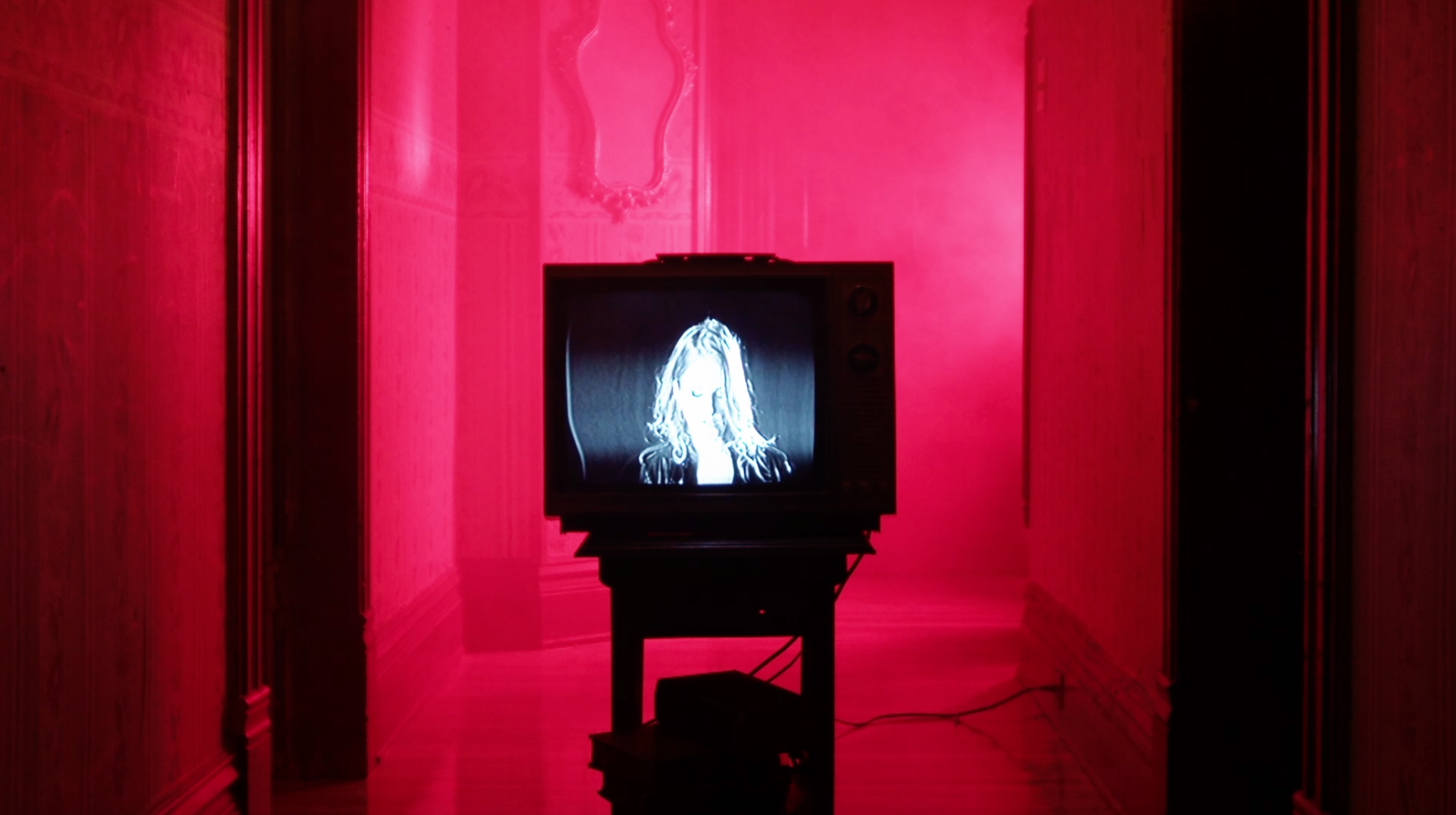
Berlin-based synthwave scene icon, Nina Boldt, more popularly and simply known as NINA, unveils high-drama single entitled "I'll Wait" which appears in an upcoming movie called "There's No Such Thing As Vampires," directed by Logan Thomas. The song was also written by the director and produced by Swedish synthwave artist, Oscillian.
The track starts off with Nina's signature effervescent, breathy vocals tinged with sighs of longing filtered thru a retro, tubed amp and glazing over a nuanced backdrop of haunting, cascading washes of arpeggiated synths. Thunderous tribal drums kick in to bolster the drama and provide contrasting weight to this airy and magnetic conceptual piece. Understated, low-key yet a very emotional production, it is always such a pleasure to watch Nina's artistic evolution in her new direction yet while still maintaining her beautifully nuanced approach to her sound that won the hearts of so many retrowave lovers across the globe.
The accompanying music video for “I’ll Wait” will be unveiled on December 3.
"I'll Wait" includes additional production by Greg Beaton, additional vocal performances by LAU and musical performances by Logan Thomas and Beaton. "There's No Such Thing As Vampires" releases December 12th in North America, Great Britain on VOD and BluRay.
For more info on NINA, visit www.iloveninamusic.com

EXCLUSIVE WORLD PREMIERE: “Dark Tides” by Honey Beard
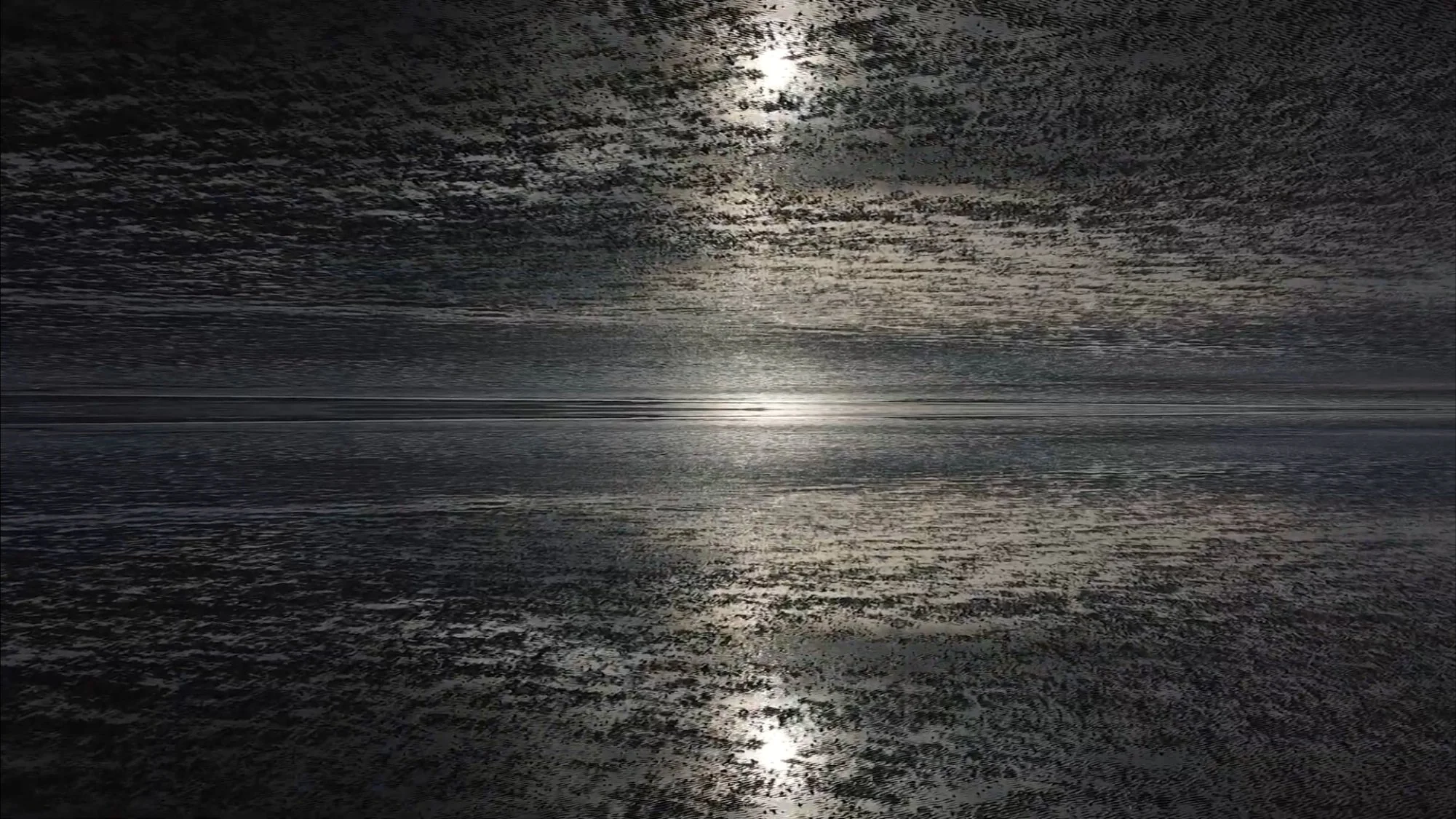
Canada-based, award-winning synth and electronic duo Gaz Conlon and Tom Bell, also known as HONEY BEARD, recently released their sophomore record, Oneiros, thru RetroReverbRecords. Contemporary and evolutionary synthpop for adults featuring lush cinematic arps, hard-thumping beats, emotive vocals and progressive songwriting structures, Oneiros is the latest installment of a long conceptual narrative that began in 2016. In the midst of the pandemic in 2020, Honey Beard first released the enigmatic track and visuals for Black Skies which also appears in Oneiros. Black Skies is the first half of a twin sister songs in Oneiros, with Dark Tides as the follow-up sequel which we have the honor to premiere the complimenting visuals for. In his own words, Gaz describes the band’s sentiments in the creation of their new music video (created and directed by DME Photography) and how it circles back to the on-going themes throughout all Honey Beard records, including Oneiros.
“ Dark Tides bares a theme repeated many times over in each Honey Beard release. But for Oneiros, both Dark Tides and Black Skies are the condensed representation of the themes of anguish, dread, sorrow and despair which can be found in other Honey Beard tracks such as Hummingbird, Momento Mori, Dancing Alone, and Electromorphosis. Dark Tides paints an image of the two natural forces we wake up to every day which also define the universe from our fleshy eye, the bottomless sky and the unending land beneath. In the music video, Dark Tides evokes being in between these defining wonders, the pressures of what each represent to someone and how they squeeze the protagonist’s existence into a fine line that cannot be seen and only defined by the very pressures destroying it. Dark Tides, in the literal sense makes dark stormy waters a metaphor for the dread and foreboding a person may feel, pushing him out to this horizon (as recalled in the track, Like A Fire). It’s a prelude to how Black Skies, a metaphor for depression and self-harm, manifests to bare down upon the mind, subjugating it and obliterating it; Ultimately it’s a sense of despair, culminating into a calm surrender.
In the video, another person is a proxy for this despair (as I act as the protagonist in the other videos) as he has lost the love of his life and goes through the same struggle. Some of the imagery is a mirrored effect and creates an artificial horizon — a sense of otherworldliness, almost like a Space Odyssey 2001 ending as reality is folded, over and over again. The shore line and waves are always a certain death and they call to me and to the protagonist like the mythological Sirens called to Ulysses — just like Oceanus, the edge of Hades.
Water and fire are a consistent theme in all Honey Beard songs. Water represents destruction and fire represents rebirth. ‘Oneiros’ is basically a decision between two eventualities. After drowning himself, the protagonist does not die but enters a dream state in his coma. He discovers he has a choice to live (Lighthouse) or to continue to die (Slipstream of a Daydream), and the album tries to reconcile over that. And Dark Tides / Black Skies is what brings us to this situation. (I’ve always wondered about folks who take their life, in that split second before dying, if their life flashed before them and given the choice again would would they continue or not). I’ve also been haunted by an image in my head since my late teens that I see in daydreams but have also dreamt many times. In the video, the POV is looking directly out at a massive lake with mountains flanked either side. The water is usually always clear and still (loads of dark greens, dark blues). There is a very small island directly in the centre line of sight, only big enough for some bushes and one tree, just a little out from the land bank, of which is more like soil, the same texture of a mountain or a bog and not a beach or lake. This feels to me like my home, Ireland. The strange thing is that the lake looks like it goes out to a larger sea in the background, but it doesn’t make sense due to the elevation of the mountains. That image has informed my writing. In some dreams it’s pure horror; others it’s lovely. I feel like I’ve died in it or will die.”

Gaz and Tom of Honey Beard will appear along with synthwave juggernaut Michael Oakley (who did the mixing and mastering of Oneiros) in the upcoming ABSYNTH Episode 10 video podcast on Friday Nov 26th, hosted by CZARINA and Thorisson.
Make sure to tune in on twitch.tv/staticrealmsmusic
For more Honey Beard, visit honeybeardband.bandcamp.com

OPEN SYNTHWAVE

Written By Life Patterns and Jonny Fallout [Photo: by Joseph Pearson on Unsplash]
On Music, Openness, and Innovation
Music innovation is moving at a fever pace — whether it’s the evolution of delivery systems, the software for creating music, or the business models that are being broken even as they’re being made. In fact, music may be the creative industry most disrupted by the digital revolution. We have tremendous power, as artists, at our fingertips now from DAWs to software instruments from distribution platforms to media channels. But the ways in which we work are often still stuck in the 20th century. This is not unusual, of course. It takes a long time for industries to adopt new tools and ways of thinking. And, we’re in the middle of music industry upheaval.
So, where do we go to discover new ways of thinking and working? A familiar quote from cyberpunk godfather William Gibson, is that “the future is already here, it’s just not evenly distributed.” Cross-pollination is a powerful technique for stimulating innovation — taking ideas from one area of creative endeavor and applying them to others. In borrowing techniques from other industries, we can reap their benefits. And one of the most powerful ideas driving innovation in software, science, and a host of others is open source. Open work can speed creation. Sharing can generate not just new ideas but also build community.
So, what does it mean to be open? In the world of software, open source means that the underlying code is available to modify, build upon, and share freely. For instance, the foundational tech protocols that underpin the Web, like HTTP, are open source. In the practice of open science, knowledge, from data to materials to code, is shared through collaborative networks with the purpose of improving the efficiency and increasing the reproducibility of scientific research. Game developers have long understood the power in open development, baring the creative process for all to see. John Carmack used an early Internet protocol to share a daily log of tasks, along with snippets of code, opinion pieces and observations. Complete archives are available online to this day, including on GitHub. Crowdfunded games like Broken Age had notoriously open development cycles, with fans being given access to regular updates and insight into the process.
Opensource.com discusses the open approach to creative work in this way:
“The term originated in the context of software development to designate a specific approach to creating computer programs. Today, however, "open source" designates a broader set of values—what we call "the open source way." Open source projects, products, or initiatives embrace and celebrate principles of open exchange, collaborative participation, rapid prototyping, transparency, meritocracy, and community-oriented development.”
In a lot of important ways, music already has the underpinnings of open source: the melodies, the traditions, the theory, the culture are all part of a framework, an expansive vocabulary that we build on as our starting point. In retrowave and related genres, that vocabulary also includes the sounds, riffs, musical references and atmosphere of the ‘80s.
We can see elements of openness across the music industry, particularly in remixes, mashups, and sampling that permeates dance music and hip hop culture. For example, in 2015, Converse (yes, the famed sneaker company) introduced Rubber Tracks Sample Library — no cost, royalty free loops recorded by various bands and musicians at their Brooklyn, NY studio — and encouraged artists to build the loops into songs. Well-known electronic acts like RJD2 and Com Truise as well as a host of producers, DJs, and electronic musicians participated in the project, which while clearly a marketing effort for Converse, was also an interesting experiment in community building and collaborative digital music making.
Artists across genres have incorporated open practice into their music to build community. Trent Reznor famously made the tracks and stems for his Nine Inch Nails album, “The Slip” and “Year Zero” available for other artists to remix under the Creative Commons Attribution-NonCommercial-ShareAlike 3.0 United States (CC BY-NC-SA 3.0 US) license. Premiere synthwave band, The Midnight, offers stems of their songs for use in remixes, in a non-commercial context. And, Berlin-based indie synthwave artist, Neon Deflector, publishes his music under the Creative Commons Attribution 4.0 International (CC BY 4.0) license which allows other artists to share and adapt his tracks, like this one, “Outpost X”, for any purpose, even commercially, as long as the appropriate credit is given. “Once you create something original, that work is automatically protected by law. By using a Creative Commons license, you don't take away your legal rights or ownership — it remains your property. However, with a license, you can grant permissions to use the intellectual property in specific ways,” Neon Deflector explains.

Trent Reznor made the tracks and stems for his Nine Inch Nails album, “The Slip” available to remix under a Creative Commons license.
Neon Deflector describes some of the reasons he releases his music with an open license and the reach it has given him: “My songs have been used in a variety of ways so far. It's a wonderful feeling to listen to your own sounds in a big SpaceX documentary, as background music to discussions about meme origins, or even in videos about sports cars and urban buildings around the world. The songs thus gain a dimension that I could never have achieved myself. I regularly get comments and positive feedback on my music because someone in this world has used it in the context of their video,” he says.
“I think that above all, you should be aware that once a license has been granted, it cannot be taken back. So if the next movie blockbuster makes millions while your music is playing — don't get angry about it (not that that would ever be a real scenario for me...), but enjoy the reach you achieved.”
“Overall, my music — no matter how it is licensed and used — will always be my music. It's my feelings, my thoughts and it's my work. If a license helps me reach more listeners and gives the songs a life of their own — then that's an asset I love.”
Open Synthwave Concepts
The underpinnings of openness are already present in digital music and culture, but to build new ways of working that extend beyond experimentation into common practice, we’ll need to draw upon and build on the tenets that support open source in other fields.
Open source is powerful because:
It’s distributed and easy to find
It’s battle-tested by thousands, sometimes millions of people
It’s constantly revised and improved upon by the people that use it the most
It can be copied, changed, re-shaped and re-shared by anyone
Open synthwave, then, would operate by sharing both the accumulated knowledge of processes and tools, and the building blocks that can be reused, re-shaped.
Sharing Your Knowledge
Musicians love to talk about their craft. Ask anyone that’s ever approached one with questions about their process, gear or software. However, the ways in which this knowledge is shared tend to be either ad-hoc or monetized. There’s nothing inherently wrong with either approach, but they don’t lend themselves to the type of collaboration that thrives in software development.
So, how do you share that knowledge? Social media is a powerful tool for engaging with peers in a public forum. Knowledge is accrued and spread in that fashion. But, this presents a few issues.
First, searching social media for previously asked questions/answers is cumbersome at best, impossible at worst. In the field of software development, there are entire platforms, like Stack Overflow, dedicated to facilitating the transfer of knowledge in a way that’s accessible at a later date. It’s a difficult problem with difficult and often imperfect solutions.
Second, it becomes hard to build on that knowledge because it is ephemeral and formless. The creation of an album is an incredible journey. It can be personal, difficult, full of triumphs and letdowns, moments of inspiration alongside periods of creative drought. Musicians tend to share bits and pieces of that process, be it snippets of WIP music, threads about a particular revelation that made a song “click”, or even how they walked away from music altogether for a few days to watch movies, cook, play video games.
These flashes of insight are wonderful. They help you understand the person behind the music, which in turn contextualizes the music and enhances it. But they are only flashes. Try to put them together to get a clear picture of the journey that leads to the final album you hold in your proverbial hands and you might feel like the protagonist from Memento, lost in a sea of disconnected symbols.
Today, it’s increasingly common for games to be sold while they’re being actively worked on, with user feedback being incorporated and shaping the end product. Why not a similar approach to music making? Imagine your favorite band making an album available to listen to before it is finished. Imagine being able to follow the process right from the start, from the creative spark that sets the work in motion. This is why making-ofs are popular: people want to see into that process. Even if they aren’t artists themselves, they gain immense insight into the art and the creative process. The artist is humanized and their artwork is further enriched.
At least one artist in the retrowave scene has taken these lessons to heart. Opus Science Collective has been releasing music since 2016. But that’s not all he’s been doing. He also keeps a blog where he writes at length about various topics, ranging from his experiences with hardware or software from his “toy box” to deep dives into the processes and motivations behind specific albums. These posts are a veritable gold mine for fellow music producers and a fine example of openness within the community.
Whether you follow this example, that of game developers all over the world, or even that of artists like Alpha Chrome Yayo and C Z A R I N A, who pepper their Twitter feeds with snapshots from the quieter and happier moments of their lives, there is no denying the power of open, honest connection.
Sharing Your Music
Talking the talk, sharing knowledge and experience is one thing, but what of the music itself? Technology used for creating music tends to be close-sourced. DAWs save projects in proprietary formats. Patches for VSTs or synths also tend to be incompatible with each other, with notable exceptions such as SysEx. Fortunately, the building blocks of music are the exact opposite. Sound clips are playable and malleable anywhere and MIDI is as good and reliable a standard as any.
But, how are open source projects, and the potentially endless spin-offs that can be generated from each one, kept under control? In a truly open project, anyone can look at it, copy it, and change it. For open source software, version control is the answer. It’s a system for keeping tabs on changes to a set of files. Changes are bundled together with a description and they’re automatically assigned a reference number and a timestamp. This creates a permanent log of all changes, since the beginning of that project’s lifetime. Want to spin it into a new project? Pick a point in time and those files are yours to change independently.
How many times have you saved projects with increasingly ridiculous names (“song_final_mix”, “song_final_mix_really_2”, “song_final_mix_really_2_BEST_KICK_5”)? Instead, imagine logging your changes, and writing up notes for future reference.
If this sounds overly technical, that’s understandable. There’s a learning curve to version control. Companies like GitHub and GitLab offer nice, easy (easier) to use interfaces with which to perform these operations, but it requires discipline and effort. However, there’s at least one solution out there tailored for musicians.
Splice is known more for its catalog of samples and rent-to-own model, but they offer up an intriguing solution for version control and collaboration between artists that doesn’t get enough attention. In their own words:
“Splice Studio allows producers to easily collaborate with friends around the world while also backing up their music projects using our free and unlimited storage.”
Here is a decidedly closed source, proprietary platform offering services that make your music more open. Everything stays within the Splice walled garden and freedom is traded for convenience and ease of use. The world of software development is filled with these contradictions, with some of the largest open source projects being driven by companies like Facebook or Google.
No Song Is Ever Done
Open source projects are never finished. They are always iterated upon, improved, updated to keep up with requests, new hardware and software revisions. Music, on the other hand, tends to have an end goal: the song or collection of songs is produced, mixed, mastered and ultimately released. What if music was handled like software? This already happens to a degree. Artists will share snippets of upcoming tracks (alpha), then drop a single (beta), then the full release (version 1.0), then remixes (1.1, 1.2…), then the remaster (2.0). Armenian-german producer Chorchill recently released Kolonie Refonte in which he remixes an earlier release and states his motivation for doing this quite simply but powerfully: “I started working on those tracks again and to be honest, I don't know why. Somehow I wasn't finished.”
Star Wars is perhaps the most famous (and infamous) example of this sort of iterative mindset in 20th-century pop culture. Whatever your feelings are on the changes made by George Lucas over the decades to his beloved franchise, you have to admire the dedication to realizing and perfecting a vision. It’s only unfortunate that there’s been little care with preserving and continuing to make available previous versions of those movies.
This appears to be a familiar feeling among artists. A release is no more than a snapshot of a body of work at a certain point in time, considered “finished”. It would be interesting to extend the open approach to releases, complete with release notes for updates. The thought of releasing something unfinished may appear daunting and counterproductive, but seeing a song or album grow as the artist shapes it might be entertaining, instructive, inspiring. Again, this is something many artists do to an extent, albeit in a scattered fashion.
The thought of releasing something unfinished may appear daunting and counterproductive, but seeing a song or album grow as the artist shapes it might be entertaining, instructive, inspiring.
How Do I Get Involved?
There are so many ways to get started with open practice. One of the most powerful ways is to offer up an existing project that you’ve worked on to the community. Depending on the degree of openness you wish to pursue, you might consider sharing your projects (stems, MIDI, etc.) under an OS license like Creative Commons, which gives you the option of making content available for use in a non-commercial or commercial context and allows you to fine tune how derivative works can be shared.
The possibilities for experimentation in open practice are seemingly endless. You might consider creating your next project in an open fashion, sharing updates to each track as they’re produced. Or you could contribute to another artist’s open project.

[Photo: by James Owen on Unsplash]
This is where the power of open practice is only just beginning. Community is the driver of open source, and a successful community built around a project generates momentum. You can imagine an open spacewave project, constantly evolving as different artists contribute tracks, or stems or patches.
What are the benefits from open collaboration? We’ve hardly scratched the surface of what’s possible musically, given the technological tools available. We’re in a long period of transformation and transition, still incorporating the models of a previous century into the new digital realm. During the second industrial revolution, it took factories decades to change from a centralized model where one steam driven engine powered the entire operation, to a distributed model of smaller electric engines powering specific tasks throughout the factory. New technology, in this case the electric engine, required a different kind of workflow and a different perspective on how work could be accomplished. We are at much the same place, today, in the music industry, with a range of digital technologies and platforms coupled to deprecated ways of thinking. Is open practice the answer? It could be a part of it. And, for indie musicians, it could be worth finding out.
If the past year and a half of pandemic has shown us anything, it’s that we’re better together, even when we’re apart. We’re ready and able to collaborate digitally, at a distance and as a part of a community. This is a powerful moment for musical creation, and the right moment for building on the ideas and ideals of open source and open collaboration in music.
About the Authors

Life Patterns works as a software engineer from his home in Lisboa, Portugal, making music whenever he can find the time. His sophomore album, Bedroom Days, will be out soon. His other releases are available on Bandcamp.
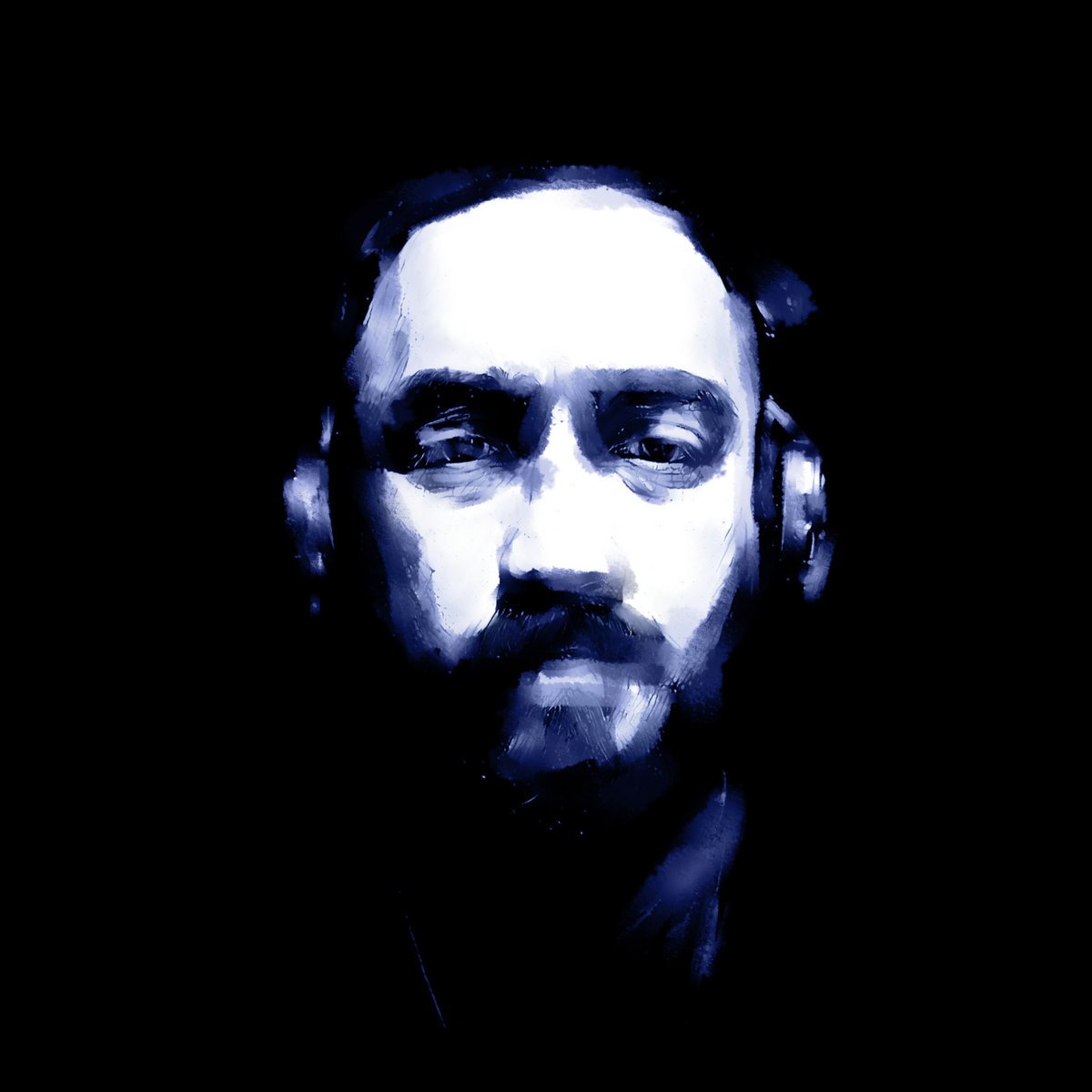
Jonny Fallout has written articles for various tech magazines, several non-fiction books on innovation, design and technology, as well as music reviews for the Boston Phoenix and Film Score Monthly. His new album, Cybetherial, is now available on Bandcamp.
CAT TEMPER - Furbidden Planet

Review by Mike Templar
CAT TEMPER is the solo project of Boston, Massachusetts "meowsician" Mike Langlie. Mike has played several styles of music over the years including synthpunk, gothic and industrial. Some of his bands were known for causing chaos at small clubs that rarely asked them to come back.
His longest running project Twink The Toy Piano Band defined the toytronica genre and could be heard in many TV shows in the US on networks like MTV, Comedy Central and Nickelodeon. He has collaborated with many musicians, including Fred Schneider of The B-52s for an album of punk style covers of novelty songs made famous on the legendary Dr. Demento radio show.
In 2019 Mike debuted his latest project Cat Temper mixing retro synthpop, electro, hair metal and even 8-bit video-game sounds into a wild mélange he calls "meowave." In just a few years he's released 9 albums exploring concepts such as an imaginary 1980s sci-fi soundtrack (Digital Soul), a tribute to one of his musical inspirations Nine Inch Nails (Kitty Hate Machine) and a full re-score of his favourite David Lynch film Eraserhead: “Henry: An Electronic Soundtrack to Eraserhead".
His latest album Furbidden Planet is described as an instrumental audio adventure following two brave catstronauts across the galaxy as they investigate a meow-sterious signal from the depths of space. What they discover changes everything for all felinekind.
The album begins with dreamy synth strings and, one could almost say, harmonic catcalls before a pulsating bass kicks in and rhythmic melodies begin. The song Catstronauts Are Go is a fantastic adventure that perfectly covers the cinematic theme of the album and would fit into the album movie of the same name. It is very varied and contains different melodies and sounds and yet it is a beautiful composition from one cast. From the first track it becomes clear that the album is very much in the realm of spacewave - I look forward to listening further.
The next song, Vapour Tails, starts with spherical sounds familiar from 70s science fiction feature films and is a mysterious journey through the dark corners of space where all sorts of stray cats lurk. This is the image I get when listening to the slightly ominous chords in the background and the roaring bass, which is punctuated by a hopeful rising and falling melody and some chiptune elements.
Telepurrtation comes with tinny synths and a mysterious and whistling synthesiser and melodies that slowly evolve through the piece while probably our two Catstronauts look around the desert for the Meowndalorian one could conclude!

Impossible Artifacts is a fast track with typical 80s drums that starts metal-like and then later opens up with an airy synth. Again, the different parts of the song are excellently intertwined and the chosen spacey synthesizers complement each other perfectly before the track fades out with a delay effect.
Continuing with one of my favourites, A Meowsage From Space, the song also begins with what I consider typical 70s science fiction sounds while a repetitive one-note bass slowly kicks in and is then joined by dark sounds in the background before the solo melody kicks in, which includes a note off the scale (I think…), enhancing the rather dreadful mood of the song. At times, a deep male chorus enters. Later, a heavily distorted guitar joins in. The piece contains no percussion and could hold up for any suspense buildup in a horror movie. Maybe Cat Temper will put the movie The Thing (1982) to music again, like he did with Eraserhead…!
Space Oddkitty is a dance-like song with Linn drums, if I'm not mistaken, that Cat Temper uses from time to time. There are spacey synths in use here as well, and the element of an opening synth playing an airy melody in the background. Absolutely great spacewave music with a lot of detail work.
The songs Cataclysm perfectly follows the previous one, as if it were a continuation of the story before it. Here, too, synthesiser sounds are used, which could have come from science fiction anime series from the 70s. Another proof of a sophisticated sound choice of this album. The song has a key change in the later course, which leads to the conclusion of the song.
The Anomewly is also a rather darkwavey song with strong bass and brass synths interspersed with a bright string synth that features a questioning melody. Later, bubbling water sounds and a scrubbing synth come in while a metal guitar plucks rhythmic chords.
Because of the next song Changing Purrception it becomes clear that Cat Temper uses percussion very purposefully and also lets songs run without intervening with drums at any time. A little later a fast catchy beat starts and a chiptune melody is added that is decorated with laser-like noises.
The last song A Mew Beginning has Stranger-Things-quality to it and probably points to a continuation of the story of our two Catstronauts? It's a nice slow synth ballad that also features a key change and brings the album to a questioning close.
Cat Temper never fails to make a cross reference to cats when naming his songs and albums; such is the case with the space odyssey Furbidden Planet. The album shines with excellent compositions, great synthesiser choices, with exciting changes in the tracks and tension generation. The album could very well be used for an anime science fiction series and joins the crowd of great albums by Cat Temper, but in my opinion the first that can prove itself as skilful spacewave and this Cat Temper has shown with bravura.
For more Cat Temper, visit cattemper.com
- December 2025
- November 2025
- October 2025
- September 2025
- August 2025
- July 2025
- June 2025
- May 2025
- April 2025
- March 2025
- February 2025
- January 2025
- December 2024
- November 2024
- October 2024
- September 2024
- August 2024
- July 2024
- June 2024
- May 2024
- April 2024
- March 2024
- February 2024
- January 2024
- December 2023
- November 2023
- October 2023
- September 2023
- August 2023
- July 2023
- June 2023
- May 2023
- April 2023
- March 2023
- February 2023
- January 2023
- December 2022
- November 2022
- October 2022
- September 2022
- August 2022
- July 2022
- June 2022
- May 2022
- April 2022
- March 2022
- December 2021
- November 2021
- October 2021
- September 2021
- August 2021
- July 2021
- June 2021
- May 2021
- April 2021
- March 2021
- February 2021
- January 2021
- December 2020
- November 2020
- October 2020
- September 2020
- August 2020
- July 2020
- June 2020