
Kidburn - Fooled By The Rush Of Growing Up

Review by Karl Magi
Overall Album Impressions
Kidburn’s Fooled By The Rush Of Growing Up delves deeply into loss, memory and love through the artist's powerful vocal performances, lyrics that exude moving emotion and instrumental performances that intensify and deepen the mingled affection and nostalgia permeating the music. The guest contributors all add to the emotive strength of the album as it unfolds.
At the heart of Fooled By The Rush Of Growing Up is a nexus between Kidburn’s galvanizing vocal abilities and the effort he pours into his songwriting. His voice is flexible, sweeping from trembling melancholy to ferocious love as it moves through the music. The fact that the artist also writes lyrics that are engaging and permeate me with gripping feeling adds to the overall breadth and depth of the musical experience.
The combination of synth, guitar and saxophone onFooled By The Rush Of Growing Up weaves instrumental magic. Both the guitar and the saxophone solos are soulful and full of intense emotion as they express the sensations that fill the music. The melodies are achingly beautiful, capturing the essence of the album, while the synth adds a plethora of tones, timbres and textures, giving the music lush sonic complexity.
I also want to mention the guest artists who have worked with Kidburn on this album. Each of them contributes their own vision of the music while remaining true to the overall emotional tenor and sonic signature of the record. The end result is an album that pours out feeling with unadulterated strength and richness.
My Favourite Songs Analyzed
“The Magic Pond” begins as a sax echoes distantly, full of piercing poignancy, while the huge bass trembles and chimes flash with warm radiance. The low end undulates with silky motion before the track slides back into silence, providing a dreamy introduction to the album.
Massive drums reverberate and warm notes wash smoothly through the music as “Dreams” begins. Rich bass flows underneath and Max Cruise’s impassioned sax weeps with reedy strength. The sax melody is tinged with melancholy and now Kidburn's intense voice fills the music as it carries the enfolding melody.
Underneath the other musical elements, the bass pulsates with a smooth undulation, as the drums keep throbbing and Kidburn's silky voice wraps around my ears. Medium-high synth sails with a caressing feeling while the vocals ache with need.
The drums also have a colossal presence underneath everything. The vocal melody contains deep sentiments above the robust low end, the chorus soaring out with palpable feeling. I enjoy the tenderness in this music as it unfolds.
Max Cruise’s sax solo flies out with a mixture of pain, desire and intense expression above the pulsating bass as gigantic drums propel the music forward. Trembling vocals call out above the flaring synth and swirling bass. Again the saxophone fills the music with heartfelt strength before the song ends.
Our storyteller tells the song's subject not to cry but just to open up their eyes. He goes on to say “there's a new love that's coming into your life.” He points out that when they said goodbye, he tried to forget about the other person but now he says "this time I'm going to make you mine.”
The narrator adds that he was running against the wind and trying to “reach for you in my dreams.” He saw the other person's face as they stood in the rain and he found himself falling in love all over again. He goes on to say that " I know someday you'll find your way” and that their memory will stay in his heart.
Our storyteller wants to win back the song subject's love. He continues by asking " baby let me be the one " but points out that the other person's heart is made of stone because when they're gone he's still running against the wind and trying to reach for them in their dreams.
“Written In The Sky” starts as a shining synth bursts with brilliance in an elegiac melody above massive drums and scudding bass. Kidburn’s touching voice carries a melody mingling memory, loss and desire.
Low end oscillation shapes the music while a resonant synth vibrates as giant drums continue to throb powerfully. Kidburn’s vocals are rich with need and a dreamy feeling a s the radiant synth light suffuses the song. Guitar cries out to touch the yearning synth as the low end pulsates on.
The vocal melody is a mixture of hope and intense passion as guitar leaps through the track. Kidburn’s voice trembles with feeling as the chorus soars up. The drums have a powerful shaping influence and the guitar solo combines heartbreak with howling energy.
Hi hat skitters and the guitar sings out with a penetrating feeling and the low end throbs. The vocals are deeply felt and the flashing synth sings a melody with an aspirational feeling as the song ends.
Our storyteller is alone with the song’s subject and their bodies burn for one another as “you turn on the lights, you kill me with that smile.” As they take off their jeans, there’s “the sweet taste of fear” and he drowns in the other person’s eyes. The song’s subject trembles in his embrace as “we surrender to the spark of desire in the dark.”
The narrator reminds the other person that they only have that night and it won't last forever. He asks them to take his hand, adding that "sometimes it's now or never.” He says that it's hard to understand feelings deep inside and concludes that "baby, tonight was written in the sky."
Our storyteller says that now he and the song’s subject "stare at each other in silence, waiting for the words." He tells the other person that they'll always be the love of his life. He whispers "the words you love to hear” in the other person's ears and says that his "broken heart’s been set on fire.”
The guitar cries out with tenderness and memory as the piano and synth add slip steadily to commence “Wind of Lies”. The jazz organ suffuses the song with gentle light as Kidburn’s voice carries the painfully pining melody. The sensitivity and emotional weight of the lyrics and vocal performance come together to touch my heart.
Kidburn’s voice climbs with passionate power and the drums rebound as the chorus cries out, full of emptiness and desolation. The backing synth gleams and adds luminosity while the drums and bass throb together and the vocals surge with heartbreak. As the chorus rebounds, a radiant synth carries tragic feelings.
The saxophone calls out again, ripping with ardent wanting and loss, rising above the hard-hitting percussion. The guitar solo burns with lost love as the interwoven notes tumble and float, dancing above the low end with muscled strength. Kidburn unleashes his vivid voice as the chorus rings out and the track pulses to an end.
The narrator wonders if, when he and the song’s subject said goodbye on a winter night, it was fate or “the mystery of life.” They met up beside the river while the “wind of lies was blowing straight into our eyes,” and because they were “victims of our silly ways,” they didn’t learn from their mistakes and for reasons he can’t explain, “I didn’t hesitate a minute to say goodbye.”
Our storyteller lets the song’s subject know that if they let him go, “everything I was before, I can’t be anymore.” He points out that it’s no one’s fault, but the other person is better off “in someone else’s arms.” He adds that the other person waited “so long for love that’s gone.”
As the song concludes, the narrator says that he has to turn away and cry when he should be at the other person’s side. He finishes, “we broke up near the river while the wind of lies was blowing straight into our eyes.”
“The Beach of Tears” begins as a placid synth adds a lambent glow. Tightly glistening notes wander dreamily as the drums tick slightly. An illuminating synth spills as the heavy drumbeat shapes the music and crystal chimes flicker delicately.
Kidburn’s voice exudes potent sensations, delivering the aching memory reflected in the lyrics. The drumbeat continues to thud heavily as the vocals flow with poignancy. The guitar deepens the emotional punch of the words and Kidburn takes hold of me with his gripping vocal performance.
The shining notes flash as sparkling synth levitates above the strong low end. The vocals pour out engaging feelings as the solid bass guides the music. Kidburn has the ability to draw the listener into the song’s storytelling with his first-rate voice.
The guitar snarls with added muscle while the fragile chimes tremble and the drums and bass rebound. The guitar solo sobs and flies, pushing home longing and need. Flaring notes shiver with soft brilliance in the distance and the chorus calls out again, conveying the complex emotive landscape of the words. The song ends on the vocals and a softly drifting sound.
As the narrator walks down the beach “where once we were free,” he wonders if the song’s subject will rescue him. He adds, “Now my heart’s a mess, it’s so hard to confess how much my love for you is slowly fading.” He wants to know why the other person isn’t there in his arms.
Now the storyteller is sinking into dark water and he says, “You’ll be lost and my feelings for you have drowned.” He points out that his heart is “trapped in the sand,” where it suffocates. He asks why the song subject’s love is so difficult to understand.
The narrator talks about the song’s subject “wading in the deep end of an ocean full of secrets,” as he says that he tried to make the person his for a long time. He follows the other person’s footsteps on the shoreline and “they always lead me here to the silent beach of tears.”
As the song ends, our storyteller says, “I drove a thousand miles to get you out of my mind, but my car is haunted by the light of neon signs.” He dives into “eyes that once showed me paradise” and wonders, “How could I have been so blind?”
A gliding and utterly peaceful melody slips through the music as the drum beat adds shape to the opening of “Girls.” Waves wash as Kidburn reaches out with his silken and intensely affecting voice, while the low end undulates and the bass pulses.
The chorus bursts with affection and remembrance while the drums and bass throb on. I am moved by the depth of love within Kidburn’s vocals as they crest and the glimmering synth in the background sweeps with warming feelings. The drums continue to burst as the synth swirls, while the choir exhales with gentle emotion.
The drums continue to surge as the guitar carries a solo full of caring and nurturing emotion, while Kidburn catches the song’s mood and drives it home. As the song comes to an end, the synth drifts with soothing sensations and the drums continue to pulse before the track fades away.
The narrator reflects on the fact that another year has passed and he knows that eventually his daughter will be out of sight. She is tearing up his heart, as he muses, “Strange how time flies.”
Our storyteller points out that “girls suddenly turn into women” and adds that “their tears don’t lie when someone breaks their heart.” He reminds us that the heart that is broken is “the heart of your baby, the one who used to sleep in your arms until the end of time.” He closes with a reminder: “She’ll be your everything.”
“Fall In Love” comes to life as a plaintive sax flows into the music with powerful, ardent emotion. The guitar drifts through with touching immediacy as the drums pulsate and bells glimmer. Kidburn’s voice captures all the absolute yearning within the lyrics as the saxophone doubles the affection and longing. The lyrics are well conveyed by Kidburn’s voice, filling me with the weight of its emotion.
The chorus rises with bells permeating the music with rich luminosity. The drum beat and the chimes are joined by the soaring sax as it leaps upward. Kidburn’s voice trembles with memory and caring as the low end drives on. The vocals are full of soul and depth as the chiming notes flash with glimmering brightness and the drums and bass push forward.
The drums flourish and the guitar solo flies out, embodying the spirit of the song with intricacy, while the saxophone interweaves, adding another level of passion. The two instruments play off one another as the low end undulates. As the song comes to an end, the lead singer reaches out to pull me into the music.
Our storyteller says that if he had another chance with the song’s subject, he’d “try with you until the end” and dance with them once more. He decides that it doesn’t matter if they’re right or wrong because “we belong in Paradise.” He asks the other person to look into his eyes because this is “the time to find a way to make you stay.”
As they are together under the moonlight, the narrator says, “It’s time to break these chains and try to feel again.” He adds that if the song’s subject still wants to fall in love, they know his heart is still full of fire. He says, “Baby, you know it’s true if you wanted to fall in love tonight, you know that I would give my life to you.”
Our storyteller talks about both of them waiting on the dance floor as he says, “After all these years, I still remember that look in your eyes that tells me it’s time to find a way to make you stay.”
Emma Ballantine Dykes chants as sweeping wind blows to commence “(I Don’t Wanna) Go”. A gleaming synth carries a melody full of uplift and celebration, capturing an unbreakable love, propelled by Kidburn’s palpably expressive voice. The polished notes tumble as the drums burst and the guitar radiates the music with brilliancy.
The drums continue to throb as Kidburn encapsulates the welter of emotion within the lyrics. The energetic performance fills the music with longing as the guitar glistens. Emma Ballantine Dykes exhales in her warming voice as the guitar intermingles with it before the solo unfolds with equally tender emotion. Kidburn lets loose again, wringing every scintilla of emotion from the music. A string-like synth shimmers and the track pulses to an end.
The narrator doesn't want to leave the other person, adding, “Please don't let me go back now, I'm under your spell when you turn out the lights.” He feels like a long-lost love that night. He says the song’s subject feels “so good, so close to me” making him not want to move or breathe.
Our storyteller realizes he has to stay because “something about the way you call my name tells me that the time is right.” The other person holds him tightly and close, so that he doesn’t want to talk or move. He concludes, “I don't want to go right now, don't let me go.”
Conclusion
Fooled By The Rush Of Growing Up is an album that captures my heart with the sheer sincerity and depth of the performances, the beautifully wrought melodies and the gripping lyrics. The addition of talented guest contributors only intensifies the positive qualities of the music.
THE ABYSS - Chrome Plated Heart Beat

Review by Mike Templar
The Abyss delivering his first full vocal album after a string of synth‑driven instrumental releases. The album blends synthwave, futurepop and 80s‑inspired funk, resulting in a sleek, emotional neon dreamscape. Tight electronic percussion, layered synths, and pulsing groove define the instrumental palette. Coma opens the album with an irresistible rhythm and lyrical imagery of emotional paralysis. Tracks like Smooth with Struggling bring a swaggering downtown energy, while the title track Chrome Plated Heartbeat pulses with punchy vocal hooks and vivid imagery.
Coma
A hypnotic opener where love feels both intoxicating and suffocating.
“I’m stuck in a coma, I'm lost in your love… one breath… two steps…”
The swirling synths mirror emotional paralysis, setting the album’s tone: passion trapped in stasis.
Answer With a Yes or No
A plea for clarity in a stagnant relationship.
“I can only do this so long… You don’t answer with a yes or no.”
Its plaintive vocal delivery and restrained production make it one of the album’s rawest and most relatable cuts.
Chrome Plated Heartbeat
The neon centerpiece: fetishized energy and dizzy obsession.
“She’s got a chrome‑plated heartbeat… rewires all my circuits…”
The polished synth layers and punchy percussion embody a futuristic seduction, blending romance with machine imagery.
Slow Decay
Melancholic and introspective, this track drifts in slower tempo, its minimalism highlighting lyrical resignation. A meditation on emotional erosion framed in hauntingly sparse electronic textures.
The Bottom
Gritty and bass-heavy, it leans darker: lyrics of hitting emotional rock bottom meet a pulsing rhythm section that feels claustrophobic yet propulsive, echoing the album’s push-pull tension enveloped within a cool dance track.
Smooth With Struggling
A swaggering downtown groove with funk undercurrents. The lyrics paint nightlife escapism—cool surfaces masking inner turmoil—while the tight bassline and elastic synths keep it danceable.
Midnight Strangers
An atmospheric nocturnal interlude—haunted city streets, fleeting connections, and whispered promises that fade by sunrise. Dreamy yet lonely, it’s the album’s most cinematic moment.
Broken Loop
A metaphor for toxic cycles—addiction, repetition, and entrapment. The looping synth motif reinforces its theme of being trapped in self-perpetuating patterns.
Just Another Day in America (Album highlight)
A powerful closer, shifting from personal to societal disillusionment:
“Another shooting on the TV / Another voice drowned out in the crowd…”
It’s a bold pivot, layering stark social critique over dark, cinematic synths. Here, The Abyss widens the scope, connecting private heartbreak to national malaise—a sonic snapshot of America in 2025. It’s cathartic, unsettling, and unforgettable, leaving the album on a note that lingers long after.
Verdict:
Chrome Plated Heart Beat is a compelling synthwave narrative of addiction, longing, and neon‑lit heartbreak. Through taut lyrics and pulsing grooves, The Abyss crafts a mood that’s both retro‑romantic and futuristically detached and provides insight into the American soul in 2025. Furthermore, the album isn’t just synthwave nostalgia—it’s an emotional and cultural document. From intimate heartbreak to the systemic alienation of Just Another Day in America, The Abyss delivers a cohesive, lyrically sharp, and atmospherically rich record. For listeners craving electronic pop with both heart and commentary as well as charged electronic pop, this album offers both atmosphere and poetic bite.
The Abyss remains an underrated force in the synthwave scene, delivering outstanding work marked by exceptional musicality and powerful, emotive vocals. His knack for intricately layering percussion and drum kits gives every track an infectious groove, with beats and rhythms that hit just right.
For more The Abyss, visit https://radioabyss.bandcamp.com.
Voidrunner - A Thousand Lifetimes
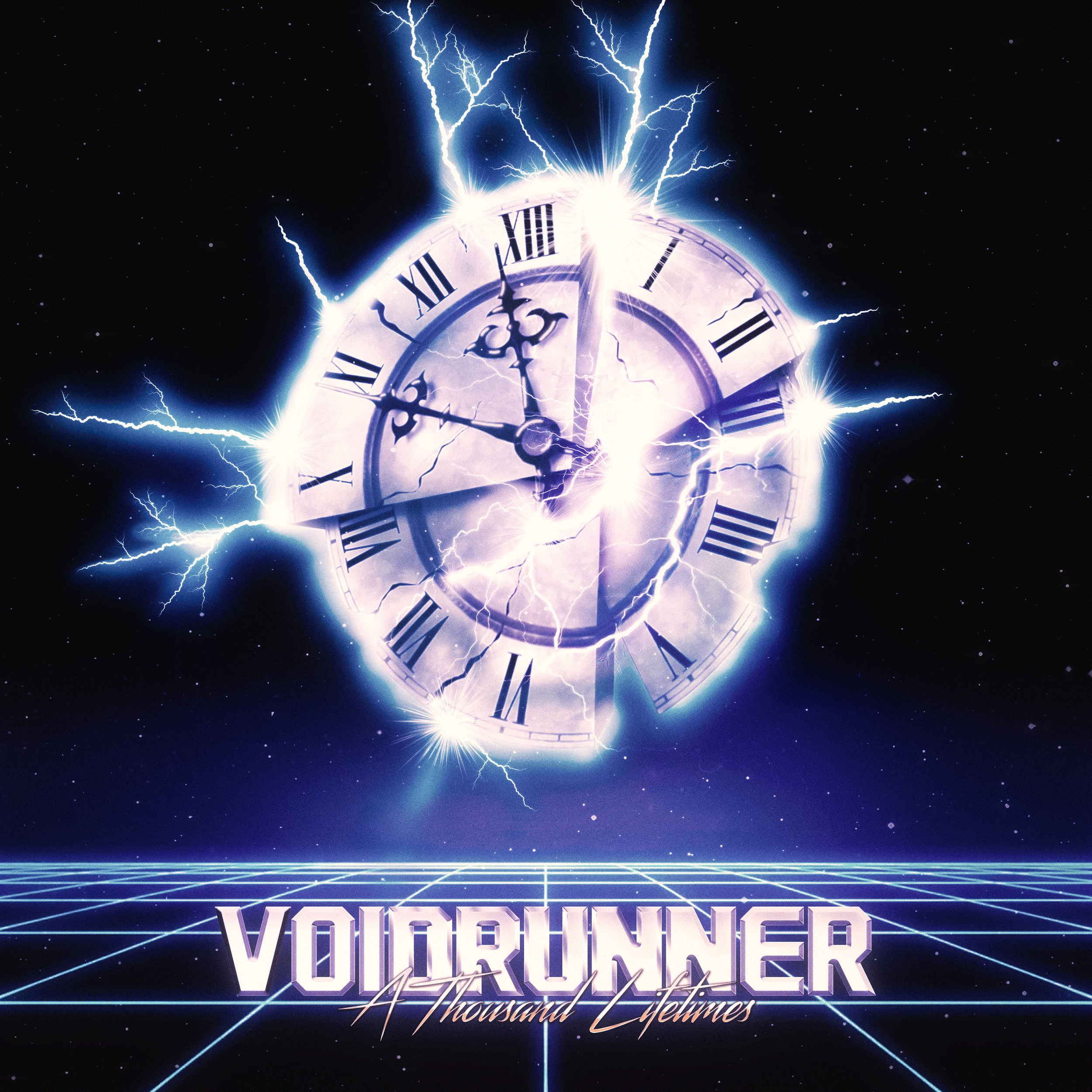
Review by Karl Magi
Overall Album Impressions
Voidrunner's A Thousand Lifetimes is a moving, poignant listening experience punctuated by touching vocal performances, intricate guitar work and songwriting which touches on pain, love and loss which is leavened by lighter moments. I enjoy the way in which all of the sonic elements combine to create a tightly woven, expressive whole as the album unfolds and reveals itself.
At the centre of A Thousand Lifetimes is George Rich's voice. It contains resonant depth, soaring emotion and the ability to capture a wide range of moods within its range. The way in which George Rich transfers the affecting lyrics and vocal melodies presses home the depth of feeling within the music. The end result is intensely engaging and full of heartfelt sensations.
Another crucial element to A Thousand Lifetimes comes from guitarist and producer Britton Shrum. The way in which he intermingles skillful, emotive guitar performances with layers of interestingly textured synth sounds results in music which supports the strength of the vocals and adds more weight and complexity to the entire album.
I also want to comment on the songwriting on A Thousand Lifetimes. The themes of the songs are human and full of sensitivity and emotional range. I enjoy the way in which the songs paint visceral images in my mind and carry me through my own personal experiences. The songs reach out and capture all of the experiences that make up a life.
My Favourite Songs Analyzed
“Introduction” comes to life as rain patters down and static crackles. In the distance, smoothly riffling synth cascades rapidly and broadly sweeping notes spread underneath. The bass is rich and rounded as the steadily crackling sound in the distance is cut by tender guitar notes and shining synth which floats past. The bass is a steady glide while the guitar adds sharpness and the arpeggios continue to spin. Chiming notes coruscate as the guitar wanders and silence falls.
Crackling sounds move while menacing bass rumbles and metallic notes entangle with gentle luminescence to open “True Believer.” Britton Shrum’s guitar drifts as the colossal drums rebound and the bass adds shape. As the kick drum pounds, George Rich's deep and emotive vocals fill the music.
The drums continue to pulsate as the guitar adds flaring brightness. George Rich's voice spills out with passion and intensity, driven by the throbbing drum weight and flashing guitar. The chorus leaps upward with deeply felt melancholy and longing before the guitar carries a melody that rises with mingled triumph and tragedy, cascading and dancing through the music.
George Rich touches me with the sincerity and intense expression within his powerful voice while the drums guide the music and Britton Shrum’s guitar intertwines with radiant energy. Once again, the chorus leaps out on the heartfelt vocals, delivering an emotional punch with each word. Behind the chorus, the guitar and drums add dynamically bursting strength.
The track moves into a floating segment in which the heartbroken guitar sobs with feeling. The drums and bass drop away as the notes ring with shiny incandescence. Britton Shrum’s guitar solo rips through the music with richly intermingled sounds, full of intricacy and inventive playing. The song accelerates one final time as the chorus erupts with life and the music fades.
Our storyteller asks if the listener has ever wondered why it doesn’t matter how hard you try because “you just can’t seem to rely on the words that come from the tears in your eyes.” He adds that you try to run away from your mistakes and “tears run down your face.”
The narrator speaks to the listener and says that as a true believer, they “just keep running away, hoping that things will change.” He adds that nobody’s left to say “that the heartache won’t fade away.”
Now our storyteller asks the audience if they’ve ever given up on the people that they loved. He concludes by asking, “Have you ever cried so hard that you had nowhere else to run?”
“Holding Time in My Hands” begins as a warmly levitating synth grows in volume and huge bass rolls as enfolding synth chords open widely. Fragile motes glisten from a raised synth as Britton Shrum’s guitar carries a pining melody that reaches to the sky, full of profound longing and a knowledge of loss. The guitar slices as the glittering synth radiates sunlight and the drums pound.
George Rich's voice is aching and heartfelt, capturing the love and certainty of heartbreak in the words. As the guitar growls, George Rich’s voice delivers an emotional gut punch while the drums pulsate. The vocals slip out with deep emotion as Britton Shrum’s guitar slices and snarls and the scintillating synth shines while the low end presses on.
The chorus captures all of the mournful, but affectionate sensations within the song. The guitar solo is brimming with feeling and intricate expression, wildly leaping and spinning with unrestrained energy. The vocals become muffled for a moment as the gigantic low end thunders and the drums burst again. George Rich lets loose with his distinctive and affecting vocals while the guitar cascades and the drums burst before the song ends.
The narrator reminds himself to "take a little time to keep your eyes on her." He points out that one day everything’s all right and the rest just blurs together. He wonders how he can slow things down because "I'm holding time in my hands" as the days flow past. He wishes the song's subject could stay. He knows that, at the right time, he'll have to let the other person go. He wants to slow things down because "one day she'll fly, you'll just have to let her grow."
The sound of rain and running water is joined by a feverishly bright synth that tumbles to open “In The Water.” The bass continues to thunder with dramatic muscle as the ghostly notes tangle and George Rich's portentous voice carries a melody that radiates sadness.
I am fully engaged in the song’s emotional depth as the huge drums rebound and distantly wandering voices move through the distance mournfully. The sparkling synth drops away as George Rich’s vocals capture broken-hearted loss, while a glowing, cascading synth adds eerie sensations.
The drums continue to batter while Britton Shrum’s agonized guitar cries out. A synth sparkles as the deeply expressive vocals drift and the heavy drums collide. The drums smack in again as George Rich unleashes his voice.
The glittering synth drops away as the lost, floating vocals are touched by delicate chimes while broad arpeggios vibrate sharply. The drums explode again as the vocals drift with longing before Britton Shrum’s guitar solo unfurls with intricately flying notes conveying torn emotion before silence falls.
Our storyteller says that "no one knows what's in the water, black as the night, why even bother?" As we are washed away, there's no more hope. He speaks of our "haunted feelings" as we ask what's in the water. He talks about how we'll reach a point at which "we bend and then we break."
The narrator wonders if this was all a game as he points out that "no one knows what's in the shadows, no one thinks about our dreams." He adds that we're each looking for a monster "but it's always hiding its teeth." As the song concludes, he mentions our haunted feelings again and asks what lurks in the shadows.
“Can't Stop Loving You” begins as rain falls and footsteps tick on pavement, as a deep sigh exhales. Widely radiant synth pierces with hurting emotion and colossal strength before the vocals come in. Fragile synth slips through the music as the drums begin to thud massively and the bass moves below. Arpeggios glimmer in the distance as the drums drive on.
The rippling notes float past and Britton Shrum’s guitar carries uplifting emotion as the low end pulses. A mixture of hope and longing permeates the guitar as the heavy low end throbs. George Rich’s engaging, directly expressive voice carries the vocal melody which is full of yearning and encouragement, while the guitar charges and the drums explode. I enjoy the tone and feeling of the vocals as they unfold while the melody in the distance elevates and shines.
The drums throb as the slicing synth exudes taut luminosity while George Rich catches the emotion within the song. The drums continue to add propulsion while the background spills out brilliance and the guitar churns with vast strength. George Rich releases the full strength of his voice, punching home the song's message with conviction. Britton Shrum contributes towering muscle as the track drifts to a segment in which starlit synth sparkles above heavy bass.
The sharply shining synth joins the tenderly hurting vocals as they trickle and the drums rebound. The chorus erupts again with the guitar growling and George Rich calling out with deep feeling as the drums push forward. The song ends with the chorus fading out.
The narrator points out that everyone cries sometimes and "everybody wonders why nobody's there sometimes,” as he says that nobody knows why. He adds that "when the storm breaks out, I will run to you." He says that he can't stop loving the song's subject.
Our storyteller says that everyone tries sometimes and "everybody wants to fly straight to the sky sometimes," even though nobody knows why. After the lightning strikes, he will let the storm rage on because "my love for you will stay strong."
As the storm continues to rage, the narrator says that he's going to "carry on through the torture and the pain" while his love remains strong in the face of challenges.
Slowly expanding synth grows in strength to open “Drive.” Gossamer notes sigh as they open into the music, adding shimmering brilliance. The drums rebound as the bass undulates and the jewel-like synth glitters.
George Rich’s deep, sensitive voice carries the melody, which mingles escape and motion. Britton Shrum’s guitar flies out with hopeful, concentrated dynamism as the chorus climbs with explosive energy. The drums continue to punch hard as the vocals carry the resonant emotion, pulling me inward.
The crisp drums snap as the chorus rings out and a bell-like synth shines delicately. Britton Shrum’s guitar vaults into the music again, singing with unrestrained liveliness, delivering as much emotional weight as the vocals.
The chorus climbs upwards and the sound of rain begins in the distance. The bass rumbles as tiny notes twinkle and the rain continues to fall. The track glides along before its level of intensity rises again. Glimmering notes growbefore the track erupts again.
As George Rich’s voice moves through the music, Britton Shrum pours his heart out through the guitar strings, catching all of the feelings within the lyrics. The track comes to an end as another guitar solo punches home with mingled excitement and agony within the music.
Our storyteller says that there's "another reason to keep holding on to you, another reason to start anew." He and the song's subject are leaving town on an empty road as they fasten their seatbelts and hold on. He talks about listening to "the sound of the broken hearted" while they follow the lines and sing in the darkness. They're singing "the songs of a broken hearted night."
After running out of gas on the side of the road, they pull on their jackets and the storyteller wonders where they'll go. He isn't sure, but knows that they can "follow the sound of a broken heart, holding our ground while the sky goes dark on us." He concludes that since they don't know how to fly, they'll drive.
“Purgatory” comes into being with a caressing synth gliding out into open space. Mournful peace permeates the music as the colossal bass towers, adding sharp-edged majesty. George Rich’s voice slides past with calming, hurting emotion as the reverential synth intertwines in the distance. The drums crash with monumental strength and the vocals drift wistfully past.
George Rich presses home the bereft feelings of the lyrics, which touches me as the low end batters heavily. Britton Shrum’s guitar thunders ferociously, adding dark power as the drums continue to smash. The ticking percussion shapes the music as the heavy low end crashes and the slipping synth echoes in tranquil motion while the drums are muffled.
The percussion becomes clear again as the heavy drums collide while the vocals carry elegiac emotion and the synth slides. The drums punch hard and Britton Shrum’s growling guitar cuts with jagged edges while the chiming notes tremble. As the track comes to an end, sparkling synth floats above the crushing strength below and silence falls.
The narrator is losing touch with himself and he takes "one more drink just to think" as he shrinks inward so he can feel "like I can tell the difference between Heaven and Hell." As street lights blur together, he says he "can't tell if it's her."
He wonders if he's taking his time as "the time begins to unwind." He speaks of a high coming down and wonders if he's "doomed to go on and on." He concludes that he ought to know if he's doomed to continue on.
Tranquil, soothing synth drifts as raised notes add a diamantine shine to start “With You.” A saxophone drifts with passionate energy as flickering notes spill out above the softly touching drums and the arpeggiating synth spins.
Drums begin to snap sharply as the luscious bass rumbles and the rhythm drives in. George Rich’s affecting voice carries the emotional heart of the song. Gleaming notes flash as the drums continue to pulsate sharply.
The drums flourish again and George Rich lets his voice fly with sincere emotion as the bass swirls. The track exudes brilliance as George Rich’s voice transports me while the drumbeat snaps cleanly.
The guitar cuts with razor edges and the vocals rise, full of feeling, before the drums drop away and trickling notes shimmer. Britton Shrum’s propulsive guitar snarls again as the drums press on and the track pushes forward.
Crystalline illumination spirals from the synth before the guitar cuts in again, Britton Shrum grabbing hold of the song’s emotion and running with it. As the song ends, the guitar skirls and the vocals sail out as the synth scintillates before the drums fall silent.
This tale’s teller says that “never in a million years did I think it would come to this,” or that the song's subject would ever stop his kiss. He adds, “I don't know how deep this goes, Heaven is so far below,” as he says that he loves when the other person takes control.
Our storyteller says it's okay to be afraid and he doesn't want to leave the moment he's in with the other person. He says, “I just need to feel something with you, this is the lifetime that we're waiting for.” He asks if he's supposed to be afraid and is reassured that it's all right.
The narrator says that the song’s subject leaves their mark around town so “nobody can ever feel down.” He concludes that their love “was lost, but now it's found.”
Conclusion
A Thousand Lifetimes is a gripping, touching listening experience that draws me into the emotional depth and propels me along with the musicians as they unfold the album with real feeling.
I Am Boleyn - Voyager

Review by Karl Magi
Overall Album Impressions
I Am Boleyn’s Voyager is emotional, full of synth-pop energy and rich with expressive vocal performances and heartfelt explorations of what it means to be a human being. The way in which all of the musical elements combine with the collaborative songwriting and Lydia Owen Edmunds' (I Am Boleyn) performance creates music that is fully realized, intensely engaging, and irrepressibly energetic.
One of the most attractive things about Voyager for me is the way in which the lyrics and singing interact and play off each other. Lydia Owen Edmunds' voice is delicate and nuanced, with the ability to soar or ache. The lyrics are well thought out and full of emotion, and these two things become one powerful, compelling way to explore what it means to be human.
Another strong aspect of Voyager is the balance of different synth sounds, instruments, and musical ideas. The synths have a wide variety of tones and textures, the guitar and other instruments blend well with the overall sound palette of the music, and the melodies are full of catchy, ear-pleasing passages. The beautiful harmonies also intensify the expressive power of the music.
I also want to mention the collaborative nature of Voyager’s songwriting. All of Lydia Owen Edmunds' collaborators help her to weave complex emotional portraits and draw vivid, human images in words. It's always good to see songwriters working together to create and explore.
My Favourite Songs Analyzed
“Only Space” commences with orchestral strings warming up and their melody trumpeting out with haunting energy. As Lydia Owen Edmunds' voice announces the journey ahead, the drums rush with intensity and the spectral synth descends, trailing tendrils as Lydia Owen Edmunds' captures adventure and emotion while the vocals slip with satiny grace.
Twinkling notes flash with Lydia Owen Edmunds' expressive voice as the bass shifts. As the ethereal vocals glide, I feel transported again. As the low end drives with a steady heartbeat, shimmering notes flash past and Lydia Owen Edmunds' captures all of the excitement within the words. Gleaming synth illuminates the track and the vocals are touching and luscious, driven by the unstoppable beat.
Now the oboe-like synth moves as the singer repeats the phrase “only space.” The drums burst again and the main melody reaches out with a sense of progress as Lydia Owen Edmunds' draws me into the music with her emotive performance. Once again the space flight message calls out and the track ends.
Our storyteller talks about stars reversing on the ground “lost like a sound." The sky has become the floor and color’s the core as the storyteller is "caught in between the Milky Way" without fear.
She says that she'll "travel through space and time a million years" as she encounters "intergalactic minds and atmospheres." She adds that if you only believe, you can start again because "the future is close and I can take you there." She concludes by saying "enter this world, come as you are, you know the journey's just begun."
Glittering chimes sparkle distantly as rounded notes tumble over each other to open “Girl Like Me.” Lydia Owen Edmunds' softly touching voice slides out with gentling emotion as the background flickers delicately. The percussion ticks softly as the chorus glides with breezy emotion and the bass throbs densely.
Lydia Owen Edmunds' voice is surrounding and full of affectionate sensations which draw me in as the drums and bass snap into a steady pattern. Above it, elegantly unfolding synth moves as the chorus slips past while the chimes add sunlit luminosity. The bass drops again and the low end pops with a strong groove while the vocals wrap around me and touch me. The drums guide the music as the chorus slides out with heartfelt sensations before the song ends.
The narrator muses about the disastrous state of the world and how we spend so much time on the wrong things. But she says, then you let someone in and "you forget everything, you forget the hurt has ever been." She points out that if a girl like her can meet a boy like the song's subject and "run away with you tonight," and as they stay in his car and he kisses her "under the night sky," she knows that it'll be alright.
Our storyteller says she would always dream, but she never thought that "I could live my life in a movie box." The song's subject came in like a tide and changed everything as she adds, "What a crazy world I'm living in!" before concluding that she knows it's going to be fine if they're together.
“Taxi” starts off as a distorted voice speaks and the bass rushes rapidly. The melody is tinged with aspiration and desire as Lydia Owen Edmunds captures every emotional nuance while the bass throbs.
The vocals shift and move into Lydia Owen Edmunds' range as the colossal bass drives. The gossamer melody brushes by and Lydia Owen Edmunds' catches me with her ability to convey the emotion in her airy vocals. The drums add a clapping sharpness as the bass tumbles below and a sweeping sound flows past.
Now the wildly twirling synth adds thrilling momentum as the vocals carry the melody as it reaches out with passion and joy, tinged by a sense of readiness for change. Lydia Owen Edmunds' vocals are full of life and affection, conflicted emotion flowing as the low end throbs with intense weight. Piano chords shift as the track comes to an end.
Our storyteller speaks of a late night taxi ride, reminding herself that she said she’d never call the song’s subject. She feels “lost in the back seat,” and she knows where everything’s headed. She adds, “I’m so drunk right now and you’re on my mind, I should go home but it’s too late.” She says now isn’t the time and she doesn’t want the other person to tell her to stop, so they can “just go ahead and break my heart.”
As the taxi exits the highway, the song the narrator once shared with the other person is playing on the radio. The cab is minutes from the song subject’s house and she realizes where things are leading. But, “I’m so close now, I can’t turn back.” As they reach the traffic lights near the other person’s house, she can’t go back because “it’s like the streets are pushing me forward, chasing my heart ‘round every corner.”
Reverberating, glistening chimes ring with a touching, gentle melody to kick off “Breathless (The Corrs).” The bell-like notes ring and Lydia Owen Edmunds' satin voice carries the unfolding melody as finger snaps move along with glimmering jazz organ notes that add compassionate radiance.
The low end begins to pulse as the chorus flows with brimming passion, carried by Lydia Owen Edmunds' engaging vocal performance. The sax that fills the music adds a rich, joyful tone as the drums kick along with her warming, affectionate vocals. The bells contribute a crystalline glimmer as the chorus flies with luminous notes around it and the low end continues to press on. The sax arcs out again, full of love.
The vocals slip past with gripping expression as the rippling synth erupts into life again and carries the melody with freedom and easy motion. As the song comes to an end, the sax sings alone, full of excitement, before silence falls.
The narrator expresses an overwhelming, passionate longing for a deep romantic connection. She feels emotionally and physically consumed by her desire, unable to hide or resist the feelings stirred by the song subject's presence.
Time seems to stand still when they're together and even the smallest touch leaves her feeling weak and breathless. Urgency and intensity define their love. Their connection feels dreamlike and all-consuming, as if nothing else matters but this moment. The repeated plea to “go on” reflects a desire to be fully swept away by love, no matter the consequences.
“Driving In The Dark” starts as a limpid synth shines above a quickly pulsing drum and bass beat. Lydia Owen Edmunds' voice radiates clarity and sincere emotion as it carries an energetic vocal melody, exuding a sense of loss as it unfolds.
Drums touch lightly but provide guidance while bass rushes along with them. The retro drums cascade and slightly melancholy piano chords call out before the bass charges on. Chimes sparkle along with Lydia Owen Edmunds' tender voice as a flickering synth cloud rises. The vocals slip out with pained emotion and anticipation intertwining.
The chorus flies out, full of tenderness and yearning for new horizons. Shimmering synth flares and the drums and bass push forward while Lydia Owen Edmunds' voice combines aspiration and wistful feeling.The song ends on bending, enfolding notes that guide it into silence.
The storyteller wants the other person to tell her if they’ve changed their mind. She encourages them to be honest, adding “there’s no need to lie.” She feels that the song’s subject’s love has diminished and “I can feel your heart withdraw.” Now she’s too tired to hold the other person and it’s “too hard to do the thing we need to.” It is also too easy for them to say goodbye.
In the chorus, she says she’ll be fine, she will roll the windows down and her tears will dry. She’s going to “leave this dead end town, driving in the dark.” As the song unfolds, our narrator says the other person’s been talking in their sleep and "telling secrets you should really keep.” There’s something missing when they kiss now and “loving you’s not meant to feel like this.”
As the song ends, she is driving away from the dead end town again as she adds that she won’t be looking back over her shoulder because she’s come to the realization that “it’s time to see that it's over.”
A piano tentatively touches above darkly muffled strings to open “Tiny Love.” Metallic notes tremble as Lydia Owen Edmunds' caressing voice moves above massively thundering drums. The bass is crushing as Lydia Owen Edmunds' catches the mingled longing and ache within the lyrics, pulling me into the emotional world of the song.
The massive drums collide as the vocals punch home the mournful loss and love within the lyrics. The drums collide heavily again and a gliding synth with rough edges slips along with strings that tangle smoothly. The chorus is silky and the drums continue to rebound. As the song ends, the sliding synth moves with towering drums and then silence falls.
Our narrator says that it isn’t a big deal if she doesn’t think about it and “I’m not lying to myself.” She dislikes the feeling of “too much pressure, lack of sleep or something else.” That something else just might be “a tiny little thing called love, just emotions, nothing real.”
The storyteller tries to convince herself that the song’s subject doesn’t mean that much to her. Now she adds, “Don’t talk about it, it’s not how I really feel about you. We tiptoe around it and if you ask I’ll tell a version of the truth.” As the song concludes, she says, “I don't want to drown in, I won't get caught up in this, I won't let me lose myself.”
“Here Before” starts off as rounded panpipes hover gently above a pastel-illuminated background. The drum beat moves in loose-limbed relaxation as the guitar intertwines in a melody full of gentleness and a sense of loss.
Lydia Owen Edmunds' voice is full of engaging emotion, carrying the message of resilience and a sense of abandonment. The drums and bass cruise along as the guitar shines calmly and the vocals are full of compelling feeling.
The panpipes in the distance add fragility, while Lydia Owen Edmunds catches all the conflicting feelings within the words. The drums continue to dance with the air, the repent pan pipes shimmer and the vocals slip out with touching sensations. As the guitar glimmers, the drums and bass pulsate while the synth fills the background.
Our storyteller wants to return to the beginning, as she gave the song’s subject all of her heart. She adds, “The time we wasted went so fast, never thought that we would fall apart.” She lost track of time and the other person went away because they “never had forever” on their mind.
The narrator says she’s been there before and “now you’re sorry at my door.” She adds that every time the song’s subject leaves her wanting more. She goes on to say, “It’s so hard to know where our future will go.” If she had a second chance, she would try again because “it’s worth the lesson in the end.”
As the song concludes, our storyteller says, “I don't care if I'm a fool ‘cause I know that you're one too” adding that even after everything she still wants the song’s subject.
Colossal, triumphant synth rises as the drums kick into a dynamic beat and the vocals float to begin “Say Something.” Gentleness permeates Lydia Owen Edmunds' touching voice while the synth moves in expanding whorls and the low end continues to pulsate.
The chorus slips out with silken ease, compelling me with its complete vulnerability. The guitar slides past with a warming voice, mixing with Lydia Owen Edmunds' emotionally open vocals and the pounding low end.
As the strings in the distance add a golden halo, the drums and bass continue to throb. The vocals are full of tranquility and pain, mingled into one complex whole. The guitar gleams with luscious radiance as it unfurls and Lydia Owen Edmunds cries out once more before silence falls.
The narrator says it’s hard for her to read the signs, adding that “we didn’t talk about your sadness.” She says the song’s subject can “say it with your eyes,” but tells them the time for silence is over.
Everybody thought the song’s subject “could always talk,” but never said how they were feeling. She adds that since the other person is leaving, she “can’t help believing,” so she asks them to give her the reason.
Our storyteller says, “I need you to say something to me,” pointing out that the other person doesn’t love her and never did so, “say goodbye to ever after.” She adds that she never saw the other person cry for her because “all this time, it didn’t matter.”
As the song concludes, she says, “Now that it’s over, I’m waking up sober, I’m looking for closure. I need you to say something to me.”
“Meet Me in the Clouds” comes alive with enormous bass growing as the distorted vocals tremble in the distance and digital-sounding notes ripple. The drums and bass pulsate heavily as a spectral synth levitates with a lonely melody. Lydia Owen Edmunds' wordless vocals echo into openness before she sings to caress my ears, drawing me deeper into the world of the song.
The thudding low end adds dramatic weight as the spoken word segment is chanted with haunting smoothness. The low end dances on as the chorus bursts with exciting life, propelled by Lydia Owen Edmunds' deeply felt performance. The massive drums collide as her voice echoes into open space. The way in which Lydia Owen Edmunds' vocals trail through the music creates a net in which to entangle the listener while she chants, driving the song’s emotional strength.
The bass thumps as the snare drum erupts again and the vocals ring out with intensity. The chorus hovers again with a ghostly sensation before the song comes to an end, with Lydia Owen Edmunds' surrounding voice flowing until the music ends.
Despite being on top of the world, our storyteller is still "down here, running around after highs all day" to avoid feeling fear. She adds that she's had enough and she's got to stop. She vows to "change the scene" because she has to know what happened to her dreams. She "had to stop this living day to day," and now she wants to tell the song’s subject to "meet me in the clouds."
The narrator is in another dimension and when she touches the song’s subject, it's "an atomic reaction." She asks the other person to rise from the ground and meet her in the clouds. She adds, "I'm moving fast in another direction, I'm looking out for a real connection." The other person is on top of the world but remains down below, "always searching for signs of life when the answer is clear."
Now our storyteller reminds the other person to take their body and soul, let the music take over and "lift you up to a higher place, baby." She points out that the song's subject was lost but has been found as they fall "back into the sound that lifts you up to a higher place."
Rapidly washing synth joins Lydia Owen Edmunds' gently breathy voice to commence “Another Me.” The utter softness and emotional depth in Lydia Owen Edmunds' vocals touch my heart and draw me inward. Brightly glittering synth dances along with her lightly touching voice while the wistful melody dreams above the thudding low end.
Sparkling synth flickers as Lydia Owen Edmunds captures the power of love and passion with her emotive vocals. In the distance, frolicking notes dance with effervescent luminosity while the drums and bass continue to thunder. The chorus climbs with uplifting life, tinged with melancholy. The words slide with genuine affection and the drums continue to pound.
A snare drum continues to kick as the low end accelerates and the chorus climbs, leaping with coruscating luminosity. The track slides with smooth emotion before the song fades.
The narrator tells the song’s subject that you can’t do things differently or be someone else. She wonders, “Is it in my DNA? Am I born to be this way?” She adds that she feels hopeless in love, but insists she won’t be “another me.” With regret, she says, “Give me something good and I will break it.”
Our storyteller points out that usually, “I'm another me,” but she feels the song’s subject isn’t like other people. She adds that “pain is the same” and pleads for the other person to pause because, “I don’t want to mess this up. I want to be another me this time.”
On the previous night, the narrator says, “I died when you kissed me.” She speaks to the other person and says, “Tell me what you want to do, I’ll do anything for you.” She concludes, “Maybe this is what it feels like—the falling.”
“Stay” begins with twinkling chimes and smoothly swelling synth as gigantic bass throbs and vivid guitar strums. Lydia Owen Edmunds' tenuous, trembling vocals carry the aching melody above the shining guitar as the drums pulsate easily. The sincere emotion within her voice pulls at my heart as she carries the hurting melody out above the thick bass tide.
The chorus is gentle and pained as it drifts above the reverberating low end. As the vocals slide out, they transmit all of the longing, need and loss within the lyrics. The chimes shimmer delicately as the bass slides past and Lydia Owen Edmunds' voice wraps around the guitar as it calls out. The chorus climbs again, imbued with intense feeling as the twirling arpeggios ripple and the vocals sail out into silence.
Our storyteller begins by saying, “Guess I’m sleeping at home, another night on my own.” She wonders if she’s missed something, because it wasn’t always that way. She recalls the night she met the song’s subject, unable to forget “when you said you want me to stay with you.”
The narrator tries to call the song’s subject, but decides they must be out with their friends. She regrets what she said and adds, “Let’s take the weekend to clear our heads.” Ultimately, she realizes, “I’m so tired of being free.”
A choir of voices harmonizes over the heavily pulsating bass to kick off “Snowdonia.” Lydia Owen Edmunds' voice is fragile and full of tremulous emotion as the bass and drums cascade. The vocals are yearning and full of memory and a feeling of connection as the low end continues to pulsate.
The melody mingles joy and remembrance as the choir calls out and the percussion throbs while the bass drives. Lydia Owen Edmunds captures all of these emotions in her distinctive and intensely beautiful voice, compelling me as she releases all the feelings within the words.
The low end bursts as the vocals slide past with silken ease. The drums batter and pulse as the swirling synth intermingles with the harmonic voices while the ethereal vocals trail through the music. The main melody is full of longing and yearning as the vocals call out and the steady low end throbs.
The choir calls out again as the lead singer lets her expressive voice unfold above the bursting, throbbing low end before silence falls.
There are times when the narrator is “outside the circle, a candle in the rain.” Sometimes she looks at other people and doesn’t feel the same. She adds, “When I’m catching a minute, an hour, I have you one breath away.”
She speaks of Snowdonia and says she never leaves it, carrying it in her heart. She says, “I close my eyes, it’s you I see. Snowdonia, I carry my home with me.”
Our storyteller speaks of the sleeping dragon and the wind at her back, in a place “where the stars will shine like diamonds and the sky is blacker than black.” She talks about the memories she’ll hold in her from “Hardy Head down to Anglesey.”
“Until the Summer Ends” opens with the sound of washing waves as smoothly flickering synth is joined by the breathy affection of Lydia Owen Edmunds' voice, carrying the melancholy melody. The bass undulates as the drifting vocals enfold me in sadness tinged with hope, which I find affecting.
Now the melody bounces with brighter energy as the chimes sparkle and the trumpeting synth harmonizes with the lead singer. The bass and guitar add depth and strength while the shimmering notes sparkle with lively encouragement.
The massive bass snarls while the lead singer fills the melody with authentic expression and the sunlit synth sails past. Once again, the chorus climbs with joyful aspiration while the lead singer carries the melody with assurance and the guitar surges with power.
The elevated notes add crystalline luminosity while the low end continues to drive forward. The charging chords growl and the track flows to an end with Lydia Owen Edmunds' voiceover and a glittering synth intertwining.
Our storyteller says the song’s subject “came around like the sunrise, made me feel like the first time.” She points out that the other person got away “when I should have held you close.” She adds that the other person “disappeared like a low tide, waiting here for a lifetime.” She feels she wasted everything “when I should have let you go.”
Now the narrator says she’s calling with wide-open arms, “still hoping you take me someplace I want to go.” She adds that she’s been dreaming and feeling that there’s something more. She says, “Give me one last dance with you ‘cause I’ve got nothing left to lose.”
In her current frame of mind, she wants the song’s subject to “hold me now till summer ends.” She says she never wants to, but she’ll let go if she has to because “I’d give it all just to feel one last touch.” As the song concludes, she says, “Do you still feel the same? The seasons may be changing, but our summer never ends.”
Conclusion
Voyager is indeed a wonderful voyage across the complicated tapestry of human emotion. It combines well crafted harmonies and melodies, skillful songwriting and carefully curated synthesizer sounds to create mature and enjoyable synth pop music.
- December 2025
- November 2025
- October 2025
- September 2025
- August 2025
- July 2025
- June 2025
- May 2025
- April 2025
- March 2025
- February 2025
- January 2025
- December 2024
- November 2024
- October 2024
- September 2024
- August 2024
- July 2024
- June 2024
- May 2024
- April 2024
- March 2024
- February 2024
- January 2024
- December 2023
- November 2023
- October 2023
- September 2023
- August 2023
- July 2023
- June 2023
- May 2023
- April 2023
- March 2023
- February 2023
- January 2023
- December 2022
- November 2022
- October 2022
- September 2022
- August 2022
- July 2022
- June 2022
- May 2022
- April 2022
- March 2022
- December 2021
- November 2021
- October 2021
- September 2021
- August 2021
- July 2021
- June 2021
- May 2021
- April 2021
- March 2021
- February 2021
- January 2021
- December 2020
- November 2020
- October 2020
- September 2020
- August 2020
- July 2020
- June 2020