
The Quiet Decay: A Meditation on Creativity in the Age of AI (Part 1 & 2)

Written by Chris Magdalenski
The Quiet Decay:
A Meditation on Creativity in the Age of AI From an Unreliable Narrator Pt. 1
I love technology. From as far back as I can remember being utterly fascinated with even the most basic tech gadgets. Be it my Little Professor Calculator, my Speak and Spell or my first interaction with a Radio Shack TRS-80 computer, (I am truly dating myself here) I spent a lot of time pushing buttons and mashing keys in pursuit of… Something.
Now the keys push back.
Offering it little more than a few sentences, the machine hums in response, hours of potential work eliminated with a handful of keystrokes.
And suddenly the line between tool and creator begins to blur.
AI art is astonishing. Terrifying. Beautiful in the way a collapsing star is beautiful — incandescent, destructive, impossible to ignore. What once took months of painstaking craft can now be summoned in seconds, called forth from a void of algorithms and memories - some say borrowed… Others say stolen.
But in this speed there is loss.
The messy frustrations of practice.
The painful imperfection of trying and failing.
The soul, or at least the illusion of one.
I find myself staring into these machine-made visions with awe and unease. They feel like echoes of something familiar, yet uncanny in their precision — like seeing a dream I didn’t know I had, painted for me by something that has never truly dreamed.
Is this creativity, or its simulation?
Does it matter?
Perhaps art has always been a dialogue with ghosts. We borrow, we remix, we imitate, we evolve. AI is simply the newest ghost in the room, louder and more insistent than the rest.
And yet…
There is still something quietly decaying at the edges of it all.
The patience of brushstrokes.
The sacredness of mistakes.
The slow burn of mastery.
Maybe the real question is not what AI can create, but what we will let wither away in exchange for the spectacle.
• • •
Now, for the sake of this experiment, some honesty… A sizable chunk of the text above was generated using ChatGPT. As someone who has recently added “AI Ethicist In Training” to the about section of their LinkedIn it would be downright egregious not to mention this. The ethical consideration of AI has become a subject of great interest to me, most likely due to the fact that I’ve had to deal with it in both my day job as a UX designer and as a longtime visual artist and musician. Over the course of the past year a large part of my job involved designing software that integrated artificial intelligence into the products my company sold. The work was both interesting and challenging, providing not only valuable career experience, but also an entry into understanding how this technology works at a rudimentary level.
However, while I enjoyed the work I couldn’t ignore the discourse coming from those opposed to humanity’s latest achievement. Watching the reactions from my artist communities on social media made it plain that any technology that so blatantly took the humanity out of the creative process, all while stealing from flesh and blood artists’ work was not going to be received with open arms… It was a tide of voices that I wholeheartedly agreed with.
But at the same time being the fan of technology that I am, artificial intelligence still intrigued me. It’s newly developed ability to push pixels together to create fully formed pieces of “art”, to shape sound into complete songs, to thread words into what became the first half of the article was fascinating and terrifying.
Because just as much as I see potential in what can be done with AI, I also see the massive amounts of damage it could do, both to ourselves and to society as a whole.
I have more thoughts on this to be sure, and the goal with this piece was not subterfuge, not to create easy content just for the sake of views, but rather as a way to more deeply investigate my own feelings about this new tool and the its ramifications on not just my own creative pursuits, but of humanity’s in general. To push myself, (and possibly others) to question these technologies from all angles in the hopes of having a clearer view of the future that is barreling towards us at breakneck speed.
All of which is to come in part two.
The Quiet Decay:
A Meditation on Creativity in the Age of AI From an Unreliable Narrator Pt. 2
I assure you that no Artificial Intelligence was used in writing this part of the post.
If you’re here I’m going to assume that my previous article didn’t annoy you enough to give up reading and put my name on a list of traitors to both art and humanity. The irony of having a machine give its “thoughts” about what its place should be, (if any) in pursuing creative endeavors is not lost on me, however the experience did help to refine some of my own thoughts around this issue.
In the process of creating part one, I fed ChatGPT the first paragraph, a few sparse notes on voice, tone and theme, as well as a couple of previous articles I had written for further reference on writing style. Upon reading what it gave back to me I was hit with a tidal wave of rather complex emotions with all the force that one would expect when coming face to face with potential obsolesce. But while I’d love to say that revulsion was top of the list of those feelings, that wasn’t quite the case.
Yes, as someone who was recently laid off from his tech job in no small part due to the somewhat dubious promises AI makes to desperate C-suite executives, there was plenty of revulsion involved, right alongside fear and resentment, but I’d be lying if I said those were the only feelings I had. Even though what it gave me wasn’t going to come close to winning a Pulitzer, and was undoubtedly just an amalgamation of sentiments stitched together from the work of better writers, I couldn’t help but to feel that the possibilities of this technology as a tool in a creative’s toolbox were there.
As someone who considers themselves an artist, the fact that I even entertained the idea of experimenting more with AI as a creative tool was, to quote Darth Vader… Disturbing. Especially when I could make a solid case that one of the reasons I lost my job was because someone felt that using “tools” like this could save their company some money.
After finishing part one of this piece I took a short break, collected my thoughts, and mulled some things over. It didn’t take long before I came to some conclusions around how I was going to proceed in using AI in creative endeavors going forward. It starts with a simple premise…
Our creativity makes us uniquely human. Once we cede too much of the process to the machine, we run the risk of losing part of ourselves.
I realize that this is not a new idea. And with how much machines have already become an integral part of creative workflows, it’s going to be something of an ever shifting line that’s always up for debate. But I believe that line and those debates are going to become as important a part of the process as someone sitting down to write a novel, paint a portrait, or craft a song.
Because now that all of those things can be done to some extent with a few keystrokes, part of the creative process could well become the ability to avoid the temptation of letting the machine do the difficult parts for you. For some this will be easy. Maybe for others not so much. I’m not here to cast judgment on that, or to start to delineate the line between genuine human creativity and something else. But as time goes on, and these “tools” get better and better I think that temptation to use them for more and more is going to become harder to resist. We’re already see it playing out now, and while that’s certainly not unexpected it should give us pause to think about what state humanity will be in ten, twenty or fifty years down the road.
Will we have found a balance between the creative of man and the utility of machine. Or will that part of us have decayed so much that it is barely functional?
WHITNEY TAI - American Wasteland

Written by Vero Kitsuné
Whitney Tai returns with her third full-length album, American Wasteland—a raw, unflinching portrait of resilience where beauty is carved from pain, and chaos becomes fuel for perseverance. Written with collaborator Tommy Hatz, who also produced the record with Tai as co-producer, the album doesn’t just confront desolation—it transforms it into what Tai calls “weapons of mass creation.”
For the album’s visual world, Tai teamed with acclaimed photographer Joseph Cultice, whose imagery captures the haunting beauty of nature reclaiming urban decay.
Blending dark pop, rock, and electronic textures, American Wasteland is both immersive and transformative. Tai’s honey-coated golden voice and words scatter like seeds across barren ground, breaking through grief and doubt until the wasteland blooms with unexpected life.
Here are some of our top picks from the record:
Perfect Storm is a soulful pop-rock ballad that channels both vulnerability and strength, weaving intimate lyrics with soaring emotion. With imagery of storms, rivers, and bridges, the song captures the fragility of trust and the struggle to hold on when everything feels uncertain. The swelling melodies mirror the push and pull of love under pressure, making the track both cathartic and deeply relatable. It’s a moving testament to weathering emotional turbulence and finding shelter in connection.
On the titular track American Wasteland, Tai trades ethereal elegance for a grittier, raunchier edge, delivering a hard rock punch that smolders with defiance. Her vocals—reminiscent of Sarah McLachlan, but rawer and more unrestrained—cut through the darkness with striking intensity against a backdrop of the controlled, tantric chaos of guitar leads. The song’s visceral lyrics and driving energy capture the chaos and decay of modern life, transforming disillusionment into something fierce and unforgettable.
Rhea delicately drifts on lush guitars and whisper-soft vocals, feeling like a moonlit confession. The lyrics—full of desert flowers, lonely moons, and tidal longings—trace a tender search for belonging and the fragile hope of reunion. It’s intimate and cinematic, folding quiet longing into gentle crescendos that seem to linger. A bittersweet lullaby for anyone chasing connection under a vast, starry sky.
Slumber Party unfolds over cascading guitars and glimmering synths, evoking a hazy, 90s-inspired nostalgia that feels both intimate and wistful. The lyrics float between playful memories and bittersweet reflection, capturing moments suspended between reality and reverie. Tai’s airy, emotive vocals weave through the instrumentation, adding a soft, nostalgic glow. It’s a warm, neon-lit, immersive track that feels like revisiting a dream you half-remember but can’t quite let go of.
Aura unfolds like a quiet dream layered in lush, atmospheric textures and tender, aching vocals. Its imagery of fading auras and fractured bonds feels luminous and haunting, like light breaking through stained glass. A stirring rap verse by Nahhdahh cuts through the haze, grounding the ethereal soundscape with raw honesty and edge. Together, they shape a song that glows in the shadows—fragile, wistful, and unforgettable
Sequoia closes the album with delicate guitars and silken, luminous vocals that float effortlessly over a luscious soundscape. The track gradually crescendos into a grand, cathartic release, turning introspection into a soaring emotional climax. Its lyrics explore perception, freedom, and the weight of modern life, painting vivid imagery from skyways to sunlit mountains. By the end, Sequoia leaves listeners suspended between reflection and release, a gentle yet powerful finale.
American Wasteland delivers a tender, shimmering refuge amid the chaos of our times. Whitney Tai’s poignant lyrics, lush arrangements, and beautifully layered instrumental performances craft a starlit, glittering portal—a place to pause, reflect, and lose yourself. The album balances grit with grace, turning desolation into something vividly alive and emotionally resonant. In a world that often feels on fire, American Wasteland offers both escape and a reminder that beauty can still sprout from barren desolation.
For more WHITNEY TAI, visit: https://whitneytai.bandcamp.com/
Damokles - Then Again

Review by Karl Magi
Overall Album Impressions
Damokles’ Then Again is another album shot through with his unique style, in this case tinged with rave vibes and a futuristic outlook. His inimitable vocal performance is joined by his unmistakably crafted synth sound and usual melodic chops. The end result is music which is a hell of a lot of fun and brims with personality and charm. I could definitely see myself putting this album on repeat.
Of course, no Damokles album would be complete without his ear-catching mixture of strong vocal performances, a sound like no one else’s and songwriting which is quirky and explores topics most people don’t think much about. As a result, each song pours out characterful energy and tends to convey unique messages with an entertaining spirit.
A dance floor–filling feeling permeates Then Again. It’s a sound I find appealing. I enjoy the massive rhythm’s throbbing pulsations along with the bright energy of the layered synths. All of the different sounds are well thought out and mixed together to create a very ear-pleasing sonic experience.
Another element that adds to the overall quality of Then Again is Damokles’ melodic writing. He crafts catchy melodies that convey emotions with immediacy and vibrant joy. A sort of magical spell is performed when he writes melodies in which my mind is transported across the soundscape to engage with them and feel them in my heart.
My Favourite Tracks Analyzed
“Immortality” comes into being as reverberating notes echo while a voiceover talks about extreme life extension. A tumbling, cascading rhythm shifts with enigmatic sounds drifting hauntingly above rapidly trembling synth and pulsating low end weight. Trailing notes shiver before the ecstatic melody rockets out above the punching rhythm and Damokles’ deep, expressive voice calls out.
Arpeggios whirl with tension as laser-light sounds flicker and bright chords shine while the low end accelerates with great weight. The lyrics ask, “Who wants to live forever?” and “who can give forever?” Damokles’ resonating voice carries the darkly shaded melody as expansive notes flange through the music with rotating energy and the dance-floor-pounding beat throbs.
Mechanical sounds clank as the rhythm grows in forceful motion, robotically clunking and driving while the raised synth slashes with lightning flares. The electrifying low end pushes the track to its conclusion.
Computerized sounds knife in with angular motion as a seething pattern establishes itself to kick off “Resurrection.” A warning sound sweeps as the rhythm becomes a steady force, accelerating with galloping motion. A pulsating sound repeats with insistent energy while Damokles’ rumbling voice carries the enigmatic melody over a dance-floor-friendly beat.
The synth in the background vibrates with danger as the chorus rises with unbridled power, the rhythm becoming unavoidably trance-inducing. I enjoy the darkness within the vocals as the steadily bursting beat makes me want to move. Flaring notes vibrate beneath the catchy chorus while the low end is broken by snarling, raging sounds full of growling threat. Angular, digital-sounding synth twirls as the irresistible pulse drives forward.
Delicate sounds drift as endlessly whirling tones spin together and the track pushes on with unstoppable force. I can imagine a crowd jumping and dancing while the lyrics speak of the endless search for the return of the dinosaurs. Nervous tones vibrate as the snare drum continues to pulsate before the track finishes.
It’s been 65 million years since the last dinosaur walked the Earth. Our storyteller says that “eons passed and the mountains rose,” but now the dinosaurs might get a second birth. We’ve been “obsessed since we discovered them,” and we’re not going to stop until we resurrect them.
We’ll “bring them out of the stone, out of the sand, ’cuz we collect them, bring them back to the world to see if we can coexist.” After unearthing their remains, we name them and display them. The narrator admits, “As things are turning out, they might live to see another day.”
Scientists have been searching for DNA to recover the dinosaurs and the narrator insists, “Give it time, because we won’t rest until they are finally really here.”
“The Sword of Damokles” begins as metal clashes and bouncing, resonant synth carries a tightly spinning melodic pattern. A blacksmith’s anvil rings as a melody dancing with light sweeps, while the backing choir calls out with reverence. The rhythm is exciting while Damokles’ deep, compelling voice carries the mysterious melody.
I’m enamoured of the way in which Damokles drives the chorus with triumphant, yet darkly powerful energy above the flowing pulses beneath it. The beat subdivides as metal rings and bending notes twist. A rising, tightly spinning sound is joined by drums that thump heavily, while Damokles rumbles the words in his shadowy, stentorian voice. The chorus leaps out again, poised like a sword’s honed blade.
Now a signature keytar solo flies with victorious, arcing energy, electrifying the music while the low end continues to push forward. Once again, the chorus reverberates with dramatic expression before the song closes out.
Just when you think you’re in control, the narrator says you ought to look above your head to “see the steel, feel the cold,” because the sword of Damokles is suspended above you and it’s “hanging just by a thread.” He reminds us to remain conscious of the fact that the sword dangles there, and always will. He concludes, “When the climb feels too easy, every move falls into place, you can feel its presence and your pulse starts to race.”
A piercing tonal pattern oscillates with dramatic intensity to kick off “Infinity.” Dense shadows hover below the climbing synth which glows with galactic light while the raving groove punches. The words are carried by Damokles’ unmistakable voice, wrapped in a melody full of cosmic mystery.
Rough edges cut as Damokles calls out. A rising tone ramps up as the drums charge and the singer’s wonderfully enigmatic, deep tones transmit the haunting melody while notes radiate with the light of distant cosmic structures. A flat, tripping percussive pattern drives as the supernova glow of the synth undulates in angular motion. Chimes glitter like nebulae and Damokles carries the mysteriously twisting melody as trembling notes glide and the song ends.
Imagine that every time you stand outside and look up at the sky, someone out there is looking back at you. The narrator adds that “the reflection of yourself will multiply, every movement that you make will be repeated too.” As he talks about infinity, he points out that “Infinity is anything existing many times, anytime will always come again.” He concludes by saying that if you glimpsed it “you would surely go insane.”
“The Universe is Waiting” starts with the classic Neil Armstrong “one small step” speech before a fulminating synth pattern trembles below a deep voice-over and the frolicking low end punches forward. Exuberance explodes from the stomping drums as the melody flies on a warmly expansive synth, resonant with joyful fire, while the bass cadence presses on.
Orchestral qualities fill the rising synth, molten and full of intensity, while the unstoppable low end pounds. Elevated notes blast out while the charging drums smash hard. Damokles speaks about a future that will involve travel beyond the stars. Flipping, twirling synth shines while the pounding beat intensifies before the track comes to an end.
Dark notes move as the voiceover speaks of activating a “Synaptic Interface.” Bubbling notes rush as the windy sweep grows in power and tumbling notes move. The beat is aggressive while the seismic bass charges and the melody accelerates with thrilling dynamism. Damokles has a haunting and powerful tone as the pummeling bass and ticking drums push on.
After an exhalation, a digital-sounding synth rocks with explosive motion and an 8-bit sound bleeps. Sensations of an unbelievable future fill the voiceover as raised notes shimmy with a melody full of hopeful, progressive motion. The vocals echo with mysterious feeling while the rhythm pumps, driving the muscled low end.
High notes cascade with digital light as the rushing beat pulsates like fiber optic signals. As the words echo, I feel myself full of future premonitions while the mechanized low end throbs. The twisting synth wriggles with a smooth, futuristic sensation while Damokles chants and the song comes to an end.
We’ve been given a synaptic interface by scientists and the storyteller says, “It will change the world we live in, the entire human race.” We’ll be able to “be who you want to be, see what you want to see.” He says that as we “emerge from reality, we’ll finally be free.”
Conclusion
Then Again is a worthy album for Damokles to bring back to life. It has a fresh sound compared to his more recent work, different enough while still retaining what makes his music such a great experience, along with songs that genuinely entertain me.
Don Eastland - Lost Letters
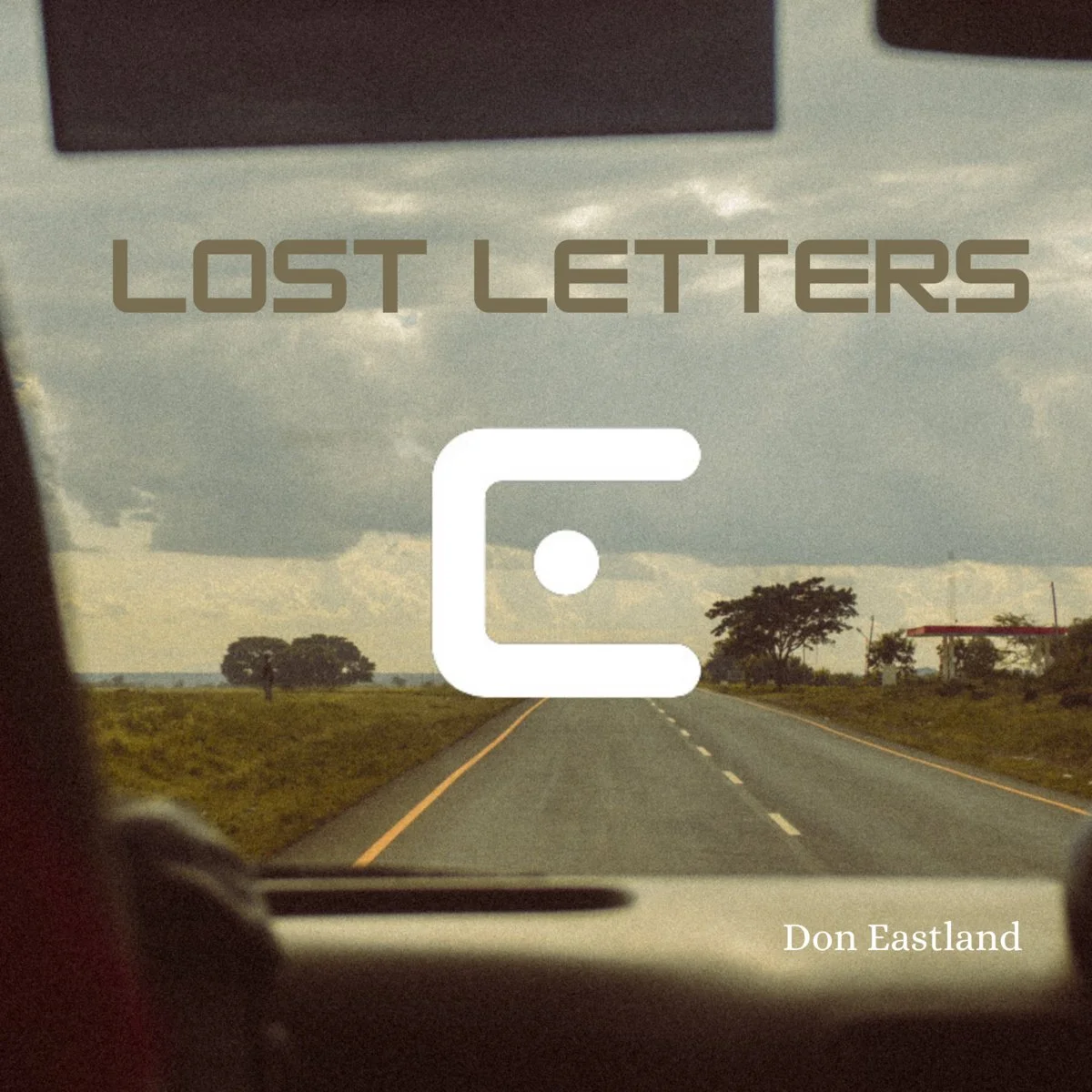
Review by Karl Magi
Don Eastland’s Lost Letters takes us on a journey through love, desire and belonging. The way in which the artist combines his hushed, beautifully touching voice with engaging melodies and rich musical textures create an enjoyable listening experience.
“Lost Letters” comes to life as a ‘phone rings and electric guitar drifts. Don Eastland’s silky voice carries the narration, explaining how he has evolved as a person. A guitar floats with affectionate gentleness while the soft voice over adds to the peaceful sensations and the guitar echoes before silence falls.
The narrator delivers an emotive monologue: Hey stranger - I realize that I'm probably not the person you once knew. I've grown, I've danced, I loved and I lost but most of all I lived, I dreamed. You should see me now! I hope that you find me in this - my heart, my soul, the pieces of me. These are my lost letters.
Deeply soothing notes drifting into pastel peace start “Tattoo”. Don Eastland’s voice is woven with yearning, carrying an affecting melody above the indigo cloud glowing from behind. His vocals shiver with hurt and desire while the rhythm brushes lightly, touching me with sensitive warmth.
Now the beat throbs with sharpened edges and clean drums as Don Eastland adds his voice, veined with ache, as a deep synth growls. The background radiates emotion as the vocals slip past with velvety feeling and the shaping rhythm slides easily. His singing is luscious and intensifies the meaning of the words. As the softly spreading background exudes moonlight, affection permeates the lyrics with inevitable need before the song ends.
All of the memories of the song's subject crash down on the storyteller like "silent whispers in the dark, like lethal wounds and open scars." Like the soft breath of an oceanic wind, "memories of you crash down on me." He says it’s "like a tattoo I can't move," and just as the moon guides the tides, he’s bound to the other person.
As he falls hard, the narrator doesn’t let go because he knows the relationship is what he wants and more. He keeps returning to the other person because "desire burns like the rising sun, it’s raining down with a quiet hum." He adds that just as "the desert craves the shore, I need your shades of blue once more." He concludes, "Just like a tattoo, I'm stuck on you. What can I do?"
Solidly undulating, heavy notes support a raised synth that gleams like a distant sunset to commence “Back Down”. Don Eastland’s voice is joined by swelling, shining sounds that heighten the emotional complexity of the song. The chorus flies with unfulfilled need while the synth exudes brightness like street lights.
The punching rhythm and heavy drums evoke the highway rushing past, while Don Eastland’s soulful voice takes hold of me. Once again, the chorus coruscates with desire as the low end batters. The beat keeps guiding, undulating beneath the distinctive vocals, while tapping drums accelerate. Chimes flash as the deep pulse pushes forward and the chorus rises again, releasing blinding brilliance before the song ends.
As Saturday night winds down, the narrator figures he should head home with friends, but his mind starts to drift because "my only thought is you." He’s speeding down a one-way road, but he loves it, even though he can’t reach the song’s subject.
He admits he’s out of control but says, "The thought of touching you, it won’t back down." He speaks of "chasing the light that's in the wind" on a never-ending ride. He concludes, "Feels like the night is young but the song is fading and my only thought is you."
“Blind Love” opens as quickly intertwining, brilliant synth moves with rapidly trickling percussion. Don Eastland expresses overwhelming passion as his gauzy voice floats with caressing sensations while the rushing notes in the distance shimmer. A faint drum beat gives the music form as Don Eastland's voice grows in strength, carrying the rising memory full of irresistible need.
Echoing vocal sounds move with oscillating notes that create an interwoven motif. The sincerity of Don Eastland’s voice pulls me into the song as he carries the melody’s exuberance. The drums continue to pulsate while the bass scuds past. Softly enchanting vocals cry out as the tumbling notes move. The words are delivered with unalloyed feeling before the song stops.
The narrator and the song’s subject find themselves alone together, which is "the perfect time to call our own." They both realize that there's something between them which the narrator says is true. He adds, "Burning desire is all that's inside, I know you want it, your eyes tell no lies."
Blind love has overtaken them and it's all that he can see. He is "forever bound, forever yours," and he adds that "if love is war then I want more." The feeling between them is strong and our storyteller wants to become one with the other person. He concludes, "You know it's true between me and you."
Delicate chimes are joined by a sax which aches to start “One Shot”. Don Eastland’s voice trembles with loss and hurt while the sax’s reedy emotion fills the song before echoing percussion slaps into the music. The vocals are tentative and full of longing, enfolding me in feeling while trickling notes glint.
The sax is soulful and warm before the chorus jumps in again, conveying the raw emotions within the words. Subtle percussion drifts as the spinning synth sings. The sax unwinds in the background, overflowing with loss, as the track glides to a close with the vocals surrounding me.
"This bottle is holding my free fall," the narrator confesses. He wonders if the song’s subject is missing him and asks, "Have you found your peace?" He questions if the other person is listening and admits, "I can't hear your sound so I think I'll drown these thoughts with another round."
After taking one shot, our storyteller toasts his enemy and says that shot has him down on his knees. He adds, "One shot gives me what I thought I need." He asks, "Why is it not helping me?" before concluding, "This kill is mine, no I can't deny, I won't even try. Deep down I know you find you're better off without me."
“Young Boy” begins with dawn-touched synthesizer pulses that are joined by Don Eastland’s gauzy voice, carrying the gently aching melody. The massive drums throb with strength and the background suffuses the music with pink clouds. Memory Design's production is so luscious and layered here.
Don Eastland’s voice is powerfully vulnerable, surrounded by a synth that unfolds in ribbons of light. Percussion propels as the resonant vocals carry the plaintive melody above scintillating tones. cavernous drums roll as the chorus unfolds with hopeful need.
A cascade of flickering synth rises up, while the track pulses with a strong heartbeat. Don Eastland’s voice shakes with the need for change, gripping my heart with its emotional depth. The huge tones swirl with billowing lushness while the chorus dances and the broadly glowing notes intertwine.
The drumbeat’s propulsive strength presses forward as the vocals leap out, pouring emotion into every note. The swelling synthesizer rises once more before falling silent.
The narrator speaks to his younger self, saying, "You're on your own, so lick your wounds and carry on." He points out, "You've come so far and seen the world," but asks if that’s what he truly desires.
He’s “tired of chasing shelter in the pouring rain” as he searches for a savior in a shadowy dream. He reflects that "life goes up and down, time goes round and round," questioning when he’ll be found. He wonders, "Tell me in the end, what we found?"
His tires have left the road and he asks if they’ll ever make it home. Finally, he acknowledges that he has been “living on life’s edge” and asks, “But when will I find paradise?”
- December 2025
- November 2025
- October 2025
- September 2025
- August 2025
- July 2025
- June 2025
- May 2025
- April 2025
- March 2025
- February 2025
- January 2025
- December 2024
- November 2024
- October 2024
- September 2024
- August 2024
- July 2024
- June 2024
- May 2024
- April 2024
- March 2024
- February 2024
- January 2024
- December 2023
- November 2023
- October 2023
- September 2023
- August 2023
- July 2023
- June 2023
- May 2023
- April 2023
- March 2023
- February 2023
- January 2023
- December 2022
- November 2022
- October 2022
- September 2022
- August 2022
- July 2022
- June 2022
- May 2022
- April 2022
- March 2022
- December 2021
- November 2021
- October 2021
- September 2021
- August 2021
- July 2021
- June 2021
- May 2021
- April 2021
- March 2021
- February 2021
- January 2021
- December 2020
- November 2020
- October 2020
- September 2020
- August 2020
- July 2020
- June 2020