
Future Analog - Hope – Vol. 2

Review by Karl Magi
Overall Album Impressions
Future Analog’s Hope – Vol. 2 is an emotionally nuanced, passionately charged album that combines the soulful vocals of Wesley Reid with Future Analog’s production skills to create music that grabs hold of your heart and won’t let go. The way in which the singer’s vocal chops combine with the synth palette used by Future Analog creates a lushly woven tapestry of intense feeling. When one adds first-rate melodic writing, the end result is moving and deeply touching.
The heart of Hope – Vol. 2 is most definitely Wesley Reid’s vocals. He has tremendous range and the ability to express complicated and conflicting emotion. Whether his voice is broadcasting broken-hearted pain or hopeful dreaming, it takes every nuance and gives it to the listener with full-throated strength and deep feeling. The way in which Wesley Reid carries the music is essential to why the album works so well.
Future Analog combines an interesting sense of synth sounds along with different tones and textures to paint pictures in sound. The way in which he can draw directly into one’s imagination helps to convey the lyrical and vocal beauty within the songs. The different instruments used create unique soundscapes and carry listeners into the world created by the music.
On top of this, Hope – Vol. 2 features strong melodic writing by Future Analog. His melodies complement the emotion within Wesley Reid’s voice and the lyrics that unfold. Each melody works with the words to drive home the feelings within each song, and all of them come together to create an album that is intensely ear-pleasing.
My Favourite Songs Analyzed
“Before I Found You” starts off as powerfully swelling tones gleam with a thousand tiny lights and the foundation of the music rumbles as a phone dials. A distant female voice rises as the cleanly snapping drums move with scintillating chords, erupting in sunlight. Wesley Reid's voice is smoky and resonant, carrying the melody’s joy. The underpinnings cut with a strong pulse as Wesley Reid takes hold of the words and fills my heart with their emotional strength. His tender vocals are luscious and gripping while the chorus shines with opalescent luminosity and the frolicking synth sparkles like early morning light.
The bass undulates as a trickling synth gives off pearlescent light and the beat is broken. The chorus climbs with sincerity while the chord changes add crystalline tones and clapping percussion presses on. As the song ends, the chorus is cut by the guitar, which irradiates the music with brilliance and doubles down on the song’s touching emotive core.
The storyteller “couldn’t find the middle ground” because he felt down. The other person came into his life and “turned my world around” as well as upside down. He asks the song’s subject to hear him and what he has to say because “I was lost without you.”
“Before I found you I couldn’t see the light,” and nothing felt right for the narrator. When he found the other person, he realized that they were going to come around and be by his side. He concludes that before he found the song’s subject “skies were grey” and there was no escape. The other person’s light illuminates his darkest days and every step they take. He finishes, “I was lost without you.”
Rushing sounds move with exotic percussion to begin “Lights Shine Bright.” A synth erupts with warming luminosity, joining Wesley Reid's silken voice as it carries the uplifting melodic pattern. The drum beat is strong as a broadly glowing synth exudes light like a city skyline at dusk, while the vocals wrap around me with caressing expression. The melody has a rising, positive quality as the angular bass cuts and quickly flashing notes move like streetlights flashing past. The resonant vocals jump with joyful soul as the steadily guiding underlayer rushes forward.
As the synth shines like skyscrapers lit up at night, the vocals unfurl with a sense of contentment, escaping from the world’s gloom. Wesley Reid fills his voice with worshipful encouragement as the intensely glimmering lights illuminate like neon in the darkness. The foundational pulsation drives forward as the lyrics are captured by the moving singing before the track comes to a close on the rippling synth and choral joy.
“Hold on to the starlight, let it be your guide tonight,” is what the storyteller encourages the song’s subject to do, as they are “dancing beneath the pale moonlight, chasing all our dreams tonight” and fighting the world’s darkness and sorrow. He urges the other person to hold on because “we are wild and free, one spark, feeling the energy.”
As they stay awake until dawn, our storyteller points out that the city is asleep, so he and the song’s subject can dance all night and “reach for the skies, like stars on the rise.” He says they will “paint the darkness with shades of light” as they shed their worries and let their dreams fly while darkness guides them and lights shine brightly.
The narrator says the sun will rise, “but now we’re free, chasing all our wildest dreams.” He says that, holding his hand, the song’s subject will find a reason to believe. He wants to show the “yearning hearts” who have broken dreams and lost promises how “it has to be, one spark, we’re feeling young and free.” He concludes that they both know the “sun will rise, defy the night.”
“Second Chances” opens as a worshipful choir moves with a rippling synth and a swelling female voice. A deeply peaceful feeling washes through as Wesley Reid's broken voice is joined by rising synth that shines like a new dawn. The low end is shaping as Wesley Reid's honeyed tones carry a melody full of hopeful ache. I enjoy Wesley Reid's soulful energy as rebounding percussion joins the chorus, which leaps out with anticipation. Elevated tones glimmer like the stars while the bottom pulse drives on.
A strumming guitar adds another level of brightness as the interlocking underlayer throbs. Wesley Reid reaches out with his chanting vocals as an echoing female voice adds a warming quality. The chorus shines with lushly glistening light, like a star to wish on. A synth arpeggiates with silken luminosity as the song fades into silence.
Our narrator asks the song’s subject how they’ve been, adding that it’s good to see them once more. He continues, “I’ve been here every day, hoping you would come my way,” because he’s been missing them. He adds, “Each day I feel blue, I’ve been longing for your touch.” He wonders if they can make it right or if he’s losing the other person, so he asks, “Do you believe in second chances?” because he’s asking for one.
Now the storyteller talks about how he missed the song subject’s smile and their embrace, as well as how they “light up every space.” The world’s changed, and they have too, but “all of our worries, let them be.” He doesn’t want to have a clandestine meeting because he’s choosing to be with the other person. He asks if they can make it right and points out that he’s listening to them.
As our narrator says, “I won’t let the past define me anymore, I’ll prove I’m worth a second chance,” he adds, “In the ashes of the past, I’m hoping we can find a way to start again.” His heart knows the truth, and he’s meant to spend his life with the song’s subject because he’s asking for a second chance.
A lonely piano drifts with exhaling notes as Wesley Reid's voice chants to start “All I See.” A hectic bass pulse moves with the heaving rhythm as the piano continues to create desolate sensations and luminous synth flashes. Wesley Reid's tremulous, pained voice carries the choppy melody as the rhythm throbs. As Wesley Reid captures the hurt of this world, guitar moves with distorted drama.
The synth adds flaring brightness as Wesley Reid stabs me with the sincerity of his feeling. My heart is pierced as the broadly woven synth radiates force and the guitar floats smoothly. The chorus cascades as the chanting adds a distorted darkness while the beat throbs with sinewy power.
The guitar shines with raging strength as Wesley Reid conveys his disgust and frustration with conviction. Drifting notes slide past with meditative tranquility, contrasting with the shadow and weight below. Chimes flitter and the track slowly exhales into silence.
The storyteller wonders, “How can it be, you’ve lost all humanity, you don’t see me.” He shouts and pleads as he endures “the heat unleashed on me” while the song’s subject shows no mercy. All the storyteller can see is pain and suffering that “is enough to make me scream, it’s unforgivable.” He asks why it should be that “my hopes and dreams are broken” as he begs to be left alone. He finds himself on his knees with his dignity gone and “your sins uncertain.”
“Searching” opens as colliding drums erupt and a pumping low end is joined by swelling, irradiating synth chords. The lead synth carries a melody full of growing joy as chimes fill the music with metallic luminosity.
Wesley Reid’s voice erupts with celebratory energy while the brilliant synth reverberates with flashing light. The melody sails out with happy fulfillment as tremulous, shining notes wrap around the exciting tune that draws me into the feeling of joy which permeates the track.
Wesley Reid captures all of the emotion within the lyrics as the echoing synth moves with dynamically varied percussion. Angular notes tumble as the scintillating lead synth spills out a tender melody that feels satisfied and fulfilled.
The chorus flies out with encouragement and freedom while the huge drums pound and the bass throbs. The tumbling low end is joined by computerized notes that ripple between stereo channels as a raised synth flashes into silence.
Our storyteller has been searching for the song’s subject, hoping that one day he’d find them. He adds, “Never thought you would come into my life now,” pointing out that his heart skips a beat each time he sees the other person.
In the chorus, the narrator expresses gratitude for having found the song’s subject after a long search. He adds that he isn’t sure what he would’ve done “if my searching had not led to you.”
Silky, rounded synth flows gracefully to commence “Free.” Peace radiates from the synth chords that shift before the groove kicks in and Wesley Reid's engaging vocals reach out with a positively slanted but slightly hurting feel. The rhythm jumps with bouncy dynamism as the vocalist carries the freedom and joyful release in the lyrics.
The way in which the music unfolds leaves me feeling relaxed and at liberty while the steadily pumping beat presses on. As a frolicking synth glimmers, Wesley Reid's voice rebounds with heartfelt strength as the active percussion snaps cleanly. As airy sounds shift, the lead synth contributes pure happiness and light as the driving beat presses on and the song comes to a stop.
When he wakes up in the morning, our storyteller finds a note saying the song’s subject is leaving. He adds, “So you’ll be leaving, we’ve been here before, I’m so tired of all these silly games.” He goes on to say, “I am more, can’t ignore what you did to me,” as he tells the person to hit the door, adding that it was never meant to be. He continues, “I set you free!”
With his eyes open, the narrator has come to understand “the way that you were treating me was all in your plans.” Now he is resistant and says, “Hear what I say, it’s time for you to go. I gave you everything.” He goes on, “Hear me roar, out the door.” He deserves more and can’t ignore that it wasn’t meant to be.
As the song concludes, our storyteller has come to love himself “through the good and bad.” In the case of the song’s subject, he says, “Won’t take this another day, hear the words I say to you.”
“Give Me A Sign” comes into being as delicately trickling notes move with percussion that rebounds between channels and bass that creates supporting undulations. Wesley Reid’s voice wraps around me with elegant, smooth expression as the percussion adds a steady pulse. The vocals echo with breath-warmed feeling as the synth flits past, while the piano carries a melody full of loving sensations.
Reverberant tones shimmer like the sunlight referenced in the song as the hollow synth exhales and notes shine delicately. Pure affection fills Wesley Reid’s performance as the limpid synth shines above the steady bottom-end beat. As the song progresses, Wesley Reid wrings intense emotion from the words while warmly swelling notes float around him, and the track slides to an end.
“In this age of thunder and of rage,” it seems to the narrator that one can feel the ground moving beneath their feet. He says that while he barely knows the song subject’s name, he can feel that “love’s sweeping down on me.” He asks the other person to give him a sign because “you’re like the brightest ray on a cloudy day.”
Our storyteller says that the song’s subject’s smile lights up the room and “chases away this doom.” When he sees the other person, he feels complete and adds, “I hope and yes I pray that you will find a way of sweeping down on me.” He concludes, “Give me a time,” because the other person is like sunlight piercing the clouds.
Conclusion
Hope – Vol. 2 is full of all the complexity and pain of being human. The way in which the excellent vocal performances are combined with intriguing synth sounds and melodic beauty weaves a tapestry that draws me in and holds my attention as the music unfolds.
ANNIEE - Night School
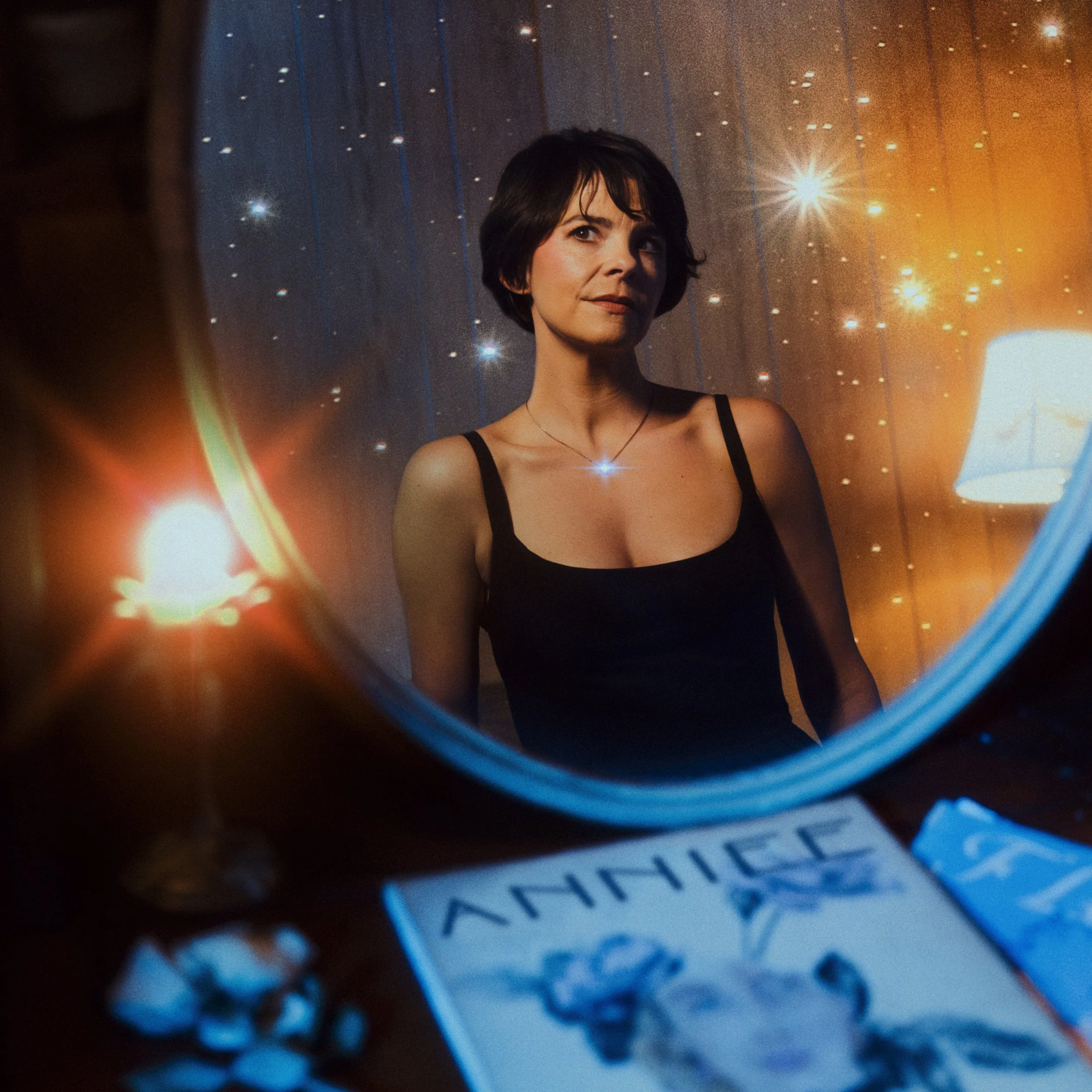
Review by Vero Kitsuné
Last year, New Jersey-based electropop songwriter, vocalist and musical theater composer Anne Eisendrath, or simply known as Anniee, had started unveiling the singles for her much anticipated EP. The time has come for her EP to finally have its moment.
Presenting Night School - a sparkly and kaleidoscopic 5-track offering co-produced with Von Hertzog (VHxRR, Majestic Phoenix) of The Social Club.
“Wearing Black” kicks off the EP with shimmering synthpop energy and a confident sense of renewal. It’s a song about transformation — letting go of heartbreak and stepping into a more empowered, self-assured self in a chic black dress. Against a backdrop of retro arpeggios and crystalline new wave textures, Anniee’s ethereal, classically-tinged vocals glide effortlessly, turning vulnerability into defiance. It’s part heartbreak anthem, part revenge fantasy, and entirely sweet and captivating.
“Danger Electricity” lives up to its name with an electrifying pulse that surges through every beat. Featuring producer Von Hertzog, the track crackles with bright synth leads, glitchy beeps and bloops, and a driving rhythm of thumping kicks and rapid-fire snares. Lyrically, Anniee embraces the thrill of intensity—taking the heat and dancing through the constant danger with fearless energy. It’s a dazzling jolt of electro adrenaline that captures the spark of risk and desire.
“Captured” keeps the pulse alive with its bouncy, thumping rhythm and sleek minimal synthpop production. Anniee’s vocals float effortlessly above the beat, telling the story of snapping a photo of a man — only to find it was her own heart that got captured in that instant. As the track progresses, airy synth pads and sparkling crystalline arps add texture and lift, giving the song a luminous edge. It’s vibrant, romantic, and effortlessly catchy.
“Let Her Hair Down” dives into darker territory, pairing its arpeggiated synth undercurrents with an eerie psychological allure. Inspired by David Lynch and brought to life visually by director Brad A. Kinnan, the track unfolds like a dream you can dance to—poetic, unsettling, and strangely beautiful. Thumping beats and sharp arpeggios drive the rhythm, while airy arps shimmer around Anniee’s haunting vocals. For a song that peers into hidden desires and suppressed emotions, it’s remarkably catchy — a dark pop gem that disturbs the calm while keeping your head nodding.
“Fall From The Sky” closes the EP on a luminous and emotional note, with Von Hertzog once again shaping the track’s radiant atmosphere. Like an angel tumbling gracefully from the heavens, the song glows with jewel-toned synths and soft, starry textures over a steady, bopping rhythm. More dramatic and downtempo than the others, it allows Anniee’s classically trained, ethereal vocals to truly shine—soaring and shimmering like light through the cosmos. It’s a celestial finale that feels both fragile and powerful, capturing the beauty and ache of falling from the sky.
Though Night School spans just five tracks, it unfolds like a complete journey—one that glimmers with heartbreak, transformation, desire, and self-discovery. Each song feels like a chapter in Anniee’s nocturnal world, where vulnerability meets strength beneath the neon glow of synths. It’s a concise yet immersive collection that proves sometimes the shortest stories shine the brightest. With Night School, Anniee turns the dance floor into a diary—honest, hypnotic, and full of heart.
For more Anniee, visit: https://anniee1.bandcamp.com/
Terrordyne - The Seventh Seal
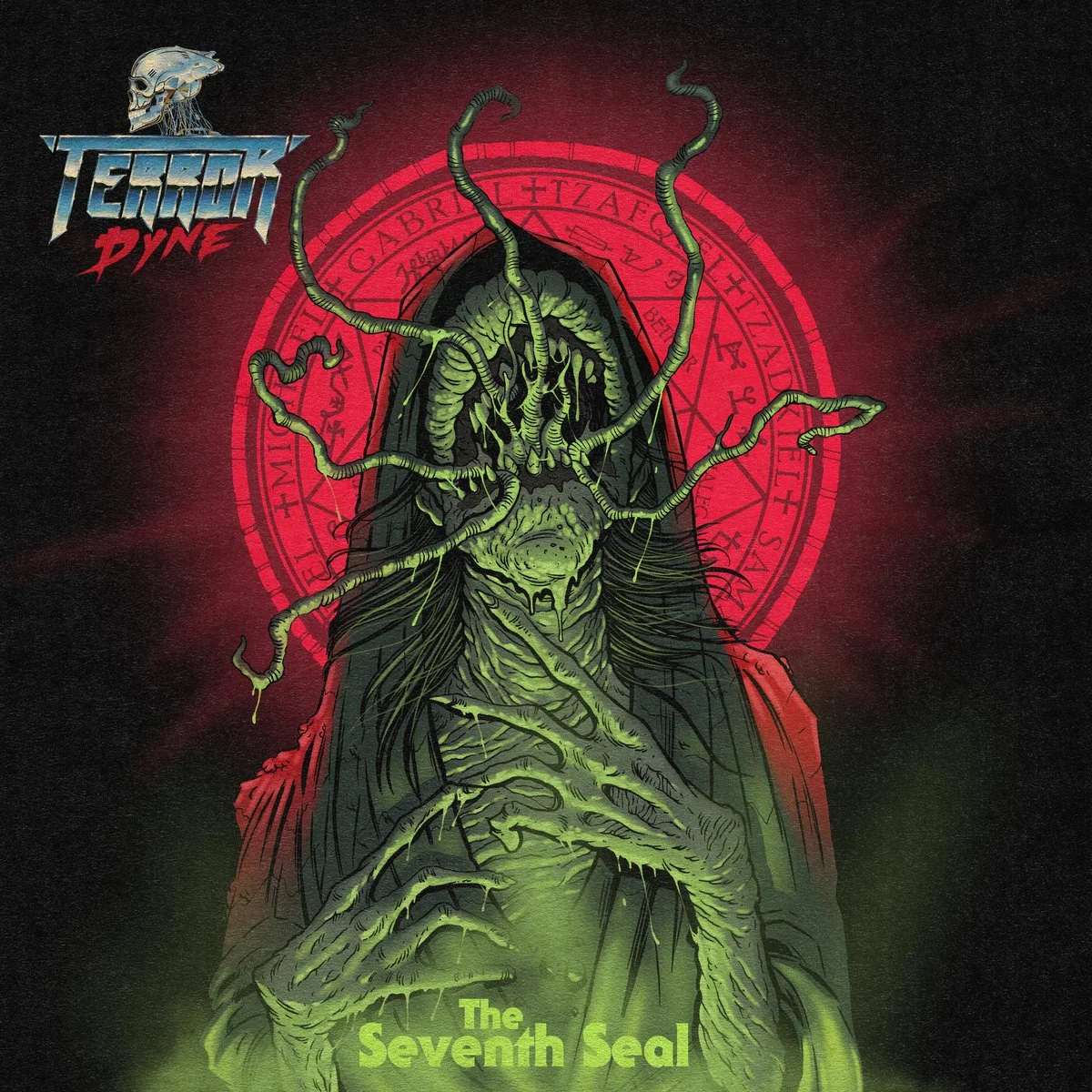
Review by Karl Magi
Overall Album Impressions
Terrordyne’s The Seventh Seal trembles with urgent agitation and carries listeners down dark corridors to places no living human should see. The music is thick with fright, conjuring images of beings from beyond any realm we recognize crawling through portals into our reality. The album is full of murky gloom and intense terror, in a way I find utterly enjoyable and extremely entertaining. This is dark synth music that grabs you by the scruff of the neck and shoves your face into the void.
Atmosphere is a key part of The Seventh Seal. Every scintilla of sound is full of cosmic fear. Rising, deadly night pours from the music as it combines jagged synth sounds with colossal, ragged-edged bass and drums that hammer with tsunami force. Terrordyne produces soundscapes full of evil portent and spectral malice that seep through every moment. The way in which images of dilapidated buildings, lurking horrors, and a night blacker than black rise up through the music fills me with deliciously sinister sensations.
The melodies which fill The Seventh Seal are another strong part of its appeal. These melodies convey nervousness, approaching hazards, and the existential emptiness radiating from the evil that abounds. I enjoy the journey upon which these different melodic moments take me, filling me with the creeping impression of something truly sinister leaping from the dark to seize me. This is music for traveling through the shadowed depths of one’s imagination.
Another reason for my enjoyment of The Seventh Seal is the sheer weight and power of the drums and bass. The underlying percussion and the bass’s gargantuan strength bring a sense of growing threat and shadows that stretch ominously toward me. The low end deepens the imagery of hungry creatures waiting in hidden corners to seize their prey and vanish.
My Favourite Tracks Analyzed
“Last Rites” commences as an unhallowed sound rises with dramatically resounding drums and a tautly wound synth that twists with trepidation. The bass is a cavernous force and the medium-high synth howls ominously. The rhythm detonates with ferocity as a minor-key melodic pattern oscillates and the tempo breaks to half-time.
The main melody carries a hellish umbra as lonely notes descend singularly before a nightmarish arpeggio moves in tortured lines. The bass towers before the rapid drums erupt again, filling me with a sense of impending danger. Once again, hypnotic arpeggios spin while an elevated synth carries the unholy melody above the roiling low end.
Delicate notes luminesce like spook lights as distant sounds keen and the undergirding pounds with demonic force. The rhythm slows again as the raised tones shiver and the track comes to an end.
As “Malice” begins, grating sounds snarl and a growling noise moves. The bass pulsates with an undulating umbra as a distant sound cries with an otherworldly sensation. The beat is unstoppable as high notes wriggle in an attempt to escape. The rhythm heaves with terrible force, radiating pure evil, as the high notes glitter with eldritch luminosity.
As raised sounds scream, a cold shiver crawls up my spine and the trembling, colossal foundation is joined by a shattering beat. Now a shimmering arpeggio shifts nervously while the voiceover reflects twisted dread. Hammering drums and tightly winding sounds that snap add to the forbidding force as the bass swirls.
The voiceover is joined by a melodic pattern that creates a sensation of horrible things lurking at the edge of awareness, waiting to destroy any human unfortunate enough to cross their path. The low end is resolute as it is joined by trembling arpeggios and the track ends.
“The Seventh Seal” comes into being with a monstrous sonic turmoil as a voiceover talks about something coming to get the children. Now the hard-hitting beat moves with an oscillating synth and notes that scream out in panicked sensation, shining with feverish light. The rhythm is crushing as quickly croaking sounds move above the dramatic strings, while the serpentine synth glows uncomfortably. Bells ring with spooky energy as the thundering underpinning rumbles.
As the bass drops away, tense sounds shiver with wicked brightness while the supporting foundation looms. Tendrils of sound reach for me and I recoil as explosive drums are joined by crunching notes. Raised tones create a hallucinatory effect as they churn and the lacerating low end slices. The drums drop into a slower pulse while the horror-struck sounds fade into quiet.
A low, hollow sound moves with slowly drifting piano to start “Daemonibus.” Rising notes add a sense of malevolence while the chimes glitter with the light of ancient ghosts. The low end is forceful, slamming in a tide of hammering percussion while the bells flicker with weird luminosity, filling me with unholy danger.
As the rhythm shatters against the heavy bass, the melody cries with terrible energy. High notes twinkle with sparkling, distant light before the ferocious foundation attacks. The drums break into a slower pulse before accelerating again while the slowly undulating synth exudes dark majesty. The song cries out with extreme evil while the drums rattle. The track comes to an end as elevated sounds contort before the music stops.
“To The Grave” opens as foreboding tones fall over a rising sound that reflects ultimate doom. The cavernous beat moves with churning notes that create a sense of sinister forces drawing closer as an unholy choir cries in the distance. Bone-rattling noises drift as spinning notes send a coil of unsettled emotion through me above the hammer blows below.
As the bass drops out, chains clank and horrified screams echo while a painfully unfurling synth twists. Diabolical sensations reach with dead hands as the string-like notes undulate with emotive power and the colliding low end fades along with the choir.
Orchestral sounds rise with fearful majesty as a rough-edged voice speaks indistinctly and radiant notes ring with nobility to kick off “Oracle.” A screaming sound echoes as classical arpeggios dance with shadow and the underlying pulse shoves the music forward. Strings rise in ghostly knots as the howling synth weaves a spine-tingling melodic pattern.
The low end drops away as chimes float with delicate melancholy, wandering into the misty night. The leaping bottom end pushes forward while twirling notes send dire motion through the music and the raised synth evokes reaching tentacles spilling out of the darkness to grasp me.
As the heavy percussive pulse moves, a hollow-voiced synth whirls in possessed lines and a melody full of threatening strength calls out above the low-end pulsation. The tempo subdivides and the nervous synth spins into silence.
“Apocalypsis” starts off as the tomb-like bass is joined by a whispering narrator. The bass rises with colossal darkness as the elevated notes tremble with unrestrained fear. The drums smash in a wave as the churning notes are joined by a guitar that exudes a minor key melody, full of intimidation.
String-like synth carries a quickly intermingling note pattern as the horror-filled voiceover whispers sibilantly. The huge beat surges again as the growling foundation moves with the cold of the grave. A sense of nearing awfulness fills me before the fragile piano carries an aching melody as the strings glitter, then silence falls.
A sense of doom fills the buzzing synth as it trembles to open “Pale Horse.” A dark voice rumbles before rapidly shifting clouds of looming synth move above the crushing underpinnings. A pipe-organ-like synth churns with worried sensations as elevated notes float like graveyard mist above the crumping drums.
As the pipe-organ synth twists, I am filled with the sense that time is limited and deadly peril nears. While the synth surges in broken pieces, a deep foreboding permeates the music. The tension winds higher as the synth shimmies with growing intensity.
The low sounds are full of slashing power as high notes leap in a melody of flickering spirit light. The bass becomes a living force as worry-filled tones tumble and twist above the urgently throbbing underlayer. Finally, the drum beat breaks into a slower tempo as the higher sounds fade away into uneasy silence.
Conclusion
The Seventh Seal is a slab of dark synth that rips its way into the soul and fills it with dire majesty, allowing the listener to bask in the horrors it evokes. I revel in the way it carries me into realms of maleficent creatures and endless opportunities for beautiful, terrible doom as it unfolds.
Color Theory - This Bright Circumstance

Review by Karl Magi
Overall Album Impressions
Color Theory’s This Bright Circumstance moves through the complications of anxiety, stress and panic to gentler and more calming emotions. It reflects Color Theory’s past along with his experiences in gaining self-knowledge through meditation. This is music that combines intriguing synth textures, well-crafted melodies and a vocal performance that is weary, beautiful and at times heartbreaking. When one adds in the introspective, carefully written lyrics that explore the incredible diversity of emotional experience, the end result is an album that affects me profoundly.
One of the outstanding features of This Bright Circumstance for me is the way in which Color Theory combines vocal and lyrical craft. His voice is full of pensive, plaintive emotion and captures the richness of his lyrical output. There are moments of brightness leavened by mournful shadow, along with advice for living that moves me. Both elements come together to pierce me with a welter of emotion and transport me to new realms of thought.
Another excellent synergy on This Bright Circumstance is the combination of the ever-fascinating synth sounds with Color Theory’s compositional abilities. He writes melodies that are direct but deliver a powerful emotional impact, carried on synth tones that shimmer with intricate texture and depth. As these two elements complement one another, the album gains in scope and blossoms with beautiful musical moments.
Most importantly, Color Theory has spoken directly to my own experiences. I’ve struggled with anxiety and moments of darkness in my life, so hearing about his own challenges and the ways he has learned to cope with them has given me inspiration and a sense of deep connection.
My Favourite Songs Analyzed
“Where Tigers Are Said to Roam" begins with tapping, xylophone-like sounds behind lushly spinning arpeggios, joined by a steady drumbeat. Color Theory’s unmistakable vocals call out in a hopeful melody, rising above the coiling, rippling tones and fluent drums.
The vocals dynamically capture the adventurous spirit of the lyrics. A deep undercurrent rumbles as flitting notes flow easily. Color Theory’s silvery voice takes hold of me and the chorus is full of exultant energy as the low end glides smoothly past. Skittering noises tremble and voluminous bass growls while Color Theory delivers his lyrics with a touching feeling.
The chorus flows with graceful smoothness as the synth twirls while the woodsy sound of the xylophone continues to tap. The kick drum pulses strongly as the undulating notes carry the song to its conclusion.
Our narrator opens with the statement: "they say that tigers roam free in these lands." He adds that you might question how that is possible when you've never seen a tiger, even if you hear "legends of mist-covered hills" and their dangerous thrills. "The mighty roar, the savage gore" are all just folktale and rumor until you "map out a route, remove all doubt" and find out for sure by heading out into the wilderness "where tigers are said to roam."
"Don't be content to rely on hearsay" is the advice that our storyteller gives us. In order to confirm what we deny, we should "explore every region, seek out the cat in its den" and do so over and over again. He reminds the audience that it might be dangerous and you never know what you're going to find. He points out that you should still "embrace the wilderness" to courageously face "the nature of your own mind."
In conclusion, the narrator tells the audience that we have to act alone when we "set out for the great unknown where tigers are said to roam."
Reverberating sonic figures bounce along with stuttering drums to commence “The Rehearsal.” The craggy synth moves in fractured lines as Color Theory's voice is full of bittersweet emotion while the bending notes wriggle past.
The vocals ache, driving home the words and filling me with emotive sensations. Color Theory's silken voice trembles with uncertainty as the low end throbs. The widely leaping technical sounds move as the open-voice percussion continues to pop. Color Theory wraps his words in distinctive vocal sounds and his voice slides with the melody as the fragile, prismatic tonal pattern continues to shift.
Resonant melancholy fills the vocal performance and the drums tap easily. Once more, jumping synth cuts with ragged edges and Color Theory calls out with mingled emotion. As the track draws to a close, the vocals are layered and the drums and tremulous tones move together before the music fades.
The storyteller deals in daydreams and traffics in text while constantly trying to predict what the other person will say next. He says, "I pick my battles and I take my licks" while rewriting the script during rehearsal. He adds that he has something to get off his chest but isn't sure how to say it best.
Our narrator points out that tape decks eat old cassette tapes and pacing the floor wears out the floorboards. He says that he'll "grasp at smoke and call it home, shape my thoughts like molten chrome." He yearns to tell stories and break each silence but "I bottled the eclipse from my umbra to your lips."
Compulsion gets the storyteller caught in a "cognitive trap" as he's always trying to polish his act during the rehearsal. He adds, "I'm the sole architect of each pause, I preach my gospel to empty halls." He asks why he shouldn’t allow the words to “find their own flow, I can make it all up as I go.”
"Improvisation is the skillful way" for the narrator as he urges himself to trust that when the time is right he'll know what to say. He reminds himself to "let go of scenes that may never exist, live in the moment and welcome the risk."
“Thoughts Can’t Hurt You” opens as raging synth slashes harshly while the rhythm adds an assertive heartbeat. Broadly separated, sliding notes flare and descend as the lead singer cries out in choppy vocals, his voice full of trembling energy. The slicing tones pulse and the drums create an even throb while the blinding synth exudes brightness and the melody mingles encouragement with focus.
Now the song moves into a slowly undulating pulse as rough-edged notes add a smooth quiver. The way the lead singer captures the wandering nature of thought pleases me as the warm synth is joined by tumbling xylophone tones while bending notes shift and the bouncing synth cascades. His fresh, expressive voice carries the yearning vocals as the glimmering notes sparkle.
Once again, the song flows into a drifting segment in which the vocals slide past the track concludes on rippling notes and gruffer sounds before silence falls.
“Your thoughts are never dangerous, accept them without prejudice,” is the advice that our storyteller gives to us. He reminds the audience that “the only passage out is through,” and whatever you resist will come back on you.
As the narrator says, “you think your house a cluttered mess as you wrestle with uninvited guests (who) vandalize your furniture.” He reminds us to be grateful for every visitor. In a secondary message, he adds, “these patterns, like phantoms, don’t chase them.”
“Thoughts can’t hurt you, don’t usher them away,” is further advice from our storyteller. He asks the audience to invite those thoughts to stay, because they can’t hurt them. He points out, “they whisper like a breeze, if you keep the doors open they’ll come and go as they please.”
The narrator goes on to say that one can’t “reason your way out of this” because there’s no one there to bargain with. He asks, “who do you think you’re talking to?” adding that the voice you hear isn’t you. The parenthetical message is that thinking “unravels like shadows point backward.”
A digital-sounding deep sublayer is joined by hand claps and swinging percussion as “The Art of Anger” starts. Color Theory’s sonorous voice carries the slowly drifting, stretching melody above the added luminescence.
The lead synth has an unctuous sound as it carries a surprisingly uplifting melody in view of the song's topic. The root vibration throbs in extended lines as Brian Hazard imbues his voice with a dark quality and the smoothly swinging percussion moves as the auroral swells with expansive ease. The main melody sings out again with a positive contrast to the lyrics, dancing with a hip-swinging motion.
Now the bass rumbles as rapid synth flashes flit through, uncertain and a little uncomfortable. The hi-hat ticks again in a swinging pattern as a metallic, flaring motif cuts in short bursts above the weighty bottom line. I always enjoy the distinctive tone and expression of Brian Hazard’s voice. The melody leaps out, twirling radiantly through the music before the song ends.
A “master class in the art of anger” is what the narrator offers as he points out that "righteousness and wrath" present themselves in many forms. Memory is cruel and becomes "the fuel for this whole endeavor.” He points out that trauma can leave an everlasting scar. He reminds the listener that one can "keep the flame alive" through constantly reminding oneself of it.
Our storyteller talks about whispering to the flames "as you stoke the embers" and repeating the names of all those who you feel have wronged you. He speaks of holding a grudge and never moving from it or allowing distraction over it. He says that it takes work to stay angry. He adds, “Feel the hurt, keep your mind in action.” He concludes the song by reminding listeners to "dedicate yourself to reliving dying grievances.”
“Flavor” commences as the resonant bass moves with Color Theory’s echoing voice while the clapping percussion adds shape. The vocal melody is spectral as the chorus introduces a soothing element, while the layered vocals create a fascinating sonic experience.
The bouncing hang drum-like sound shifts as full tones vibrate, while the chorus is tinged with gentler feelings. The percussion has an unsettled feeling as the computerized-sounding notes dance through the music in an elastic manner.
A diaphanous sound moves briefly along with sharply twinkling notes and Color Theory’s voice captures the emotional tenor of the lyrics, interweaving with the chorus to create a fascinating harmonic effect.
I appreciate the way the melody incorporates elements of uncertainty and shifting emotion, reflecting the ideas within the song. The song ends on the bursting percussion and Color Theory’s voice fading along with a glockenspiel-like sound.
Our storyteller asks the listener why one shouldn't savour "the salt in the tears running down your cheek" because it's just a flavour, "like bitter or sour, spicy or sweet." He asks if there's any living thing that's always happy, adding that day will "never arrive."
One should "feast upon the sting of the cold, the warmth of a summer's kiss" according to the narrator as nothing else is real except those sensations. He adds that one should taste each flavour and "welcome to burn so that we might learn."
Now our storyteller reminds the audience that it's just a flavour, "like falling in love, wanting to die." He speaks of it being like a heat exchanger to "breathe in the fire of a dragon's sigh." He urges the listener to welcome the pain and "take in the unpleasant, whatever is present." He concludes by pointing out that one should be like a mirror, "reflecting what's really there."
Effortless percussion moves as tautly jumping synth is punctuated by computerized bursts to begin “Undone.” Color Theory’s fascinating, expressive voice carries the choppy melody, which stutters as a plaintive melodic line slips out with. The steady percussive pulse and digitally punching sounds contrast with the flowing vocals.
The contrast of the easy-going slide of Color Theory’s voice with the cut-up, rapidly vibrating melody is one which I enjoy. Twisted notes wriggle as bass thunders and the drums pulsate. Now the vocals become briefly choppy before they make a silken slide while brightly robotic notes tremble. The drums continue to break before the track ends.
"Our lifeblood flows into one heart, like shadows merge beneath the moon," as they are aligned "in silent grace." This tale’s teller asks where he ends and the song’s subject starts. He wonders if the thoughts are his or the other person's, as their "raw perceptions intertwine."
For the narrator, the world is "a humble prediction based on the weight of conviction." He asks if there's up or down when the centre can’t be found. He speaks about how "vision and sound blend into one," as we are living and undone. He adds, "When I close my eyes, there's no edge."
Now, as "constructs collapse" around the storyteller, he asks, "How could I stand at the boundary when every sign of what I am is all right here, contained within?" He talks about how thoughts "like whispers take their flight" and vanish into the empty night.
“Disappear” starts as the lead synth pops while a heavy rhythm moves below it. The synth sonorities have an elastic quality as they move through. Color Theory’s honeyed voice captures the dreaming sensations in the lyrics.
Diamond-edged notes trickle through above broad, slicing synth. Color Theory’s voice drifts as twisting, flanging synth moves in the background. The drum cadence keeps pulsating as the vocals float through while the song moves forward. Phosphorescent synth flickers through as gruff notes cut in below it.
A warm synth sound climbs while brilliant notes leap out and rubbery synth bends through the music. Fragile notes flit through and heavy drums reverberate along with the solid bass as trumpeting synth echoes out and the song ends with Color Theory’s unique voice.
Our narrator says that he spent a day without sleep "awakened by the dream again, just to drift away." He says that on occasion a "half remembered thought occurs" as he goes over what he should have said before. He has to fight the urge to "watch the tug of war in my head. "
"The self that sits behind your face cannot survive your inner gaze” and the storyteller says that one is free to disappear at any point. He goes on to say that it's simple to "search for the homunculus" rather than a sneak attack.
Our narrator continues, "you're not some sort of exorcist, examining the rope you hold" and checking that there's nothing attached to it. He concludes that the thing you felt like you controlled “surrendered with a smile and a laugh."
Slightly pulsating drums move with a bouncing synth that echoes out into space as “Stop Breathing” starts off . there's an luscious resonance to the sonic components as angular synth trembles through.
Color Theory’s inimitable voice carries a slightly broken melody, touched with gentleness. The rhythmic underlayer is dense and the flatly popping percussion adds an intriguing sound. The synth that flows through the music bends and wobbles as airy notes move past as gilded synth sweeps.
Color Theory’s voice is weary but tender as the meandering melody flows through the music. Metallic synth notes dance out in a slightly uncertain sounding melody as softer, rounder notes move through the music. Sharp-edged synth contributes a glistening sheen as gruff notes cut through.
The percussion has an open sound and flaring accents dance past. Brian Hazard transfers the emotion in his lyrics through his unique voice. Bending, flashing synth rises and falls as digital sounding notes shine. The song ends on metallic, reverberating synth and the popping percussion.
The storyteller says that he's a soldier at war with the atmosphere. His brain is carrying on a dialogue "like an auctioneer." He goes on to say that when he hyperventilates he sees stars and feels like he's suffocating. The process is forming scars. He talks about shutting everything down and ceasing to breathe, adding “take what you need, just what you need.”
Our narrator speaks of how he seems to “envelop myself in catastrophe” with every potential outcome "a threat to my mortality." To conclude, he talks about being as white as snow when he hyperventilates and he feels his world imploding.
Clean-sounding, rebounding notes add an opalescent glow to open *“When I Can’t Remember You.”* As they undulate and bounce, Color Theory’s vocals carry a weary melancholy as the melody doubles with his voice. The continual rippling motion supports Color Theory’s mournful but touchingly affectionate performance.
A nasal synth glides tenderly as quickly patterned tones intertwine while the vocals combine deep loss and a sense of care. The fresh-sounding notes trickle, and Color Theory’s voice breaks my heart with its emotional depth.
A trickling flash of notes is joined by the oscillating synth as it bubbles and the percussion skips. The gentle, heartwarming sound of the slightly distorted tones merges with Color Theory’s broken feelings before the song comes to a quiet close.
“In the gathering dusk, I will fade to a husk. Vital systems will fail, trains of thought will derail.” Our storyteller points out that “what you think of as me, will in time cease to be.” He asks, “can you give me a clue when I can’t remember you?” Every name and face will become harder to place, “like a verse left unsung on the tip of my tongue.”
The narrator reminds all of us that we end up as dust, “so we do what we must.” He asks to have his hand held and to be guided “when I can’t remember you.” A voice in the darkness whispers that he’s going to lose it all and he says, “(I) feel like I should apologize for what I’ll put you through.” He points out that “the faithful will testify that true love never dies,” but adds the bleak reminder that “nobody knows for sure what’s going on behind those lost eyes.”
To conclude, our storyteller says, “recollection recedes, strangers tend to my needs. Play this song in my room when I can’t remember you.”
“The Last Time” starts with hugely reverberating bass that bounces off a densely packed synth which stutters in sharp-edged emotion. Color Theory's emotionally immersive voice carries the splintered melody as the metallic drumbeat echoes with the rebounding synth.
Color Theory's voice catches the bittersweet quality of the lyrics while the chorus carries a melody that is tender in contrast to the gigantic, hard-hitting beat. The harmonies are intriguing and draw me in as the vocals capture the song’s mingled feelings.
The softly hissing hi-hat moves with the floating synth as Color Theory pulls me in with his performance. The broken, gleaming synth sweeps past in intertwining motion as the intermingled vocals flow out. Now the drums drive with Color Theory's chanting as the tempo increases.
Towering underpinnings rumble as the huge synth vibrates and the vocals carry out the song’s strong message. The chorus swells again, spreading warmth and complex feelings, as the low end continues to rebound and silence falls.
Our storyteller muses that there have to be a million things he won't do again like "sleeping beneath the stars, holding my father's hand." He adds that "when our lives are enchanted, we take it for granted, sipping on borrowed wine." He points out that we direct our attention the wrong way without mentioning that it could be the last time.
As our narrator asks himself what he'd do differently and if he'd start weeping uncontrollably, he reminds himself that "this could be my last time and I wouldn't even know." He adds with pain that "it wasn't so long ago, I kissed my son good night, then one night I let him be, figured he'd be all right."
The storyteller points out that "we're all dying in pieces and deepening creases" as we’re imprisoned by our minds. He reminds us that we can't afford recklessness with such a precious thing because it could be the last time. He says that "it may sound a bit morbid, tasteless or sordid" to dwell on harsh facts, but "these moments define you and serve to remind you" that it could be the last thing you do and you won't get the day back.
Conclusion
This Bright Circumstance is a shatteringly emotional, gorgeous musical experience that lays bare all of the complicated and contradictory responses that rest at the heart of what it means to be human. In terms of sheer feeling, this album is hard to beat.
- December 2025
- November 2025
- October 2025
- September 2025
- August 2025
- July 2025
- June 2025
- May 2025
- April 2025
- March 2025
- February 2025
- January 2025
- December 2024
- November 2024
- October 2024
- September 2024
- August 2024
- July 2024
- June 2024
- May 2024
- April 2024
- March 2024
- February 2024
- January 2024
- December 2023
- November 2023
- October 2023
- September 2023
- August 2023
- July 2023
- June 2023
- May 2023
- April 2023
- March 2023
- February 2023
- January 2023
- December 2022
- November 2022
- October 2022
- September 2022
- August 2022
- July 2022
- June 2022
- May 2022
- April 2022
- March 2022
- December 2021
- November 2021
- October 2021
- September 2021
- August 2021
- July 2021
- June 2021
- May 2021
- April 2021
- March 2021
- February 2021
- January 2021
- December 2020
- November 2020
- October 2020
- September 2020
- August 2020
- July 2020
- June 2020